Small Balcony Layouts · THE GUIDE
Design a Low-Light Fern Corner Using Tiered Earthenware Pots
North-facing balconies typically receive low-light conditions that challenge flowering plants, but they provide an ideal environment for shade-tolerant foliage. A neglected corner can easily feel flat or cavernous if containers are left resting directly on the balcony deck. Arranging low earthenware pots on stable tiers creates vertical dimension without requiring fixed carpentry or heavy shelving. This layout lifts compact ferns toward eye level, improves localized ventilation around dense fronds, and establishes distinct visual layers. Careful spacing, consideration of container stability, and diligent saucer management keep the arrangement orderly and accessible throughout the growing season.
Jump to the checklist ↓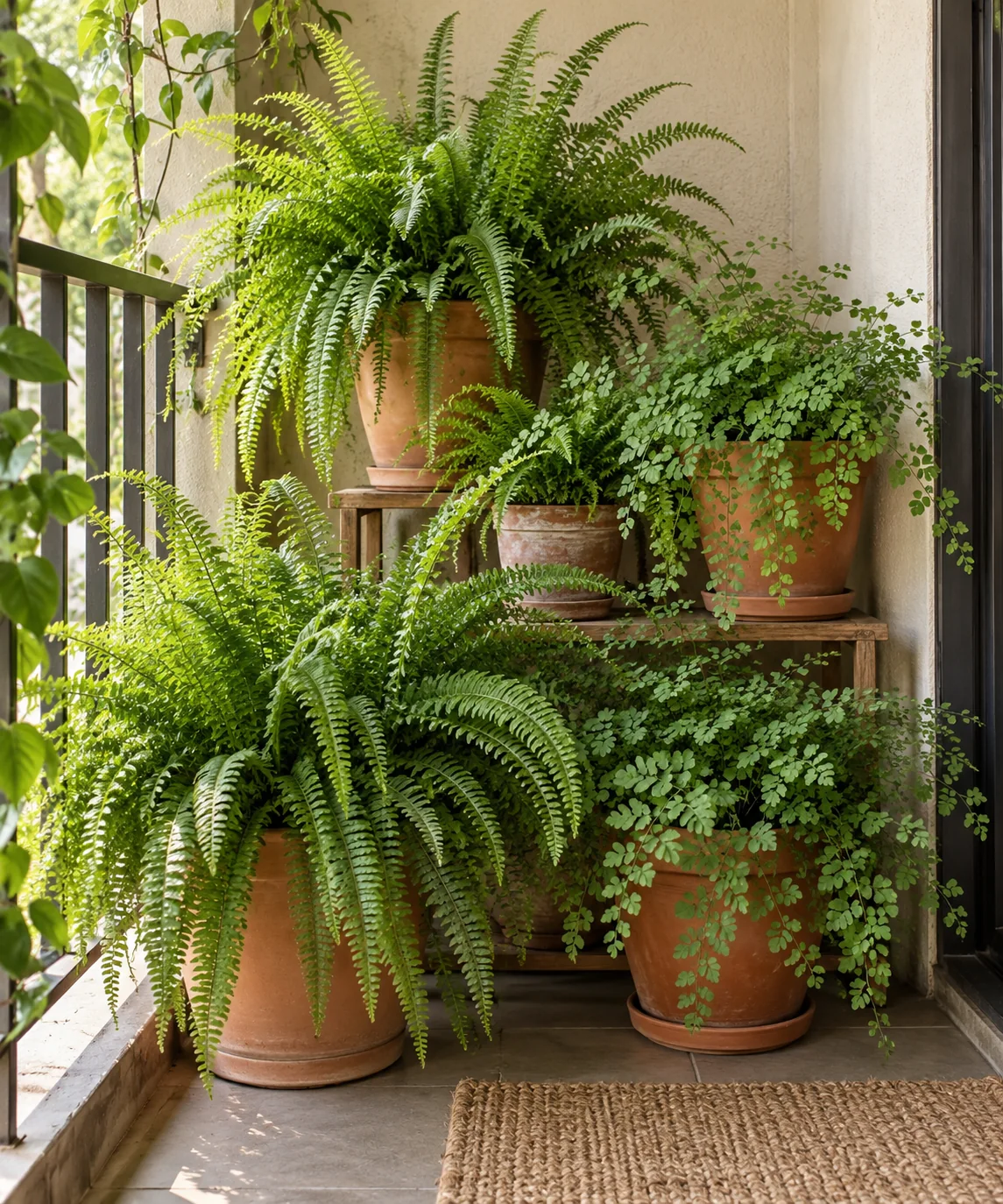
Evaluating Corner Light and Usable Space
North-facing balcony corners typically receive gentle indirect ambient light rather than harsh direct sun, making them suitable for shade-tolerant foliage. Before arranging containers, observe foot traffic patterns to ensure sliding doors, utility access points, and emergency egress routes remain completely clear. High wind drafts can channel through balcony perimeters, quickly drying out fronds and testing container stability. Test your planned layout using empty plastic nursery pots first to visualize spacing, verify clearances, and confirm that plants remain easily accessible for routine watering and care.
Assessing Riser Stability and Structural Limits
Using inverted earthenware pots or low garden risers adds vertical interest, but stability requires careful evaluation. Outdoor earthenware is prone to hairline fissures, weathering, and sudden fracturing under concentrated point loads, especially when supporting heavy planters filled with wet potting media. Never stack containers precariously or rely on small inverted rims for primary ballast. Select low, broad-based planters or dedicated outdoor pedestals, and confirm that contact surfaces sit flat without wobbling. Consult property management or building guidelines regarding floor weight limits before grouping multiple heavy ceramic containers in a single zone.
Staggering Foliage Depths Reversibly
Arranging shade plants in layered tiers creates depth without permanent alterations to balcony structures. Position taller upright specimens, such as mature Boston ferns or holly ferns, toward the rear corner against the wall, keeping containers away from railing perimeters. Mid-height spreading ferns, like bird's nest or autumn ferns, fit naturally into intermediate positions, while compact or trailing varieties remain stable at ground level. This staggered, stepped formation allows daylight to reach lower foliage while maintaining easy visual inspection of soil conditions and pests across every tier.
Managing Drainage and Surface Runoff
Tiered container arrangements require effective runoff management to avoid water damage to balcony surfaces or lower plants. Each elevated pot must sit within an impermeable saucer with a wide, flat bottom that captures excess water before it can spill onto lower tiers or the deck. Avoid unglazed porous trays that allow moisture seepage over time. After deep irrigation, check saucers and remove accumulated standing water within thirty minutes to protect roots from prolonged saturation. Ensure container drainage holes remain unobstructed without adding loose gravel layers, which simply reduce available root volume.
Air Circulation and Routine Maintenance
Shaded balcony corners retain humidity longer than open sunny spaces, making adequate air movement essential for preventing fungal issues on dense foliage. Position containers with several inches of buffer between plant perimeters to permit natural airflow through the fronds. Rotate containers periodically by a quarter turn to encourage balanced growth toward available ambient daylight. Periodically inspect the stability of each riser, particularly after heavy rains or strong seasonal winds, checking earthenware surfaces for spalling, cracks, or shifting that could compromise container balance.
YOUR STARTING POINT
A little checklist.
Original editorial guidance. Images are AI-generated concepts, not photographs of completed projects. Our sources and approach.
Questions to consider
Can inverted earthenware pots safely support large, wet planters?
Inverted pots are not engineered load-bearing pedestals and can fracture under concentrated weight, especially when exposed to freeze-thaw cycles or moisture. Use purpose-built, low outdoor plant stands with verified weight capacities for heavy containers.
Which fern varieties tolerate low-light balcony corners?
Varieties such as Boston ferns, bird's nest ferns, and autumn ferns adapt well to consistent indirect ambient light. Monitor individual species for signs of light deficiency, such as elongated fronds or pale coloration, and adjust placement as needed.
How do I prevent water runoff from staining the balcony floor?
Place heavy-duty, glazed or non-porous saucers beneath every container, and siphon or sponge out standing runoff shortly after watering. Avoid allowing drainage water to collect inside hollow risers or drain directly across building surfaces.