Garden Tool Organization · THE GUIDE
Design a Pegboard Wall Panel Painted Pale Sage for Utility Porches
Utility porches often collect an assortment of small hand tools, balls of twine, and pruning shears without a dedicated storage arrangement. Introducing a painted pegboard panel in a soft sage finish provides open vertical organization while harmonizing with porch trim and potted plants. A muted, satin finish softens the utilitarian look of perforated board while keeping steel, copper, and wooden tools neatly visible. By organizing lightweight implements along a clear vertical arrangement, gardeners can preserve tabletop workspace and protect tool edges from dulling during routine plant care.
Jump to the checklist ↓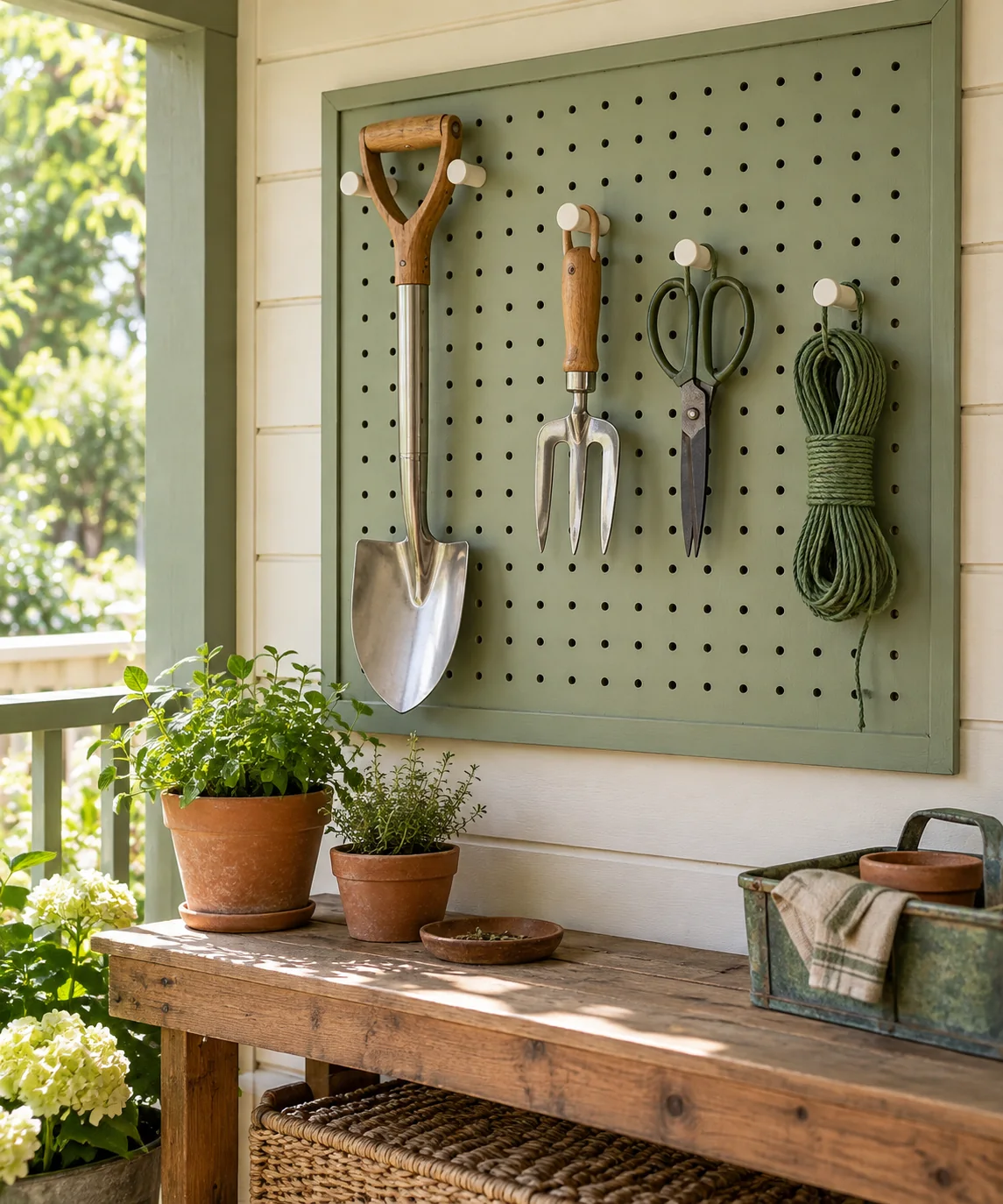
Selecting Board Materials and Exterior-Grade Finishes
Standard indoor hardboard absorbs humidity readily, making exterior-rated composite boards or exterior plywood pegboards preferable for screened or open utility porches. Prior to hanging, seal the panel front, back, and perforated edges with a moisture-resistant exterior primer. Finishing with two coats of exterior satin paint in pale sage helps resist surface dirt, cleans easily with a damp cloth, and provides light protection against airborne moisture without gumming up the peg holes.
Planning Reversible Placement and Porch Wall Clearances
Mounting any panel to an exterior porch wall requires checking wall construction, moisture barriers, and lease or building rules. Avoid penetrating exterior siding or moisture wraps without verifying underlying stud locations and using weatherproof spacers to create air circulation behind the panel. Position the board where it does not restrict access to exterior doorways, lighting fixtures, or electrical receptacles, allowing comfortable walking clearance around routine porch traffic.
Organizing Tool Groupings for Easy Access
Before affixing the board, test your arrangement on a flat table or floor to check spacing and balance. Group tools logically by frequency of use: hand pruners, snips, and ties near the perimeter, with trowels and cultivators centered at a comfortable reaching height. Allow enough spacing between implements so handles can be gripped smoothly without bumping adjacent hooks. Keep heavier tools lower on the layout to minimize strain on upper hanging points.
Selecting Hardware for Outdoor Humidity
Porch humidity can cause low-grade wire hooks to oxidize and leave dark streaks across painted panels. Powder-coated metal hooks, galvanized accessories, or sealed hardwood pegs resist corrosion and maintain a secure hold. When selecting peg accessories, look for styles with securing clips or stabilizing tabs that prevent hooks from lifting away when tools are removed. Ensure hook shafts match the board perforation diameter (typically one-quarter inch) to prevent sagging.
Routine Maintenance and Tool Care
Porches are exposed to ambient dust, fluctuating temperatures, and drifting pollen. Wipe garden tools dry and clean off garden soil before hanging them on the board, applying a light coat of mineral oil to metal blades before seasonal storage. Periodically inspect the mounting hardware and board edges for any signs of loosening or moisture intrusion, wiping the painted surface with a soft, dry cloth to prevent grime accumulation.
YOUR STARTING POINT
A little checklist.
Original editorial guidance. Images are AI-generated concepts, not photographs of completed projects. Our sources and approach.
Questions to consider
Can I hang long-handled shovels and rakes on a porch pegboard?
Full-length garden spades and heavy rakes exert significant leverage and weight on pegboard perforations. It is safer to store long-handled tools in dedicated floor stands, tool towers, or manufacturer-rated utility track systems anchored directly into structural framing.
How do I prevent wooden pegboard accessories from sticking in humid weather?
Apply a thin coat of paste wax or exterior penetrating oil to wooden pegs before inserting them into the perforations. This reduces moisture absorption and swelling during periods of high ambient humidity.
What should I do if the pegboard panel begins to bow?
Bowing usually indicates insufficient support framing or moisture absorption. Ensure the panel is fastened to a rigid perimeter frame with intermediate vertical battens, maintaining an air gap between the backing frame and the wall surface.