Laundry Space Organization · THE GUIDE
Design a Tall Narrow Open Cubby for the Ironing Board
Folded ironing boards often end up propped haphazardly behind doors, sliding off slick walls, or consuming prime closet depth. When laundry room layouts leave an unused vertical gap beside freestanding utility cabinetry or partition walls, organizing that narrow perimeter provides dedicated upright storage. Residential ironing boards fold down to relatively slim profiles, making slender gaps practical zones for tall tools. Planning an upright resting space creates designated storage that keeps everyday pressing equipment organized and accessible without undertaking permanent structural modifications.
Jump to the checklist ↓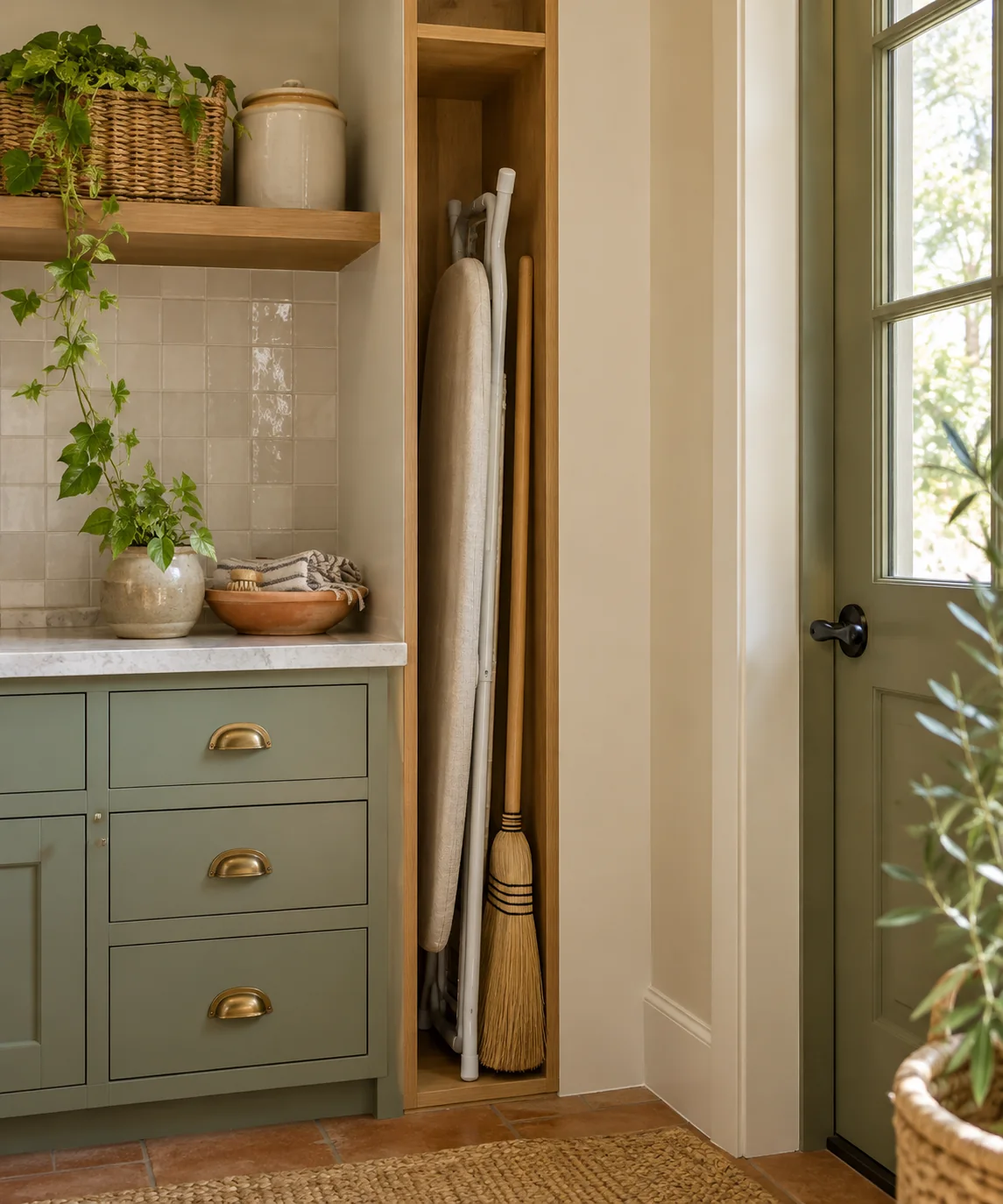
Assessing Folded Dimensions and Storage Width
Before dedicating a narrow gap or choosing an organizer for an ironing board, measure your specific model at its widest points, including the feet, adjustment mechanisms, and any attached iron rests. Collapsed dimensions vary widely among manufacturers, and broad foot structures often require significantly more width than the board surface itself. Ensure you allow comfortable lateral clearance beyond the widest measurement so the legs do not scrape adjacent cabinet finishes or bind during retrieval. If you plan to store utility tools like a broom or folding stool alongside the board, account for their cumulative footprint to prevent wedging.
Floor Surface and Base Protection
An open upright storage slot exposes flooring to repeated abrasion from the plastic or metal feet of the board frame. Over time, sliding a heavy metal frame into an alcove can scuff painted baseboards or leave pressure marks on resilient flooring. Placing a textured silicone runner or heavy-duty felt pad at the base of the storage area cushions the landing and protects finished floors. The added friction also helps stabilize the bottom of the board, preventing the feet from creeping forward when propped at a slight angle.
Upper Restraint and Tipping Prevention
Tall, narrow items stored vertically can tilt forward if left unrestrained in an open slot. To maintain stability without complex construction, incorporate a reversible restraint method suited to your space. A flexible cord, fabric strap, or adjustable tension bar positioned across the upper portion of the opening prevents the frame from tipping forward into walkways. Ensure that any retaining feature remains simple to release with one hand so that retrieving the board remains safe and practical during routine laundry tasks.
Organizing Pressing Accessories Safely
Vertical storage zones often have unused height above the top of a folded board. This upper area can accommodate utility shelving or wall-mounted accessories, provided they do not obstruct the path of the board. Dedicated heat-resistant caddies can hold spray bottles, pressing cloths, and resting pads in one organized location. If storing an iron nearby, always ensure it is kept on a stable, heat-rated surface and allowed to cool completely before returning it to the storage area.
Clearance and Retrieval Ergonomics
Examine surrounding room traffic and door swings when selecting an upright storage location. Removing a full-length ironing board requires sufficient clear floor space directly in front of the opening so you can lift and guide the frame without striking nearby appliances, open utility doors, or light fixtures. Verify that opening nearby washer lids or cabinet drawers will not impede access, and confirm that you can retrieve the board without needing to twist or tilt it awkwardly in tight corridors.
YOUR STARTING POINT
A little checklist.
Original editorial guidance. Images are AI-generated concepts, not photographs of completed projects. Our sources and approach.
Questions to consider
How wide should an ironing board storage slot be?
The necessary width depends entirely on the design of your ironing board's feet and accessories. While board tops are relatively narrow, T-leg or Y-leg bases can be considerably wider. Measure the widest point of the feet and allow several inches of extra clearance so the board can slide in and out without scraping.
Can I store an iron in the same narrow vertical space?
An iron can be stored in the same vertical footprint only if placed on a stable, dedicated shelf or heat-rated holder that keeps it securely separated from the board. Never rest a loose iron on the floor or wedge it beside the folded frame where it could fall or snag power cords.
How do I stop an upright board from sliding on smooth floors?
Placing a textured rubber runner or ribbed silicone pad cut to fit the base of the slot creates surface friction that grips the board's feet. Storing the board with a slight backward tilt against a secure wall or stop block further reduces the likelihood of it sliding forward.