Laundry Space Organization · THE GUIDE
Design a Wall-Mounted Lost Sock and Clip Board
Orphaned socks frequently migrate across laundry countertops, cluttering folding surfaces and disappearing into dark corners between washing cycles. A dedicated, wall-mounted clip board organizes stray hosiery into plain sight, keeping surfaces clear while waiting for matching pairs to emerge. By utilizing a compact vertical board equipped with simple wooden pins or lines, you centralize missing items in one predictable holding spot. This simple organizing tool establishes an orderly sorting habit, eliminates tabletop scatter, and provides a structured routine for reuniting lone socks without accumulating endless textile clutter.
Jump to the checklist ↓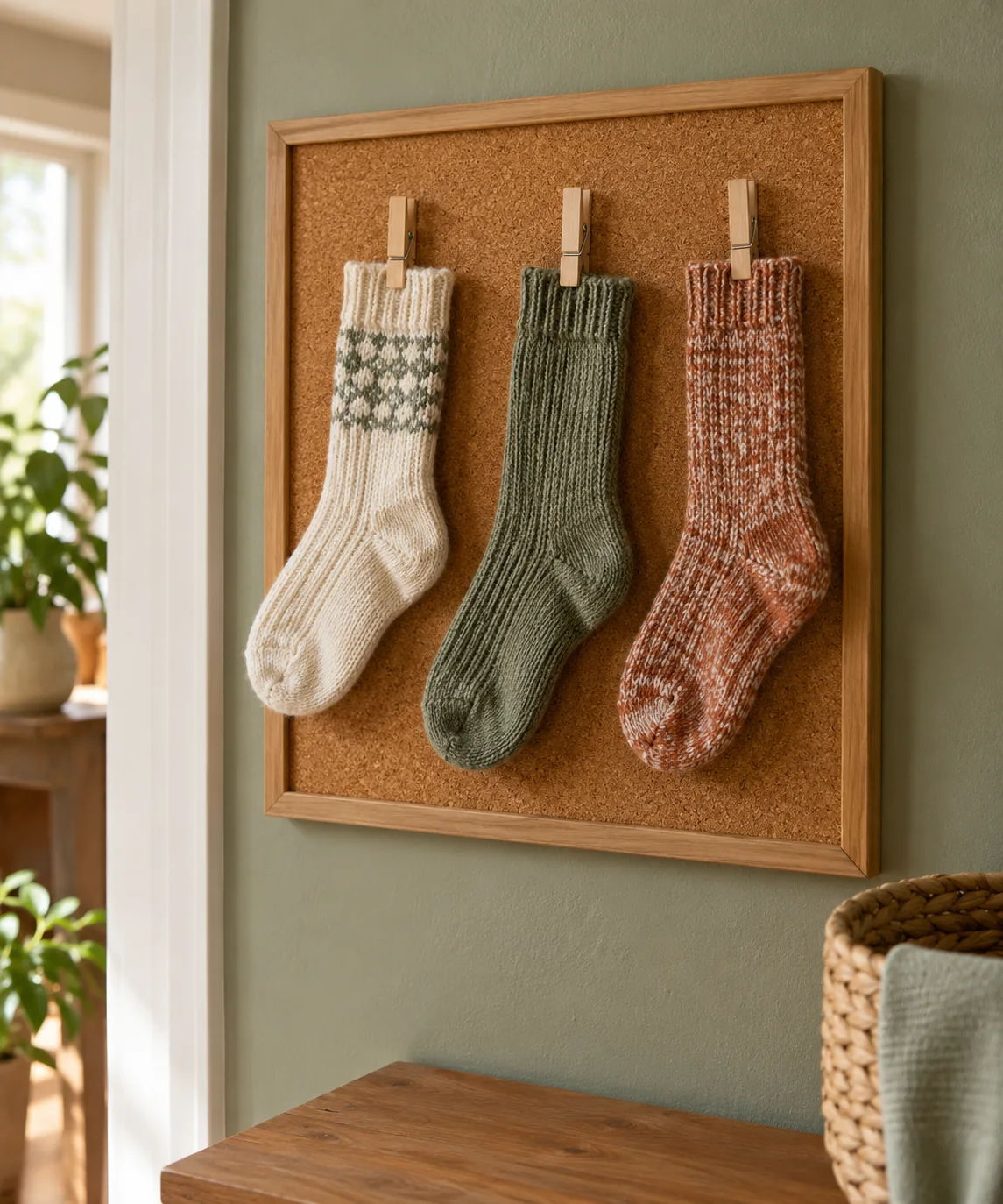
Positioning at the Sorting Station
Locate your lost sock board directly adjacent to your primary sorting surface, mounted at comfortable eye level. Placing it immediately above your folded clothes counter ensures lone items are cataloged the moment a laundry basket is emptied. When stray socks have an immediate vertical home, family members avoid setting them on top of dryers or folding tables. A compact board measuring roughly twelve by eighteen inches provides ample capacity without overwhelming your utility wall space.
Board Structure and Hanging Twine
A framed cork tile or painted wood plaque paired with horizontal lines of jute twine offers a durable foundation. Suspend two or three taut lines of twine across the frame, securing them firmly on both sides. Clip classic wooden spring clothespins along the cord, spacing them three inches apart to give each sock dedicated breathing room. Wooden clips securely hold thick athletic socks as well as delicate dress hosiery without leaving snag marks or adhesive residue on textiles.
Organizing by Size and Color
A haphazard cluster of clipped socks quickly looks messy and makes matching difficult during weekly laundry cycles. Arrange lone socks along your display lines chronologically or group them by color family and household member. Placing small children's socks along the bottom twine line and dark athletic pairs on the upper line speeds visual recognition. When clean laundry comes out of the dryer, a quick upward glance reveals whether any newly surfaced match is waiting.
Establishing a Purge Cadence
Without an active clearing rule, a clip board easily becomes a static museum for socks whose partners vanished months ago. Institute a strict thirty-day clearing cadence for any items remaining on the twine. If an orphaned sock sits on the board through four consecutive laundry weekends, its partner is unlikely to return. Retire lingering singles into cleaning rag baskets or textile recycling bins to preserve clip space for active household laundry circulation.
Preventing Laundry Room Clutter Creep
Keep the board strictly dedicated to orphaned socks to avoid inviting unrelated clutter into your sorting workspace. Resist the temptation to pin receipts, dry-cleaning tags, spare buttons, or safety pins to the board. The system works precisely because it provides an immediate visual answer to a single chore. Wiping the frame with a dry duster monthly prevents laundry lint from settling onto the display lines or wooden clothespins.
YOUR STARTING POINT
A little checklist.
Original editorial guidance. Images are AI-generated concepts, not photographs of completed projects. Our sources and approach.
Questions to consider
Where is the best place to hang a lost sock board?
Hang the board at eye level directly above or beside your folding table. Immediate proximity to the clean laundry sorting zone ensures orphan socks are hung up instantly rather than dumped onto countertops.
How long should I keep a lost sock before throwing it out?
Keep lone socks on display for about thirty days or four wash cycles. If the matching mate does not appear after a month, repurpose the orphan as a household dusting rag or textile recycle.
What clips work best for holding socks without fabric damage?
Traditional wooden spring clothespins work best. They provide a gentle, firm grip across varied yarn weights without snagging delicate synthetic weaves or leaving sharp impressions like metal clips often do.