Pantry Organization · THE GUIDE
Design a Weekly Grab-and-Go Snack Station at Eye Level
Mornings run smoother when portable foods do not require rummaging behind bulk ingredient bags. By positioning open-front wire bins directly at eye level on a central pantry shelf, household members can instantly locate pre-portioned nuts, dried fruits, and whole-grain crackers. This setup relies on clear visibility, accessible vertical clearance, and disciplined weekly restocking rather than hidden deep storage. Positioning these items between shoulder and eye height keeps small packages from tumbling behind larger boxes, maintains proper air circulation around dry goods, and reduces the daily friction involved in packing work or school lunch bags.
Jump to the checklist ↓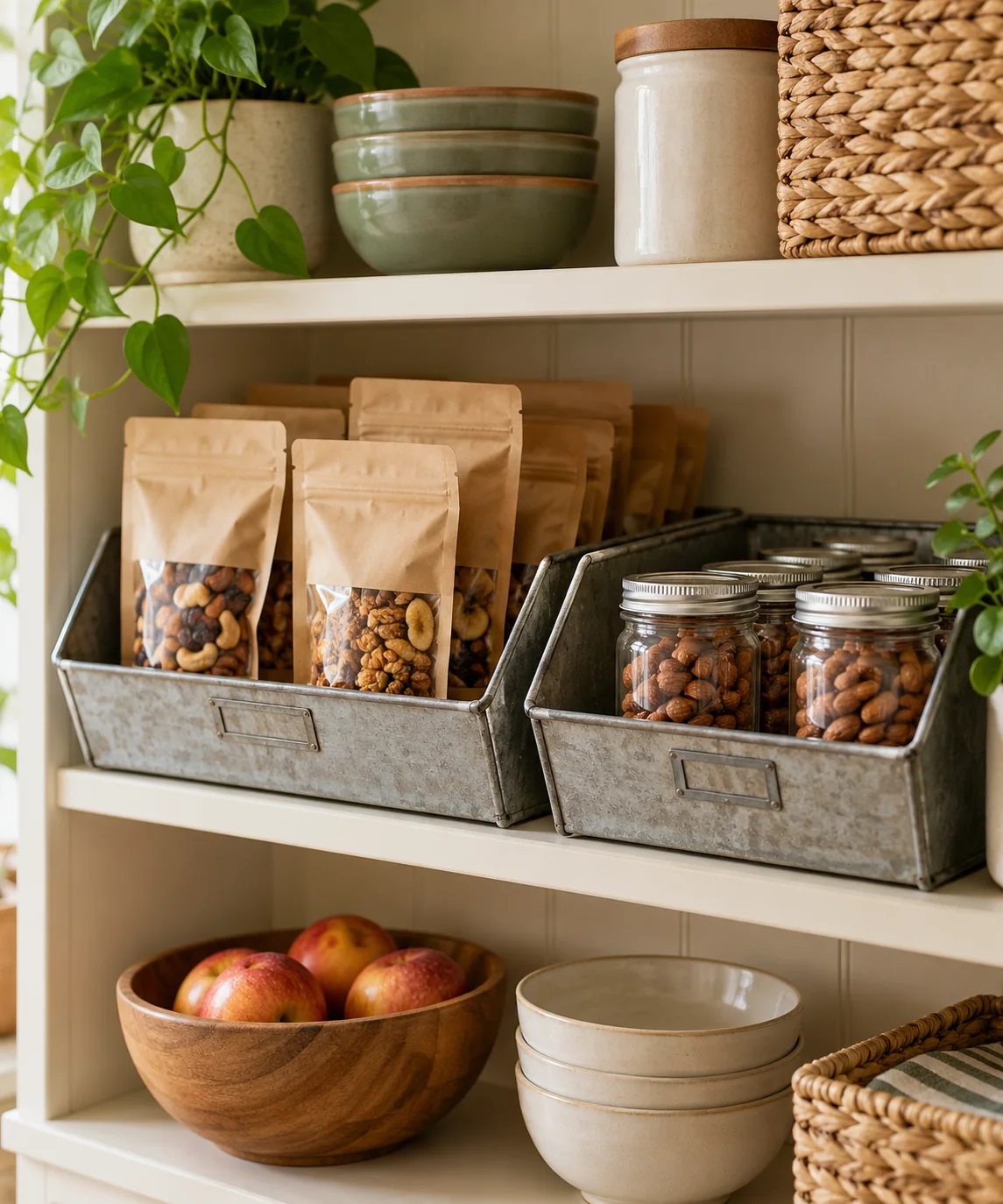
Measure Shelf Depth and Bin Dimensions
Begin by measuring the vertical clearance and depth of your primary pantry shelf. Most standard reach-in shelves measure twelve to sixteen inches deep. Select open-front wire stacking bins that leave at least two inches of rear clearance and three inches of top clearance above the basket lip. This clearance permits your hand to retrieve snack bags without pulling the entire container forward. Test the arrangement with clean cardboard boxes first to confirm that the stack remains stable during daily reach-in movement.
Establish Practical Snack Groupings
Divide your bins into dedicated categories to prevent loose bags from mingling into a disorganized heap. Allocate one basket exclusively to portioned raw or roasted nuts, another to unsweetened dried fruit bags, and a third to delicate crackers or seed wafers. Stacking crackers above heavier nut pouches prevents breakage. Keep individual servings in reusable silicone envelopes or clean glass jars with secure lids. Sorting by moisture resistance prevents cracker sleeves from absorbing ambient odors from oily seed mixes.
Optimize Open-Front Accessibility
Open scoop-front baskets eliminate the need to unstack or shift containers during busy mornings. Arrange contents upright in a single-file line from front to back, similar to filing cards. Place older batches toward the front and freshly packed items at the rear to support natural inventory rotation. Do not overfill the bin past its lower front scoop lip; overloading leads to fallen pouches that jam shelf edges and hide older portions from view.
Establish a Weekly Prep Routine
A grab-and-go system functions only when refreshed on a consistent schedule. Select one prep evening each week to divide bulk-purchased items into portioned containers. Wipe bin interiors with a dry microfiber cloth during this restock to remove nut skins, salt grains, and cracker crumbs that attract pests. Inspect sealed bags for punctures before placing them in the station. Consistent portioning prevents halfway-eaten family bags from cluttering adjacent pantry shelves throughout the busy workweek.
Address Physical Weight and Environmental Limits
Wire baskets filled with dense nuts and dried fruit exert concentrated weight on shelf surfaces. Ensure your shelf supports are securely seated in their bracket pins before stacking multiple loaded bins. Avoid locating this snack station directly above a heat source, such as a baseboard heater or adjacent freestanding refrigerator motor, as fluctuating temperatures cause oils in nuts and seeds to turn rancid quickly. Keep the surrounding shelf zone dedicated solely to dry ambient foods.
YOUR STARTING POINT
A little checklist.
Original editorial guidance. Images are AI-generated concepts, not photographs of completed projects. Our sources and approach.
Questions to consider
Can I use solid plastic bins instead of wire ones?
Yes, provided they feature a low front opening. Wire baskets offer better passive air circulation and instant visibility from floor level, while solid bins contain stray crumbs more effectively on lower painted wooden shelves.
How long can pre-portioned nuts sit in these baskets?
Portioned nuts and dried fruit should generally be consumed within two to three weeks when kept in airtight snack pouches. Check manufacturer expiration dates and discard any items showing rancid odors or moisture condensation.
What is the best way to handle delicate crackers?
Store crackers in compact, rigid reusable containers rather than soft bags, and allocate them to the top tier of your bin stack so heavier nut portions do not compress and crush them.