Entryway Organization · THE GUIDE
Design a Wet-Weather Boot Drip Station in a Compact Vestibule
Rainy seasons bring standing puddles, wet grit, and mud directly into compact entry vestibules, creating slick walking surfaces and tracking stains across interior floors. A dedicated wet-weather boot drip station confines moisture to an easily managed, contained zone without consuming precious square footage. By employing shallow, rimmed containment vessels paired with breathable fillers, footwear dries efficiently through natural air circulation. Establishing this containment barrier protects delicate hardwood or carpet while maintaining an organized, welcoming entry. Thoughtful material selection and routine upkeep keep the station functional throughout the wettest months.
Jump to the checklist ↓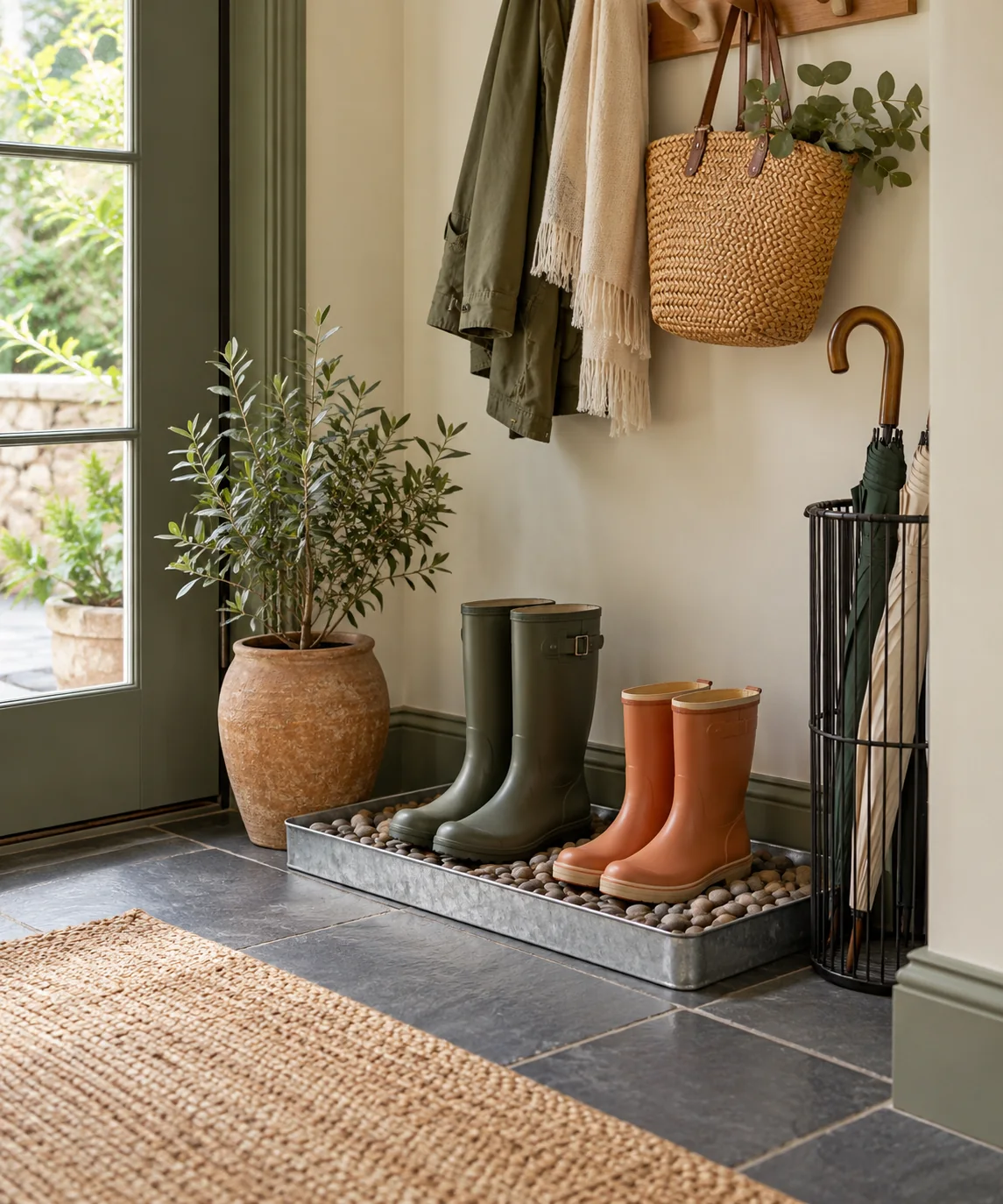
Sizing the Footprint to Protect Clear Paths
In a tight entry vestibule, floor real estate directly influences safety and ease of movement. Select a low-profile boot tray that fits snugly against an interior sidewall or corner, ensuring it remains entirely outside the door's operational swing radius. Measure the depth of the entryway recess before purchasing; common tray depths range from twelve to sixteen inches. For narrow layouts, seek out long, slender trays that accommodate two or three pairs in a single file rather than a double-wide grid. Keep primary walking paths and egress routes unobstructed so household members can navigate the space without stepping over footwear.
Elevating Soles Using Non-Porous Mediums
Placing wet rubber soles flat against a smooth plastic or metal tray traps moisture beneath the tread, slowing evaporation and keeping outer soles damp. Filling the tray with a single layer of smooth, non-porous river stones provides an effective physical separation. The pebbles allow air to circulate beneath lugged soles while runoff collects at the base of the container. Choose rounded, non-absorbent stones roughly one to two inches across to create a stable, level resting surface that does not scratch footwear finishes or shift awkwardly when boots are lifted.
Integrating Slender Umbrella Management
A complete wet-weather station manages dripping outerwear accessories alongside soaked boots. Pair your boot tray with a slim, well-ventilated umbrella stand positioned directly adjacent to a tray corner or set within a shared catchment zone. Open-frame or perforated metal designs promote continuous airflow around wet fabric panels, helping them dry more consistently than when stored in solid-walled bins. Ensure the stand features an integrated drip cup or place it inside the rim of the tray. Storing umbrellas upright prevents dirty runoff from puddling across finished flooring.
Establishing a Routine Drying and Emptying Cycle
Water collected beneath stones or standing in tray wells will stagnate if left unattended over prolonged damp stretches. Establish a weekly maintenance habit during active rain cycles. Carefully pour collected water down a utility drain or sink, wash the tray base with mild household detergent, and wipe it dry. Periodically transfer the stones into a colander to rinse away accumulated sand, grit, and street deicing compounds under running tap water. Allowing both the container and stones to air dry completely periodically discourages biofilm formation and keeps the entry fresh.
Evaluating Seasonal Transitions and Space Recovery
When dry seasons return, reassess whether the boot drip station needs to occupy active entryway space. In climates with persistent humidity or frequent garden chores, keeping a compact tray intact provides year-round protection against tracked garden soil and lawn dew. In regions with distinctly dry summers, empty and wash the stones, pack them into a sturdy tote bag, and store the cleaned tray in a closet or utility area. Reclaiming floor space during dry months keeps small vestibules feeling open and adaptable to seasonal household storage needs.
YOUR STARTING POINT
A little checklist.
Original editorial guidance. Images are AI-generated concepts, not photographs of completed projects. Our sources and approach.
Questions to consider
Won't river stones make the boot tray too heavy to clean?
Using a single, modest layer of one- to two-inch stones provides sufficient drainage clearance without adding excessive weight. Distribute stones evenly across the base so the tray remains light enough to pick up, drain, and rinse without straining.
Can metal or rigid boot trays damage or scratch tile or wood floors?
Rigid metal or plastic tray edges can scratch sensitive finishes if dragged across grit. Affix non-absorbent rubber or silicone bumper pads to the underside corners. Avoid felt pads in wet zones, as felt absorbs moisture and holds dampness directly against the floor surface.
How do I handle heavy road salt brought in by winter boots?
Deicing salts and winter road slush can leave white crusts that corrode metal trays and degrade synthetic finishes over time. During freezing periods, empty the tray weekly and rinse both the stones and the basin with lukewarm water to dissolve mineral deposits before they harden.