Sage and Cream Interiors · THE GUIDE
Design an Alcove Writing Desk With a Calming Two-Tone Wall Treatment
Carving a focused work area out of a busy living room often results in visual clutter and awkward spatial boundaries. An underutilized architectural alcove offers natural side borders, making it an ideal candidate for a dedicated, compact writing zone. Applying a horizontal two-tone color treatment—grounding the lower portion in soft sage and lifting the upper zone in warm cream—visually frames the workstation without demanding physical partition walls. By coordinating desk proportions, cord management, and desk accessories to these painted horizons, you create a calm, organized work niche that blends smoothly into your wider living environment.
Jump to the checklist ↓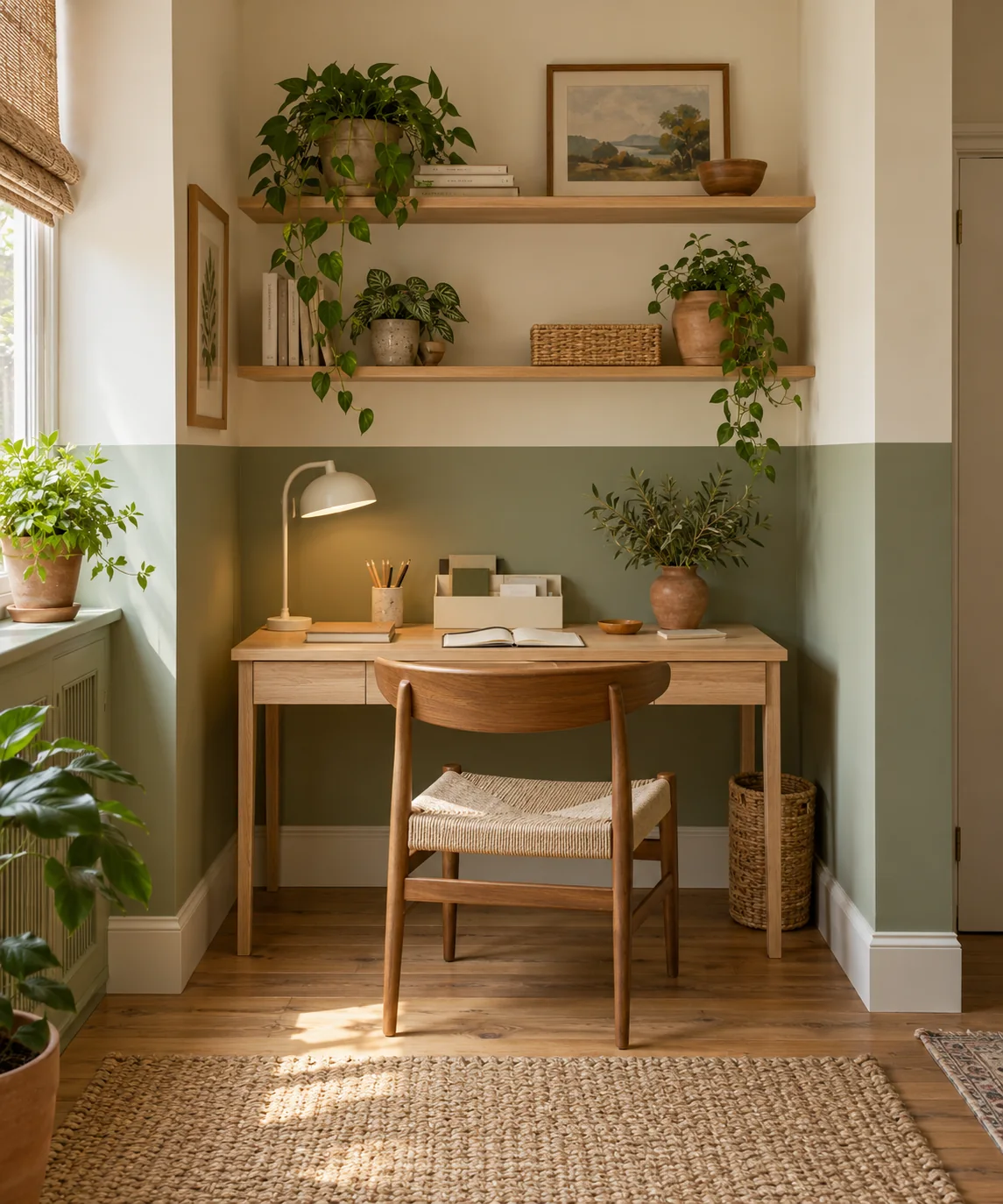
Establishing the Color Horizon Line
The dividing line between paint shades dictates how the alcove integrates with the surrounding room. Position the horizontal color split approximately two to four inches above the surface of your writing desk. Painting the lower section in soft sage anchors the furniture, giving the light wood desk a tailored backdrop that absorbs scuffs. Extending warm cream from that boundary up to the ceiling reflects ambient room light downward, making a narrow or shallow recess feel significantly taller and more open.
Selecting Proportional Furniture Dimensions
Measure the alcove opening at three separate heights—baseboard, waist, and head height—since older walls frequently bow or lean inward. Choose a freestanding writing desk that leaves at least one to two inches of clearance on either side of the recess. Wedging a desktop tightly against plaster can chip paint and makes running desktop cables impossible. A shallow desk depth between eighteen and twenty-two inches ensures you have adequate writing space without projecting awkwardly into the living room traffic path.
Testing the Color Split With Swatches
Before committing to paint, tape large color sample boards inside the alcove at your intended desktop height. Natural daylight shifts drastically inside recessed walls, often rendering cool greens muddy and creams dull. Observe the test swatches during morning sunlight and under artificial evening lighting from your nearby living room fixtures. Sit at a temporary table inside the recess to confirm the color break does not hit right at eye level, which can create visual distraction while typing or writing.
Organizing Desktop Storage and Surfaces
A small alcove desk quickly feels overwhelmed by scattered paperwork and office supplies. Maintain visual calm by selecting desk organizers in warm cream finishes that blend directly with the upper wall color. Use a single low-profile divided tray for writing tools and stationery rather than tall desktop towers that block the painted boundary. Keep the desk surface clear of decorative knick-knacks, limiting tabletop objects to an essential task lamp, an active notebook, and one muted storage box.
Routing Task Lighting and Power Cables
Shallow alcoves often lack direct ceiling illumination, making dedicated task lighting essential for comfortable reading and focused work. Position a slender cream task lamp on the side opposite your dominant writing hand to avoid casting working shadows. Bundle power and charger cords neatly with reusable hook-and-loop ties, routing them down the rear inside corner of a desk leg. Keeping wiring tucked firmly out of sight preserves the calm horizontal lines established by the sage and cream paint boundary.
YOUR STARTING POINT
A little checklist.
Original editorial guidance. Images are AI-generated concepts, not photographs of completed projects. Our sources and approach.
Questions to consider
Why should the color line sit slightly above the desk surface?
Placing the paint boundary two to four inches above the desktop visually frames the work surface. It prevents the desk from visually disappearing against the wall while protecting the upper cream wall from accidental pencil marks or scuffs.
How much clearance is needed behind the chair in an alcove?
Plan for at least thirty inches of clear floor space behind the desk edge. This clearance allows you to pull the chair back smoothly and stand up comfortably without bumping into living room walkways or adjacent furniture pieces.
What desk depth works best in a standard shallow alcove?
A depth of eighteen to twenty-two inches is ideal for writing and laptop use. This shallow profile fits neatly within most structural recesses without extending outward into the main floor area or disrupting surrounding room circulation.