Small Balcony Layouts · THE GUIDE
Design an Asymmetrical Layout with One Bold Statement Planter
Small balconies can feel crowded when divided among many small containers that interrupt floor space. An asymmetrical layout organizes the area by balancing a single substantial planter against a lightweight seating piece placed across the deck. Setting a primary container on one side introduces natural greenery, while a movable chair opposite creates a comfortable spot for relaxing. This diagonal arrangement helps preserve a clear walking path across the center of the balcony. Checking building weight allowances, doorway swings, and practical maintenance access in advance helps ensure the arrangement remains functional and safe.
Jump to the checklist ↓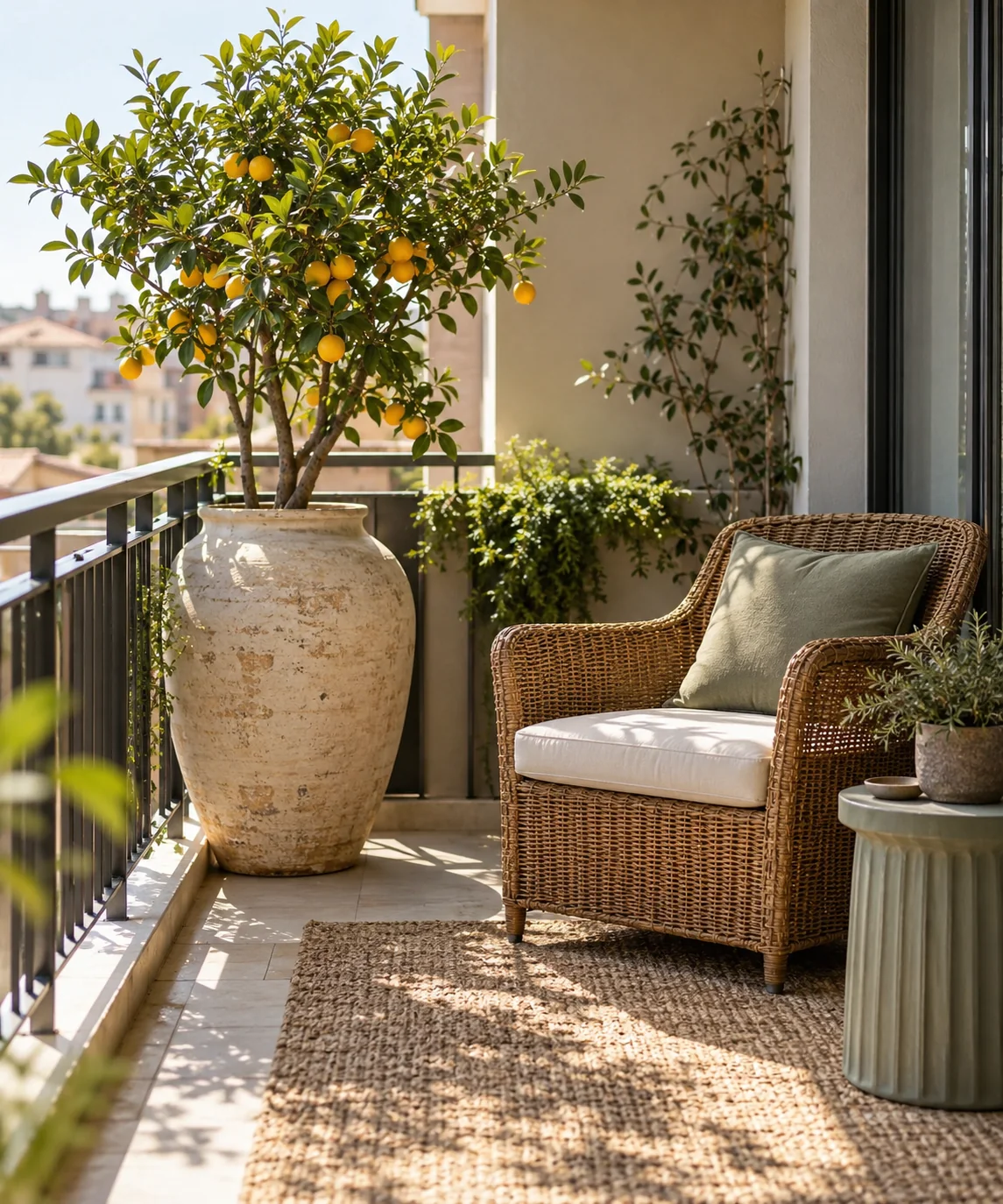
Establishing the Diagonal Axis
An asymmetrical layout relies on visual counterweight across the space. Placing your primary container diagonally opposite the main access door draws the line of sight across the full length of the balcony. Positioning a compact chair in the opposite corner, angled toward the planted area, balances the arrangement while leaving the central floor line accessible for routine transit. Review the pathway to ensure that entry doors open freely and that access to utility fixtures or exterior drainage outlets remains completely unobstructed.
Proportioning the Statement Vessel
Choose a container proportioned to your balcony's dimensions without crowding primary walking lanes. A container measuring twelve to sixteen inches across often provides visual substance for a compact balcony while offering adequate volume for dwarf shrubs or mixed seasonal foliage. Look for profiles with broad, level bases rather than extreme top-heavy tapers, which can be vulnerable to shifting during gusty weather. Consolidating plants into one primary vessel simplifies watering routines and reduces loose floor clutter.
Selecting a Mobile Reading Chair
Seating used opposite a large container should remain easy to reposition for cleaning and seasonal adjustments. Heavy or deep-profile lounge chairs can dominate limited floor area and complicate floor care. Slender chairs framed in powder-coated metal or synthetic weave keep floor lines open while allowing light to pass underneath. Choosing outdoor seating that is easy to pick up or fold also simplifies moving items indoors when severe weather warnings or building maintenance operations arise.
Mocking Up Layout Footprints
Before transporting heavy pots or furniture onto the balcony, test the footprint using temporary paper or cardboard outlines on the decking. Lay down templates matching the outer base diameter of the pot and the full footprint of the chair, accounting for your preferred seating posture. Walk the route between the access door and both corners to confirm you have comfortable, unhindered passage. Mockups reveal tight spots early, preventing accidental blockage of door thresholds, electrical outlets, or railing access.
Reviewing Weight Limits and Drainage
Large planters holding saturated potting soil can reach substantial weights. Balcony load ratings vary widely by construction type and age; consult property management, lease guidelines, or local structural documentation to confirm permissible loads before placing heavy containers. Corner placement or specific planter shapes do not guarantee structural safety. Use lightweight potting media formulated with perlite or coir rather than dense garden soil, and always pair the container with an appropriate saucer to manage runoff and protect underlying decking.
YOUR STARTING POINT
A little checklist.
Original editorial guidance. Images are AI-generated concepts, not photographs of completed projects. Our sources and approach.
Questions to consider
Can I move the large planter after planting?
Once filled with damp growing media, large planters become awkward and heavy. Set the container in its intended location on its drainage saucer before filling, or use a heavy-duty outdoor rolling base rated for the anticipated total wet weight.
How can I prevent the reading chair from moving in wind?
Choose outdoor furniture made from weather-resistant materials with sufficient heft for your local wind exposure, and avoid ultralight unweighted plastics. During high-wind advisories, fold or stow lightweight seating indoors.
How do I select plants for a single large vessel?
Choose varieties suited to your balcony's specific sunlight, wind exposure, and seasonal temperatures. Look for specimens with manageable mature sizes so foliage does not spill into the main walking path.