Bookshelf Styling · THE GUIDE
Designate a Focused Single-Shelf Poetry and Journaling Station
Amid busy multi-shelf bookcases crowded with dense reference texts and general fiction, dedicating one single tier to quiet creative reflection offers a calming visual pause. A focused poetry and journaling station isolates slim, thoughtful volumes alongside immediate writing essentials, encouraging daily contemplation. By limiting the shelf to essential tools—such as an unlined sketchbook, quality pen tray, and selected verses—you establish a dedicated creative micro-zone within an existing living space. This intentional arrangement relies on deliberate negative space, tactile materials, and strict boundaries to maintain an orderly sanctuary that inspires writing routines.
Jump to the checklist ↓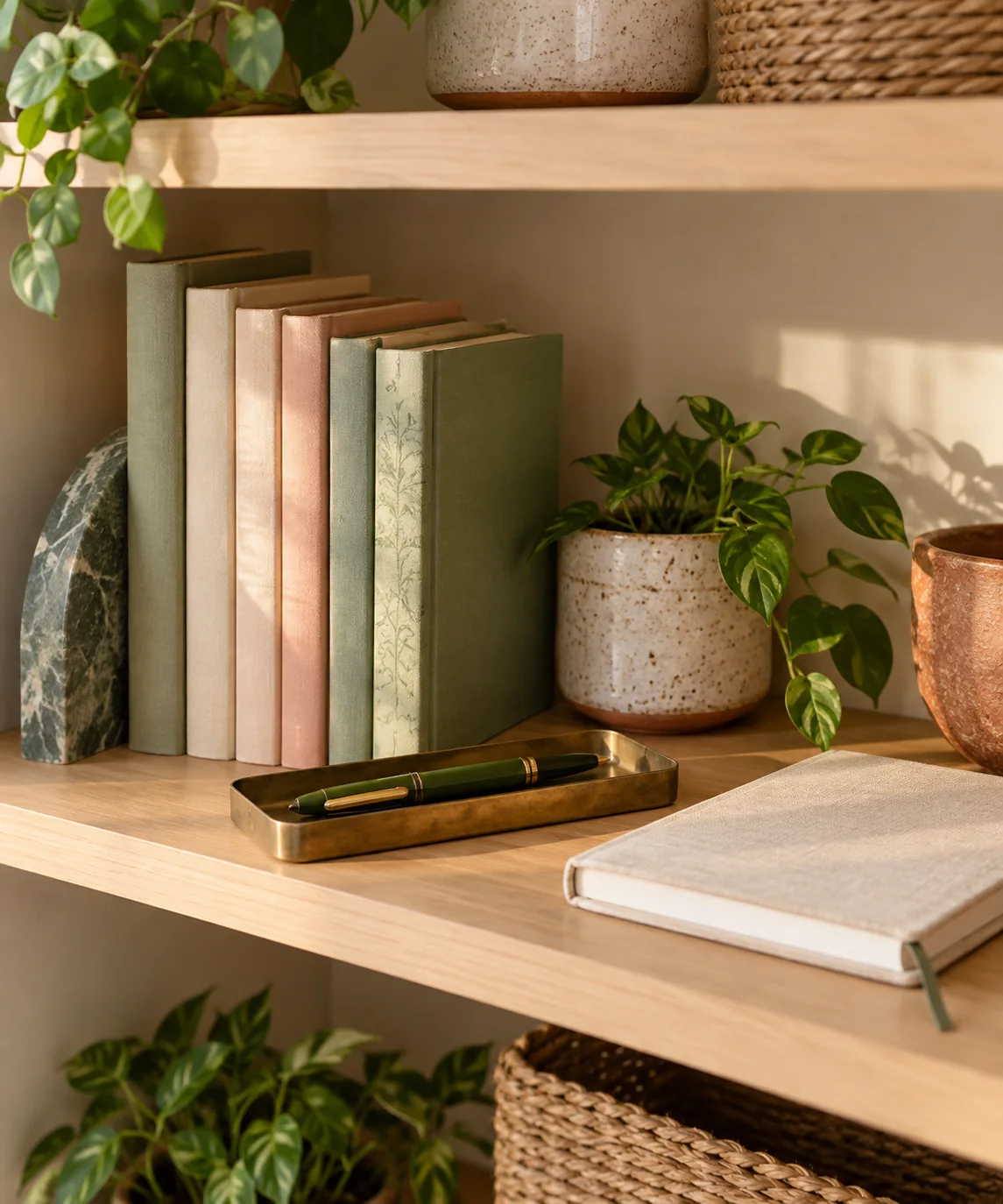
Selecting the Optimal Eye-Level Tier
Position this dedicated station at standing or seated eye level, typically forty-eight to sixty inches from the floor. Placing the station within direct sightlines reinforces its role as an inviting creative destination rather than passive storage. Avoid placing it near floor level or above head height, where accessing notebooks and delicate pen points becomes awkward. The chosen shelf should be comfortably reachable while seated at a nearby desk or pausing during a room walk-through.
Curating Slim Volumes and Negative Space
Poetry collections are typically slim, which provides an opportunity to practice disciplined spatial restraint. Select eight to twelve favorite volumes rather than cramming the shelf from side to side. Stand them upright using a simple, heavy bookend, leaving at least a third of the shelf surface completely open. This deliberate negative space frames the poetry spines, reducing visual noise and highlighting the curated nature of the collection without overwhelming the shelf visually.
Incorporating a Functional Writing Tray
A designated receptacle for writing instruments keeps practical tools orderly and prevents loose pens from rolling across the shelf. Position a solid brass or ceramic tray adjacent to the books. Limit the tray contents strictly to two active writing tools, such as a dependable fountain pen and a soft drawing pencil. Restricting tools to a small, dedicated tray preserves clean horizontal surfaces and turns the act of selecting a pen into an intentional ritual.
Storing Journal Pads and Sketchbooks Flat
Journals, blank sketchpads, and notebooks retain their structural integrity best when stored flat rather than squeezed vertically between hardcovers. Lay your active journal flat beside the pen tray, perhaps stacking a single spare pad directly beneath it. This horizontal arrangement signals readiness: the notebook can be lifted with one hand without shifting surrounding books. Ensure paper weights and notebook covers lay completely flat to maintain crisp horizontal lines across the display.
Enforcing Strict Clutter Boundaries
Because single-shelf stations feature open negative space, they naturally attract wandering household items like receipts, keys, and incoming correspondence. Establish a strict rule that no extraneous paperwork rests on this tier. Perform a weekly reset to dust the pen tray, wipe the shelf surface, and return unrelated objects to their proper homes. Protecting this boundary preserves the quiet atmosphere essential for focused reflection, reading, and personal journaling.
YOUR STARTING POINT
A little checklist.
Original editorial guidance. Images are AI-generated concepts, not photographs of completed projects. Our sources and approach.
Questions to consider
Why store notebooks flat instead of vertically on this shelf?
Storing blank journals and notebooks horizontally protects soft bindings from bowing, prevents loose inserts from sliding out, and offers an effortless, one-handed retrieval that supports an unbroken writing routine.
How do I keep slim poetry volumes from falling over?
Use a single compact, weighted bookend with a non-skid base. Avoid lightweight metal brackets that slide easily when supporting only a small stack of slender paperbacks.
Can I include decorative objects on this specialized shelf?
Keep decorative additions minimal to avoid cluttering your writing zone. A single utilitarian object, such as a plain brass pen tray or stone paperweight, maintains functional simplicity without diluting the shelf's quiet focus.