Garden Tool Organization · THE GUIDE
Designate a Tiered Plant Stand for Stacking Clean Pots and Hand Tools
A patio corner often collects empty nursery pots, loose trowels, and stray saucers without a structured system. Dedicating a tiered plant stand turns awkward courtyard space into an efficient, vertical depot for both clean containers and small tools. Rather than letting pots topple across outdoor pathways, slatted metal or treated wood tiers allow air to circulate freely while sorting containers by size. Placing frequently used hand implements in a sturdy base caddy keeps sharp edges sheltered from foot traffic. This straightforward arrangement streamlines weekend repotting and preserves valuable floor room on modest exterior surfaces.
Jump to the checklist ↓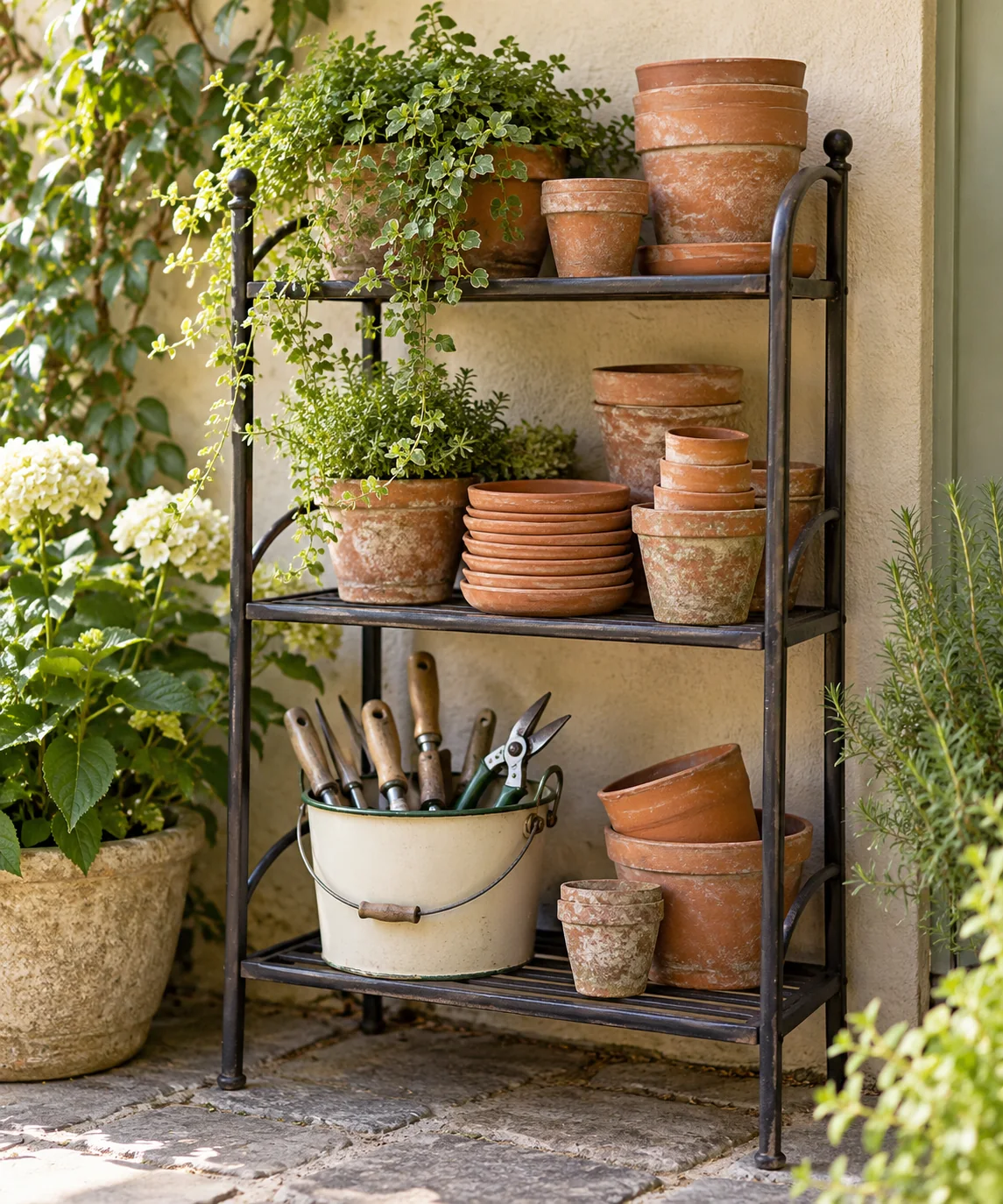
Evaluating Corner Footprints and Structural Stability
Choose a level courtyard corner away from primary walking paths and swinging exterior doors. Freestanding plant stands require a stable, uniform surface to avoid tilting or rocking under load. Check that the lowest shelf sits slightly elevated above outdoor floor moisture. When loading a multi-tier stand, distribute weight cautiously by placing the heaviest containers and tool containers on the lowest tier. Reserve upper levels exclusively for lightweight plastic pots or small saucers. In exposed or windy locations, keep in mind that freestanding shelving remains susceptible to tipping, so store taller or heavier stacks indoors or in sheltered sheds during severe weather.
Sorting Washed Containers by Size
Organize clean, dry containers in inverted stacks to stop rain, garden dust, and falling leaves from pooling inside bases. Group pots by rim diameter and base profile, keeping nested stacks modest in height to prevent rim cracking or destabilizing the shelf. Separate plastic nursery containers from porous clay pots, as terracotta can bind together or chip if nested under heavy pressure. Staging saucers vertically in a stable rack or lying flat on a middle tier keeps them accessible and prevents moisture from being trapped between stacked glazed surfaces.
Housing Hand Equipment on Lower Shelves
Store hand trowels, cultivating forks, and pruning tools in a dedicated, wide-bottom caddy or enamel bucket on the bottom shelf. Placing hand tools working-end down helps protect hands from sharp edges and keeps handles accessible. For shears and pruners, keep manufacturer protective blade sheaths attached before storing them alongside digging implements. Containing tools within a portable tote keeps loose dirt off open shelves while allowing you to carry common tools directly to raised beds or potting areas.
Managing Water Drainage and Patio Debris
Open slatted shelves permit loose grit and rainwater to drain through rather than collecting around container bases. Check under the stand periodically to sweep away soil and organic debris that could harbor pests or trap moisture against patio pavers. Storing wet gear or unwashed tools directly on metal shelves can accelerate finish degradation and rust over time. Wipe hand tools clean with a dry rag before placing them into storage, and verify that stacked pots are fully dry to minimize moisture retention.
Seasonal Adaptation and Space Limitations
An exterior plant stand serves best as an active staging area during the growing season rather than year-round outdoor storage. In regions experiencing sub-freezing temperatures, porous ceramic and terracotta pots can fracture if trapped moisture expands during freeze-thaw cycles. Move fragile containers and precision cutting tools to a sheltered garage or utility area before the onset of winter frost. During prolonged wet periods, keeping cutting tools indoors prevents mechanical stiffness and corrosion on pivot joints.
YOUR STARTING POINT
A little checklist.
Original editorial guidance. Images are AI-generated concepts, not photographs of completed projects. Our sources and approach.
Questions to consider
How do I stop nested terracotta pots from sticking together on the stand?
Place small corrugated cardboard strips or scrap craft foam between nested pots. This simple barrier cushions the clay, allows airflow, and stops moisture from locking matching tapered rims together during humid weather spells.
Can wooden plant stands be used for outdoor tool storage?
Yes, provided the wood is naturally rot-resistant like cedar or teak, or treated with exterior-rated sealant. Ensure feet do not sit in standing puddle areas, and wipe shelves dry after heavy storms to avoid mildew buildup.
What should I do if the plant stand feels slightly wobbly on pavers?
Adjust leveling glides if present, or slip durable exterior rubber shims underneath the stand's feet. Never balance wobbly units using stacked pots; always establish a flat, rigid footing before stocking heavy gardening supplies.