Sage and Cream Interiors · THE GUIDE
Display Cookbooks and Cutting Boards on a Shallow Countertop Ledge
Kitchen countertops often lose valuable preparation territory when bulky cutting boards and thick recipe books lean haphazardly against the backsplash. Installing a shallow display ledge painted in soft cream against a muted sage wall leverages vertical surface space without stealing counter depth. A ledge protruding only three to four inches stores essential wooden prep boards, reference books, and culinary art flat against the wall. This keeps counters completely clear for knife work and ingredient assembly while transforming ordinary kitchen utensils into an intentional, textural display that complements a gentle sage and cream palette.
Jump to the checklist ↓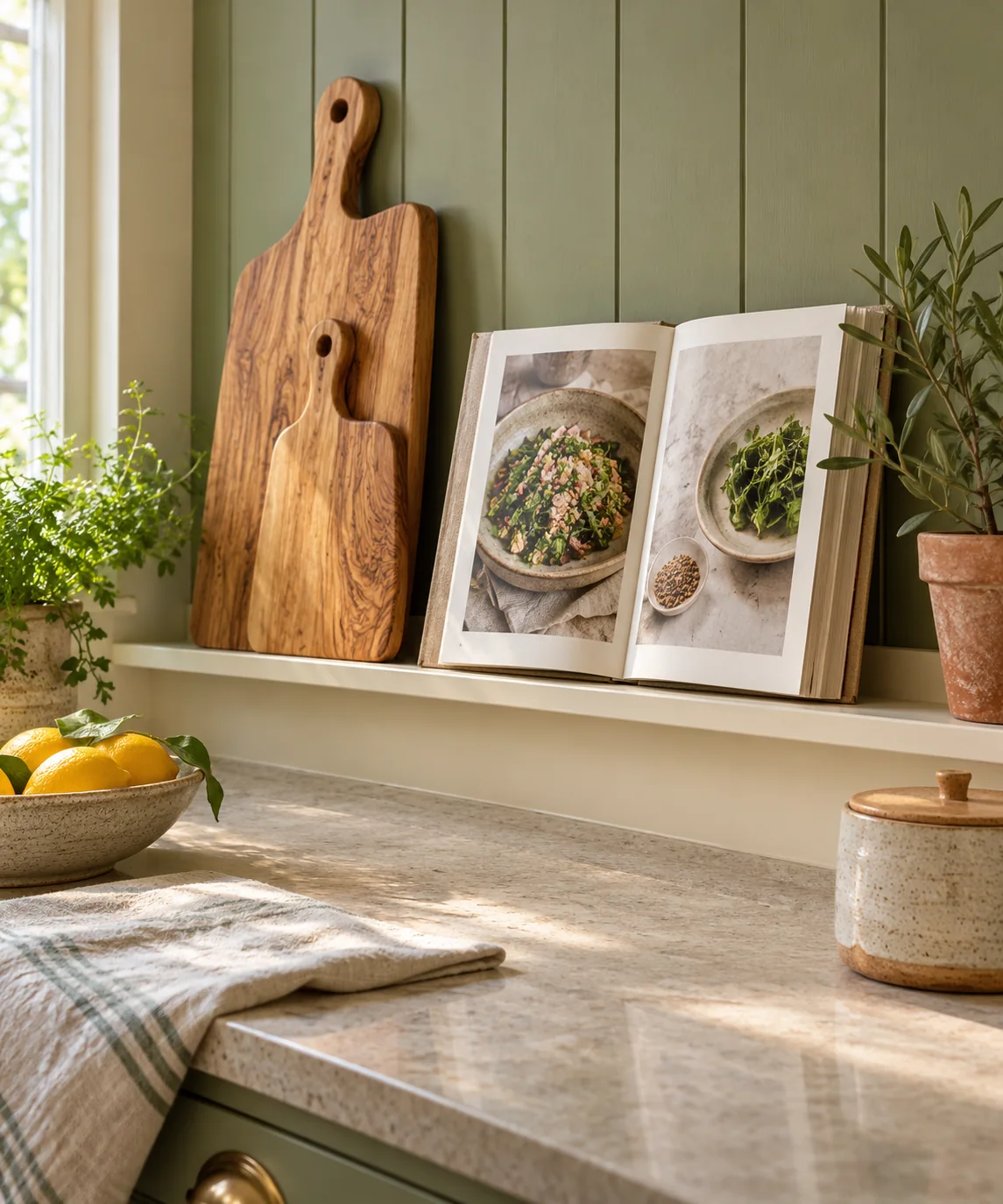
Ledge Depth and Clearance Planning
A functional display ledge designed for cutting boards and recipe books generally features a shallow profile with a protective front lip to prevent items from sliding forward. Rather than adhering to an arbitrary installation height, assess your specific kitchen layout and countertop workflow before mounting. Consider the height of your tallest countertop appliances, such as stand mixers, blenders, or electric kettles, ensuring they can sit or operate underneath without obstruction. Position the rail where it allows comfortable reach without forcing you to lean over active preparation zones. Always follow the ledge manufacturer's mounting specifications and evaluate your wall structure—whether drywall, tile, or solid masonry—to choose appropriate fasteners rather than relying on standard hardware blindly.
Layering Boards by Scale and Weight Distribution
Creating a visually cohesive arrangement involves staggering cutting boards by size while prioritizing stability. Place larger, wider wooden boards flush against the rear wall to establish a broad backrest, then lean a smaller paddle or rounded board gently in front. Sticking to two or three carefully selected pieces prevents overcrowding and ensures individual boards can be lifted without disturbing adjacent items. Natural wood tones provide subtle warmth against cream woodwork and sage backdrops, but board weight should always dictate placement. Extra-thick butcher blocks or heavy end-grain boards are best kept flat on the worktop to avoid placing unnecessary stress on the display rail.
Integrating Recipe Books and Artwork Safely
Intersperse wooden culinary tools with paper goods by incorporating a clothbound cookbook or a framed art print that echoes your interior palette. If referencing an open cookbook while cooking, place it on a dedicated compact bookstand or easel resting securely on the ledge to keep pages open and readable. Ensure that open paper elements are placed away from high-humidity spots, such as direct kettle steam vents or prep sinks, where water droplets could warp bindings or cause ink to run. Keeping reference books elevated off the counter protects them from common kitchen spills like sauces, oil, and flour while keeping prep surfaces clear.
Mounting Considerations and Stability Checks
Shallow ledges have narrow support footprints, which means their load capacity is strictly defined by their construction and wall attachment method. Consult the manufacturer's packaging for certified weight limits, and never assume decorative picture rails can support heavy kitchenware. When securing the ledge, drive screws into wall studs wherever possible, or use heavy-duty wall anchors specifically rated for your wall material. Before resting any cutting boards on the rail, confirm that the front lip is tall enough to prevent leaning items from shifting forward if nearby cabinet doors or drawers close firmly. Avoid stacking boards too upright or past the retaining lip's effective holding depth.
Cleaning Routines and Splatter Prevention
Because display rails in kitchens are exposed to ambient grease and cooking residues, avoid mounting them immediately adjacent to primary cooktop surfaces. Check your range manufacturer guidelines for recommended non-combustible clearances around cooking surfaces. Regular maintenance involves wiping down the ledge surface with a slightly damp cloth to clear settled dust and stray flour, followed immediately by thorough drying. Wooden cutting boards should be washed, sanitized, and permitted to air dry completely on all sides before being placed back against the painted wall or ledge to avoid trapping moisture, which can damage painted finishes and warp natural timber.
YOUR STARTING POINT
A little checklist.
Original editorial guidance. Images are AI-generated concepts, not photographs of completed projects. Our sources and approach.
Questions to consider
Can I lean damp cutting boards directly onto a painted ledge?
No, wooden boards should always be completely dry before returning them to a display rail. Moisture trapped between wood and painted surfaces can soften the finish, encourage mildew, and cause natural boards to cup or warp over time.
How much weight can a shallow display ledge safely hold?
Weight capacity depends entirely on the ledge material, length, and how it is fastened to the wall. Always check the manufacturer's load rating and install the rail into wall studs or with appropriately rated wall anchors rather than estimating capacity yourself.
How do I protect recipe books from cooking grease and moisture?
Position your display ledge away from the primary cooktop area, observing proper clearance around heat sources. When using a cookbook during active prep, consider a clear acrylic recipe shield to guard pages from accidental spatters.