Sage and Cream Interiors · THE GUIDE
Display Hanging Houseplants From a Sturdy Tension Rod in a Window
Suspending trailing greenery in a window frame can introduce natural foliage to bright living spaces, but hanging containers overhead requires careful hardware selection and restraint. Standard spring-loaded or friction tension rods rely exclusively on lateral pressure against window jambs and are primarily engineered for lightweight curtains rather than suspended vertical loads. When exploring tension-based window displays, safety depends on strictly respecting hardware manufacturer ratings, selecting ultra-lightweight containers, and recognizing the structural limitations of friction fittings. Understanding weight, moisture changes, and casing stability helps prevent accidental slips, falling pots, or window damage.
Jump to the checklist ↓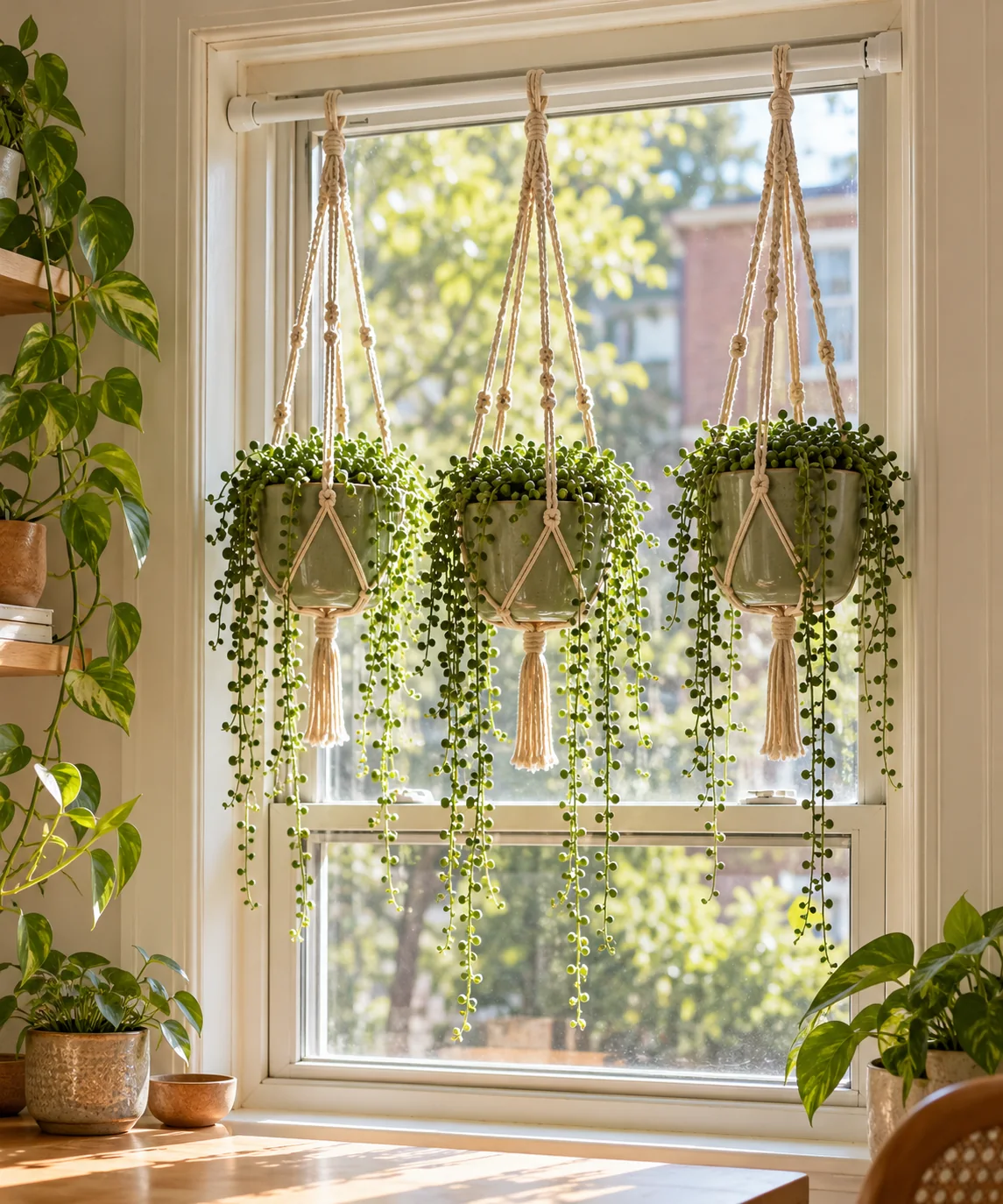
Evaluate Window Casing and Structural Suitability
Before considering any pressure-mounted hardware, inspect the construction of your window recess. Tension mechanisms require solid, unyielding structural surfaces, such as sound architectural timber or firmly anchored masonry, to hold position under lateral force. Hollow vinyl trim, unreinforced plastic casings, and standard drywall corners can flex, bow, or crush under compression, causing the rod to lose grip unexpectedly. Examine the frame for secure anchoring, surface levelness, and finish condition, noting that slick gloss paint or failing finishes provide poor traction for rubber end pads.
Understand Hardware Limitations and Fall Hazards
Standard friction tension rods are designed for lightweight textile curtains and lack mechanical stops or structural anchors. Hanging potted plants introduces dynamic downward mass that can dislodge friction-held rods without warning, risking broken window panes, damaged trim, or injury. If you choose to use tension systems, verify whether the manufacturer explicitly permits suspended downward loads and check their documented weight capacity. Where regular hanging plants are desired, permanently anchored ceiling hooks or mechanically fastened window brackets offer far greater security than friction-based bars.
Select Minimal Containers and Featherweight Materials
If displaying greenery from an adaptable bar, container mass must be kept minimal. Choose tiny plastic liners housed within ultra-lightweight woven cord, thin bamboo cachepots, or spun aluminum sleeves rather than heavy terracotta, stoneware, or glass vessels. Air plants, dried floral stems, or artificial trailing botanicals avoid the water retention issues that add sudden weight to live potted plants. Always factor in the combined weight of hangers, cords, soil, and moisture when cross-referencing manufacturer specifications.
Plan Safe Placement Away From Moving Parts
Position any window rod so it does not obstruct window latches, sliding sashes, or window crank mechanisms. Ensure hanging foliage and cords remain completely clear of glass edges and operating hardware so windows can open for room ventilation without snagging delicate vines. Distribute lightweight items across the length of the bar rather than clustering items in the center, which increases downward deflection. Avoid positioning suspended displays directly over high-traffic walk paths, seating, or delicate furnishings.
Manage Moisture Off-Site and Inspect Regularly
Adding water to suspended containers while in place introduces direct weight spikes and can saturate window trim, causing wood rot or finish damage. Always remove hanging vessels entirely from the window area to hydrate plants over a sink, allowing all excess water to drain thoroughly before rehanging. Regularly inspect the tension bar for signs of slipping, pad compression, or frame shifting. If the mechanism requires frequent tightening or shows any sign of downward creep, discontinue use immediately and transition plants to windowsill trays or fixed mounts.
YOUR STARTING POINT
A little checklist.
Original editorial guidance. Images are AI-generated concepts, not photographs of completed projects. Our sources and approach.
Questions to consider
Are standard tension rods safe for hanging live potted plants?
Most standard tension rods rely solely on friction and are engineered only for lightweight curtains. Potted plants, damp potting soil, and water can exceed friction limits, leading to sudden falls that can shatter glass or injure occupants. For live potted displays, mechanically anchored wall or ceiling brackets provide reliable support.
Can tension rods damage painted or vinyl window frames?
Yes. The lateral pressure required to hold a tension rod can crack hollow vinyl casings or crush drywall returns. Additionally, rubber end caps can adhere to or discolor painted wood surfaces over time, especially in sun-exposed window frames where heat softens paint finishes.
What lightweight greenery alternatives work best on adaptable rods?
Ultra-lightweight options such as tillandsia (air plants) in wire spirals, dried botanicals, paper foliage, or featherweight faux vines display attractive greenery without introducing heavy potting soil or water weight that could compromise the rod's grip.