Warm Neutral Living Rooms · THE GUIDE
Divide a Shared Living Room with an Open Cubed Bookshelf
Carving out distinct zones in a multipurpose living area does not require building permanent partition walls or sacrificing natural daylight. A low, open-backed cubed shelving unit establishes an intentional boundary between a comfortable sitting room and an active craft table while letting illumination travel freely. Using warm wood finishes, soft woven textures, and balanced negative space, this freestanding division preserves the cohesive, airy atmosphere of a neutral room. Careful attention to traffic lanes and visual density ensures both zones feel complete, fully functional, and visually connected.
Jump to the checklist ↓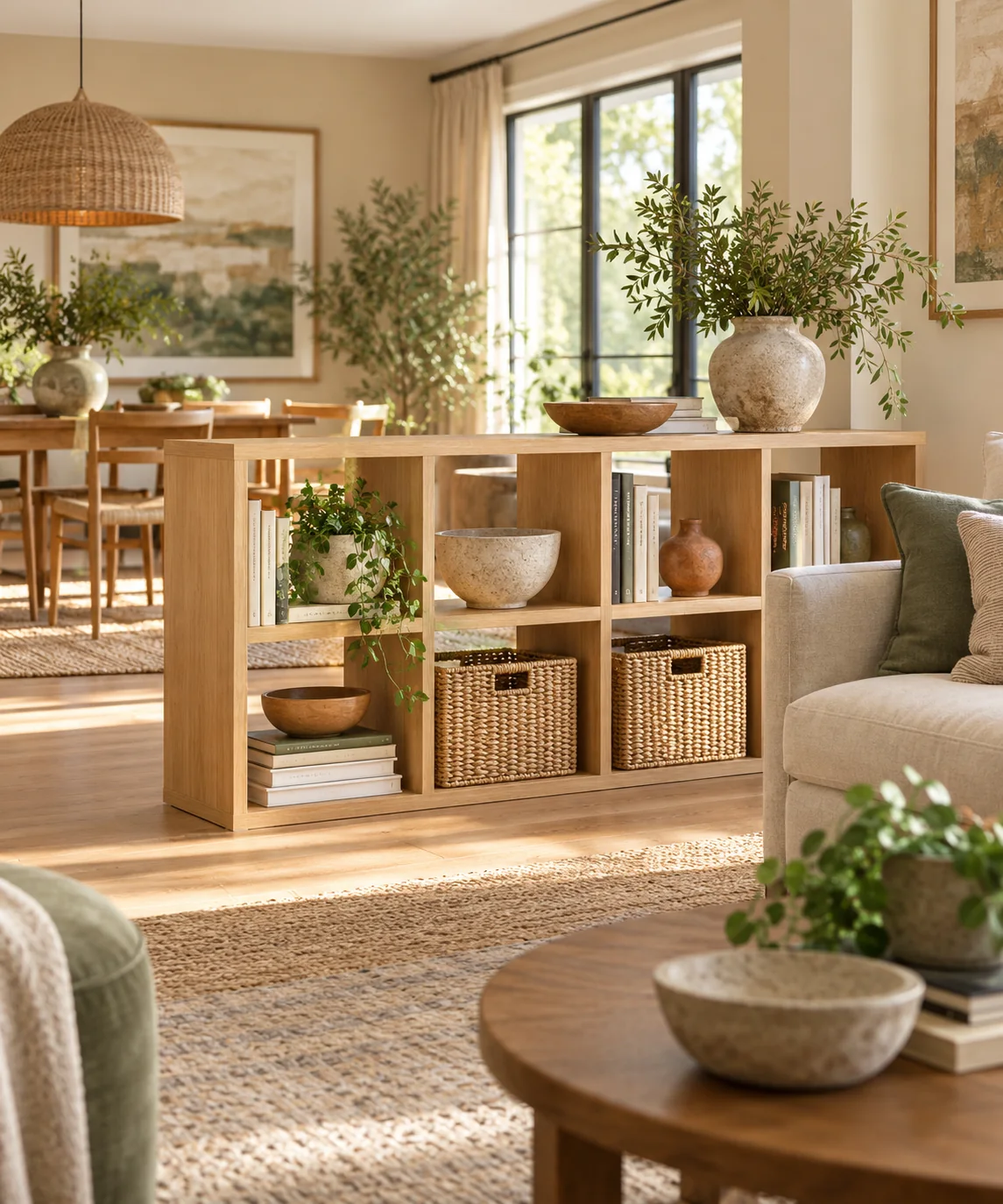
Mapping Pathways and Assessing Proportions
Before placing a shelving unit across a shared living area, evaluate standard movement patterns between designated zones. Ensure sufficient walking clearance remains between the bookcase and surrounding furniture so moving between the sitting area and work zone feels unconstrained. A low-profile unit creates a clear psychological boundary while keeping open sightlines across the entire room. Testing the footprint first with painter's tape on the floor allows you to verify that nearby doors, drawers, and chairs operate without obstruction.
Distributing Open and Enclosed Storage
An open shelving unit acting as a room partition exposes storage compartments to both sides of the space. Balancing open cubbies with fitted fabric or woven bins allows you to manage visual clutter effectively. Use opaque bins on lower tiers to conceal loose supplies, cords, and everyday items that look disorganized when viewed from the lounge. Reserve higher compartments for curated decorative pieces, pottery, and small stacks of books to maintain a balanced, intentional appearance from every angle.
Preserving Sightlines and Natural Illumination
To allow daylight from exterior windows to reach interior spaces, avoid packing every shelf compartment to capacity. Leaving open negative space within select cubbies lets natural light filter across the room division without casting heavy shadows. Arranging denser objects toward the outer edges of compartments allows sunlight to travel through the open core. Light wood finishes, pale painted surfaces, and translucent glassware further encourage ambient reflection across both zones.
Double-Sided Styling for Balanced Views
Because a partition bookcase lacks a solid back panel, every displayed item must look presentable from both directions. Stack books horizontally with neat fore-edges visible from one side, or alternate facing orientations across different compartments. Stick to a coherent neutral palette—such as warm stone, cream, and natural wood tones—to visually tie the sitting and craft zones together. Thoughtful placement ensures neither side feels like an unfinished utility surface.
Assessing Stability and Everyday Upkeep
Freestanding furniture positioned in open floor areas requires strict attention to manufacturer stability instructions. Placing denser items on the lowest shelves helps lower the center of gravity, but low storage does not eliminate tip-over risks. Check manufacturer specifications to verify whether a specific unit is certified for freestanding room divider use, and inspect flooring for levelness. Dust both faces regularly with a dry cloth, and attach felt pads beneath rough ceramics to prevent scratching the shelf finish.
YOUR STARTING POINT
A little checklist.
Original editorial guidance. Images are AI-generated concepts, not photographs of completed projects. Our sources and approach.
Questions to consider
What shelf height is best for dividing a multipurpose room?
Low-profile units that sit roughly around waist height provide an effective visual boundary while seated, maintain clear sightlines across the space, and allow light to circulate freely between functional zones.
How can I hide irregular supplies in an open divider?
Incorporate opaque storage bins made from woven seagrass, canvas, or smooth felt into the compartments. These bins conceal tools and paperwork while presenting a calm, uniform texture to both sides of the room.
Can cube shelving units safely stand in the middle of a room?
Check the manufacturer guidelines before placing any shelving unit away from a wall. Many tall and mid-height bookcases require wall anchoring to prevent tipping; only use units explicitly rated by the manufacturer for freestanding use, and keep overall height modest.