Rental-Friendly Decor · THE GUIDE
Divide a Studio Apartment with a Freestanding Linen Screen
In an open studio apartment, creating visual boundaries between the sleeping space and daily living zones can be challenging without causing damage to leased walls or ceilings. A freestanding linen folding screen offers an immediate, reversible partition that softens interior acoustics while diffusing ambient room light. Unlike tension rods or ceiling-mounted tracks that risk scuffing plaster, a three- or four-panel hinged screen stands independently on the floor. Planning your layout around proper walking clearances and natural window exposure ensures the space remains functional, airy, and distinct without compromising your security deposit during lease termination.
Jump to the checklist ↓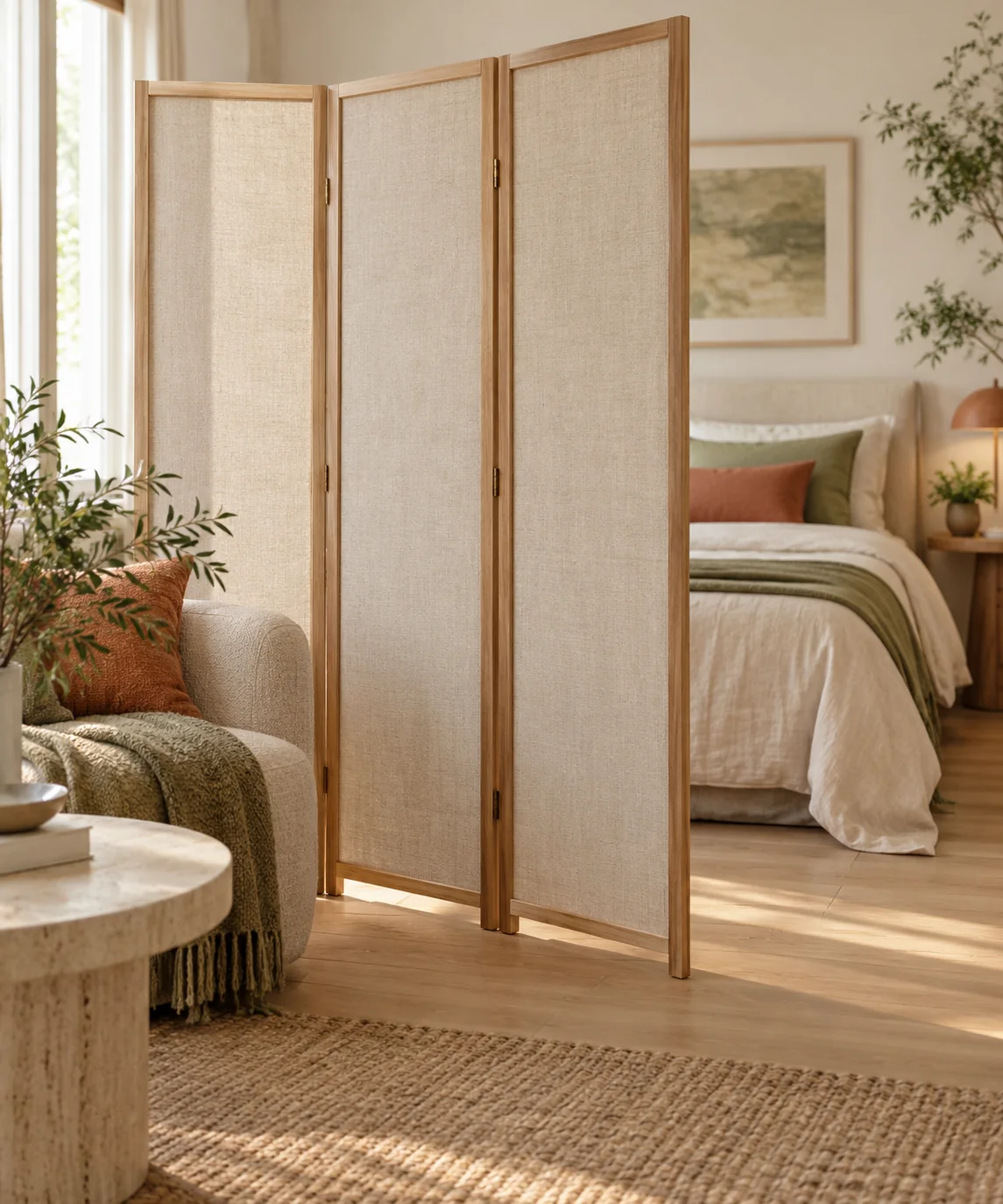
Assessing Floor Space and Walkway Flow
Before introducing a partition, observe how you move through your apartment during daily routines. A folding screen relies on an accordion profile to remain upright without mechanical wall attachments, which naturally expands its floor footprint. Plan sufficient clearance between the screen panels and adjacent furniture—such as the edge of your bed or sofa—so walking routes remain natural and unconstricted. Maintaining comfortable pathways prevents accidental contact in dim lighting and keeps primary exits unobstructed. Position the screen well clear of active heating vents, radiators, and interior door swings where sudden drafts or movement could destabilize it.
Choosing Fabric Density and Panel Articulation
Linen screens come in varied weaves, from semi-sheer open knits to backed heavyweight flax. An unbacked mid-weight linen balances privacy with daylight transmission, preventing the divided sleeping corner from feeling dark or isolated. Check that the frame features two-way brass or steel hinges, allowing panels to bend both forward and backward. This flexibility lets you adjust the screen configuration to wrap slightly around the foot of the bed or create an L-shaped reading nook that shields the mattress from the front entry.
Arranging Low-Profile Base Stability
Freestanding panels remain upright through geometric tension rather than mechanical fasteners. Avoid extending a folding screen completely flat, as an unbent screen lacks lateral balance and can tip easily from accidental contact or room drafts. Position the panels in a consistent zig-zag arrangement that provides a broad, stable footprint. If your apartment has smooth hardwood, vinyl, or laminate flooring, adhere non-skid rubber or felt pads beneath each foot. These pads provide subtle grip against floor drift while protecting delicate floor finishes from surface scuffs.
Layering Lighting and Complementary Furniture
Position lighting thoughtfully to complement the partition without overcrowding surrounding floor area. Placing a warm, low-wattage accent lamp on a bedside table behind the screen produces an ambient glow through semi-opaque linen without casting harsh direct light into the main living zone. In the adjacent space, placing a low credenza or small shelving unit alongside the partition line visually reinforces the boundary. Keeping surrounding furnishings relatively low helps sightlines feel open while maintaining the separation between functional areas.
Routine Maintenance and Seasonal Adjustments
Fabric panels accumulate ambient airborne dust over time, particularly in compact multi-functional homes. Vacuum the linen surfaces periodically using a clean upholstery brush attachment on low suction, working gently from top to bottom. For light surface marks, consult the screen maker's care tag; spot-clean with a lightly water-dampened microfiber cloth after testing an inconspicuous area first. When you need extra space for entertaining or seasonal reorganizing, simply fold the lightweight screen flat and store it upright inside a closet or behind a wardrobe.
YOUR STARTING POINT
A little checklist.
Original editorial guidance. Images are AI-generated concepts, not photographs of completed projects. Our sources and approach.
Questions to consider
How do I keep a folding screen stable without wall anchors?
Arrange the panels in an alternating accordion or staggered angle profile rather than a straight line. The varied footprint creates inherent stability on level floors, and adding non-skid pads under the feet helps prevent sliding on smooth surfaces.
Will a linen screen block conversation noise in a studio?
Linen screens help soften room echo and light ambient sound through surface diffusion, but they cannot provide acoustic soundproofing. They serve primarily as visual partitions between different living functions.
Can I place a folding screen near heating equipment?
Keep screens safely away from active radiators, baseboard heaters, and heating registers. Heat exposure can dry out wood frames, loosen hinge hardware, or pose an obstruction hazard in small living areas.