Small Kitchen Organization · THE GUIDE
Divided Wooden Box for Sorting Cloth Napkins and Dish Towels
Shallow utility drawers often turn into disheveled, chaotic catchalls when cloth napkins, waffle dish towels, and flour-sack cleaning cloths are shoved inside without structural boundaries. Stacks quickly topple, edges get caught in drawer glides, and finding a lint-free glass towel becomes an exercise in frustration. Placing a divided wooden organizer box inside the drawer brings order to kitchen textile storage. By compartmentalizing different fabrics and adopting upright rolling or filing techniques, you maximize vertical space, protect clean textiles from sliding, and streamline everyday table setting and cleanup routines.
Jump to the checklist ↓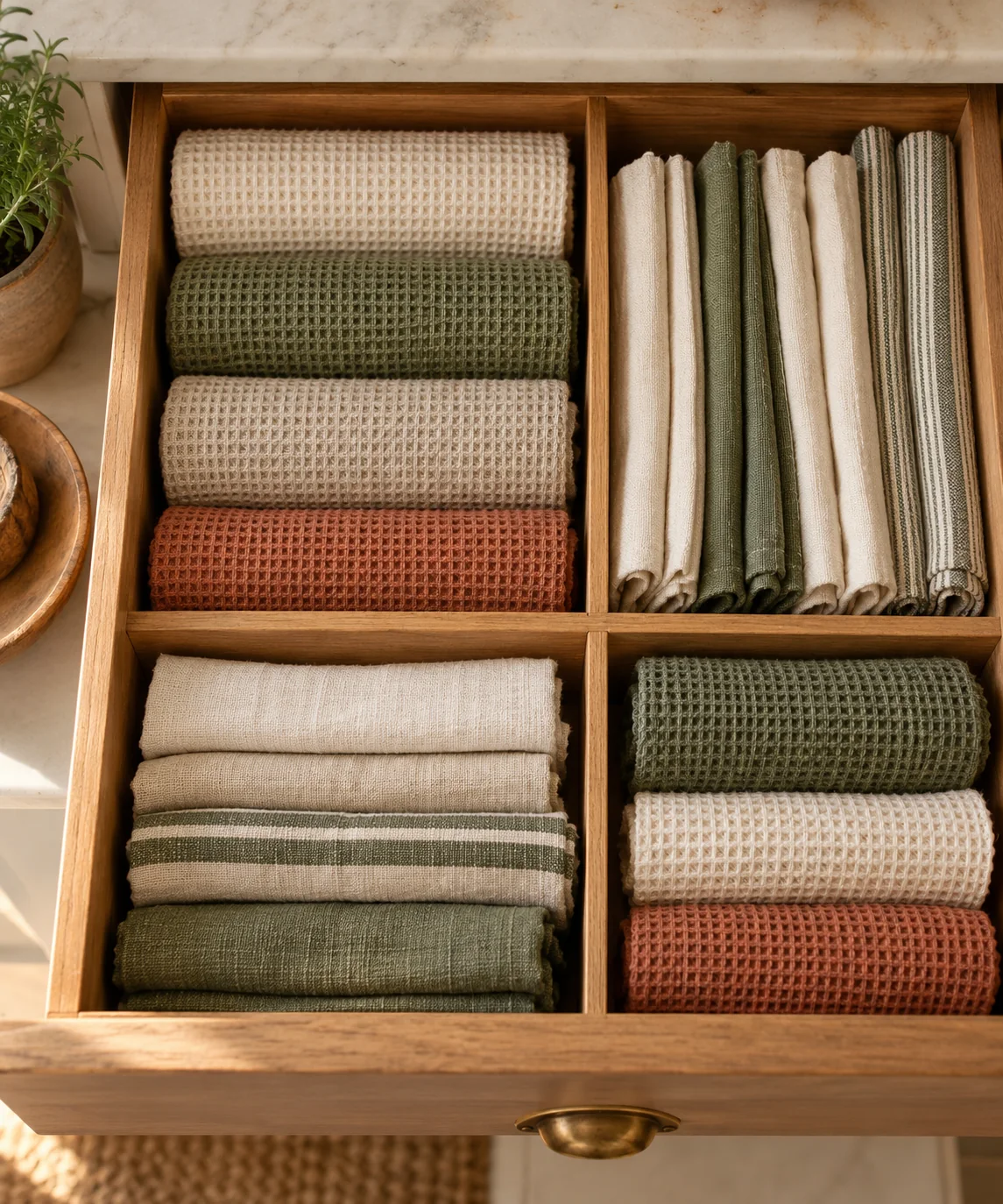
Evaluating Shallow Drawer Depth and Usable Volume
Measure your drawer’s interior height carefully before selecting or building a divided wooden box. Shallow utility drawers often provide only three to four inches of vertical clearance below the cabinet face frame. A divider box with low side walls—roughly two to three inches high—keeps fabrics contained while preventing edges from grazing the cabinet frame when opening. Confirm the full interior drawer length and width so the box drops in securely without shifting back and forth whenever the drawer is pulled open.
Implementing the File-Fold and Roll Methods
Traditional horizontal stacking causes drawer jamming because users must lift top layers to reach bottom items, dislodging neat folds. Instead, fold everyday cloth napkins into compact rectangles and stand them vertically like index cards in divided compartments. For thick waffle-weave or terry dish towels, roll them tightly into cylindrical bundles seated side by side. This vertical arrangement makes every single cloth visible at a glance and allows single-handed removal without disturbing neighboring linens or causing tall piles to collapse.
Separating Linens by Task and Material
Keep distinct linen varieties strictly separated across internal compartments to prevent kitchen cross-contamination. Dedicate one section entirely to pristine, lint-free flat-weave towels reserved exclusively for drying glassware and clean cookware. Use a secondary compartment for heavy waffle dishcloths meant for wiping countertops. Reserve a separate division for formal or everyday cloth napkins to keep meal linens isolated from greasy cleaning cloths. This structural sorting ensures family members grab the correct textile instantly without second-guessing cleanliness or purpose.
Testing Division Spacing with Temporary Boxes
Before investing in fitted hardwood drawer boxes, test your daily linen storage ratios using repurposed shoeboxes, tea tins, or cut cardboard cartons. Arrange these makeshift dividers inside the drawer and observe your household's usage patterns over a week of cooking and dining. Note whether you run out of napkin space faster than towel slots. Adjusting partition widths in cardboard first guarantees that your final divided wooden insert perfectly mirrors your actual rotation of kitchen laundry.
Maintaining Wood Condition and Laundry Hygiene
Clean, dry storage conditions preserve both wooden containers and natural linen fibers. Store only completely dry napkins and towels inside the box; lingering dampness in enclosed drawers encourages mildew and warps wood joinery. Every few months, lift the organizer out of the drawer to vacuum out stray lint or food crumbs trapped underneath. Wipe the wooden partitions with a dry or lightly dampened cloth, letting the organizer air out completely before reloading your freshly laundered textiles.
YOUR STARTING POINT
A little checklist.
Original editorial guidance. Images are AI-generated concepts, not photographs of completed projects. Our sources and approach.
Questions to consider
How can I keep the wooden box from sliding inside the drawer?
Place a cut-to-size sheet of non-adhesive, open-weave silicone drawer liner underneath the wooden box. The grip prevents the organizer from sliding toward the back of the drawer whenever you close it quickly or pull firmly.
Can I store damp dish towels in this divided wooden organizer?
No, never place damp towels in enclosed wooden organizers. Trapped moisture quickly promotes bacterial growth, unpleasant musty odors, and can warp the wood box. Always hang damp towels on a hook or bar to dry fully before storage.
What wood type works best for kitchen linen drawer inserts?
Hardwoods like beech, maple, or bamboo work exceptionally well because their dense grain resists splintering and snagging delicate napkin threads. Avoid aromatic raw cedar, which can transfer potent botanical scent oils into eating napkins and drying cloths.