Rental-Friendly Decor · THE GUIDE
Double Hanging Capacity with an Add-On Closet Extender Rod
Standard rental closets frequently come equipped with a single fixed wooden hanging rod, leaving vertical space underutilized beneath everyday garments. Drilling new hardware into rental closet walls often violates lease terms or requires repairs upon move-out. An add-on closet extender rod creates a secondary horizontal hanging tier suspended from the existing upper rod without permanent fasteners. By hanging from the primary pole using adjustable straps or metal brackets, this accessory helps organize shirts, folded trousers, and skirts, improving hanging efficiency within the limits of existing closet hardware.
Jump to the checklist ↓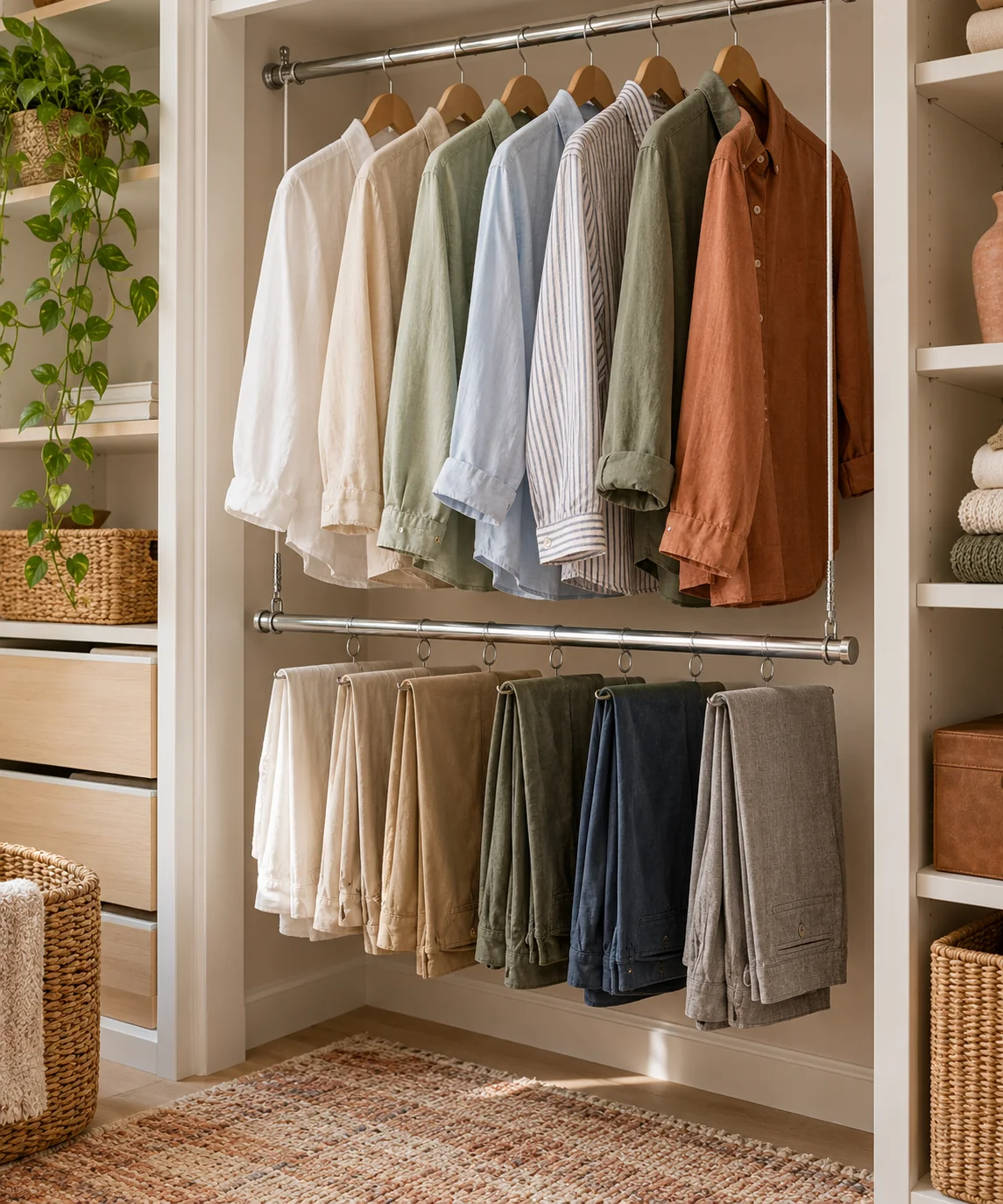
Evaluating Vertical Clearances and Wardrobe Needs
Before purchasing an extender rod, measure the vertical space available between your existing hanging pole and the closet floor. A dual-tier arrangement requires enough height for garments to hang naturally on both levels without dragging or bunching. Check the lengths of your typical wardrobe items, such as button-down shirts, blazers, and folded trousers on hangers. Consolidating full-length garments like coats and dresses to one side leaves an unobstructed vertical drop on the other side to accommodate the secondary bar.
Respecting Closet Rod Weight Limits
Suspending a second rod concentrates all additional clothing weight onto the existing primary closet rod, its end brackets, and its wall anchors. In rental units, closet rods vary widely in mounting quality and load capacity. Adding heavy items like winter overcoats, thick denim, or damp garments can strain the top rod and pull brackets loose. Check property management guidelines or closet hardware manufacturer ratings before loading down the rack, and reserve the suspended extender bar for lightweight clothing such as casual tops and light trousers.
Adjusting Height and Maintaining Balance
Most extender units use adjustable chains, notched metal uprights, or telescoping cords that hook over the primary closet pole. Setting both suspension sides to identical lengths is necessary to keep the lower bar horizontal and prevent hangers from sliding to one side. Aim to leave reasonable clearance between the hems of top-tier shirts and the lower crossbar to allow smooth hanger movement. After adjusting the suspension brackets, give the bar a gentle check to ensure it hangs level before adding clothing.
Organizing Garments for Smooth Access
Pairing a two-tier hanging arrangement with slim, uniform hangers helps maximize horizontal space while preventing overcrowding. Overstuffed closet bars restrict airflow and make it difficult to browse without pulling adjacent garments off their hangers. Group similar clothing types together, such as shirts on the upper level and coordinating folded pants or skirts below. If your closet allows, using an extender rod across only a portion of the main rod preserves full-length vertical space for dresses and long outerwear.
Ongoing Maintenance and Practical Cautions
Because extender rods are suspended fixtures, they require periodic inspection to ensure stability. Periodically check the upper hooks for signs of friction, wear, or tilt against the main rod, and verify that the lower crossbar remains securely seated in its supports. If you notice the primary closet rod bowing or the wall brackets loosening under load, immediately remove garments to relieve stress and consult property management regarding safe hanging capacity. Regular dusting of the bar keeps garments clean when sliding hangers back and forth.
YOUR STARTING POINT
A little checklist.
Original editorial guidance. Images are AI-generated concepts, not photographs of completed projects. Our sources and approach.
Questions to consider
Could an extender rod pull down the existing closet bar?
If overloaded, the combined weight of two tiers of clothing can exceed the capacity of rental closet brackets or drywall anchors. Keep heavy coats on other storage fixtures, use the lower bar for lightweight garments, and avoid overloading the primary pole.
How do I prevent the extender hooks from scratching the main rod?
Choose models with rubberized or plastic-coated hooks. If using bare metal hooks over a painted or finished wood rod, placing small pieces of felt or protective tape over the contact points can help prevent surface scuffs.
What should I do if clothing on the lower rod drags on the floor?
Shorten the suspension straps or chains by several notches to raise the lower rod. You can also reserve the bottom tier for folded pants hung over standard hangers, which take up less vertical length than untucked shirts or skirts.