Kitchen Herb Gardens · THE GUIDE
Double-Hung Window Sash Shelf for Mid-Height Natural Light
Standard kitchen window sills quickly become overcrowded, yet the upper portion of a double-hung window offers abundant, unobstructed daylight. Installing a removable clear acrylic shelf along the horizontal meeting rail doubles your growing capacity without altering trim or blocking operational sash locks. Mid-height window placement elevates culinary herbs directly into the strongest natural light stream, where rays are uninterrupted by exterior patio railings or deep interior walls. With careful container sizing, attention to seasonal thermal shifts against window glass, and disciplined drainage practices, a sash shelf creates a compact, highly productive micro-garden right at eye level.
Jump to the checklist ↓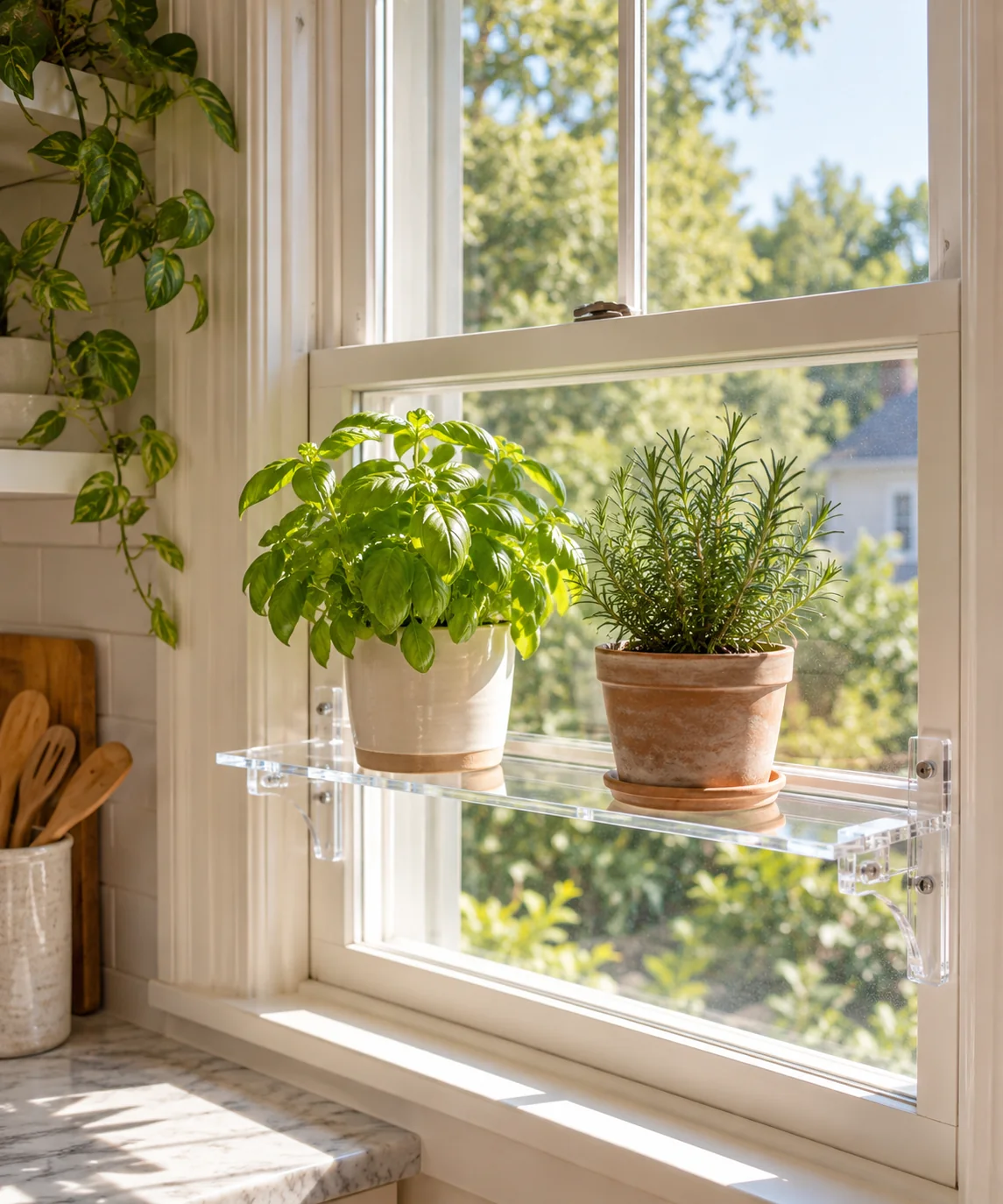
Evaluating the Sash Rail and Lock Mechanism
Double-hung windows feature a horizontal meeting rail where upper and lower sashes interlock. Before choosing a shelf, inspect this rail to ensure it provides a flat surface capable of supporting bracket contact without obstructing the central cam lock. The shelf assembly must rest securely without interfering with emergency egress or window ventilation. Removable brackets engineered for sash ledges slide into place without driving screws into window frames, preserving vinyl seals and historic wood jambs while maintaining total reversibility.
Optimizing Mid-Height Solar Exposure
Window sills often lose direct sunlight early as exterior porch roofs, outdoor shrubs, or deep sills cast long shadows across lower panes. Positioning herbs along the center sash elevates plants into uninterrupted sun for several additional hours daily. This elevated daylight zone is ideal for light-demanding culinary herbs like basil, oregano, and coriander. Regularly monitor leaf temperature during intense summer afternoons, as glass panels amplify solar radiation and can scorch tender foliage resting directly against the pane.
Weight Limits and Container Dimensions
Sash shelves rely on cantilevered support along narrow timber or vinyl rails, requiring strict adherence to weight boundaries. Restrict your display to two or three compact containers measuring no larger than three and a half inches in diameter. Select lightweight acrylic, resin, or thin ceramic cups over heavy stoneware pots. Keep container height modest so top-heavy greenery does not tip when windows open or close. Distribute pots evenly along the horizontal acrylic platform to maintain level balance.
Managing Glass Temperature and Condensation
Glass conducts outdoor temperatures rapidly, creating extreme microclimates throughout the year. During winter mornings, cold drafts drop down the interior pane; in summer, intense radiant heat builds near the glazing. Maintain at least one inch of clearance between plant foliage and the window glass to prevent leaf tip burn or frost damage. Regularly wipe away condensation that gathers along the acrylic shelf base, preventing standing moisture from contacting window sash seals or dripping down the pane.
Watering Routines and Acrylic Care
Clear acrylic scratches easily and shows water mineral deposits if moisture evaporates on its surface. Choose containers with integrated saucers or solid cachepot exteriors that house internal slotted pots. Always lift vessels off the sash shelf to water them over your kitchen sink, ensuring moisture never trickles into window tracks or balance springs. Clean acrylic surfaces using a soft microfiber cloth dampened with plain water, avoiding abrasive scouring pads or harsh solvents that cause plastic clouding.
YOUR STARTING POINT
A little checklist.
Original editorial guidance. Images are AI-generated concepts, not photographs of completed projects. Our sources and approach.
Questions to consider
Will a sash shelf stop my double-hung window from locking?
Properly sized removable shelves leave the central cam latch unobstructed. Ensure the bracket width sits clear of the locking hardware so you can engage the window lock fully without removing the shelf.
Can herbs touch the window pane directly?
No. Direct contact with glass exposes foliage to extreme temperature swings, causing heat scorch in summer and frost chill in winter. Maintain at least one inch of air space between foliage and glazing.
How much weight can a window meeting rail support safely?
Keep total weight under five pounds distributed across the shelf. Use two or three small plastic or thin ceramic pots rather than heavy stoneware to prevent stressing sash cords, balances, or vinyl rails.