Patio Seating Ideas · THE GUIDE
Drafting-Height Garden Work Perch Beside a Raised Trough
Tending elevated garden troughs offers practical accessibility for many gardeners, but prolonged standing during detailed tasks like seed sowing, thinning, or record-keeping can become tiring. Pairing a raised planter with an elevated drafting-height outdoor stool can create a comfortable, flexible work area on a patio or terrace. This arrangement allows individuals to sit while keeping planting surfaces accessible, reducing the need to stoop. By considering stool proportions, stable footing, and personal reach, you can arrange a functional, reversible seating spot alongside your garden trough.
Jump to the checklist ↓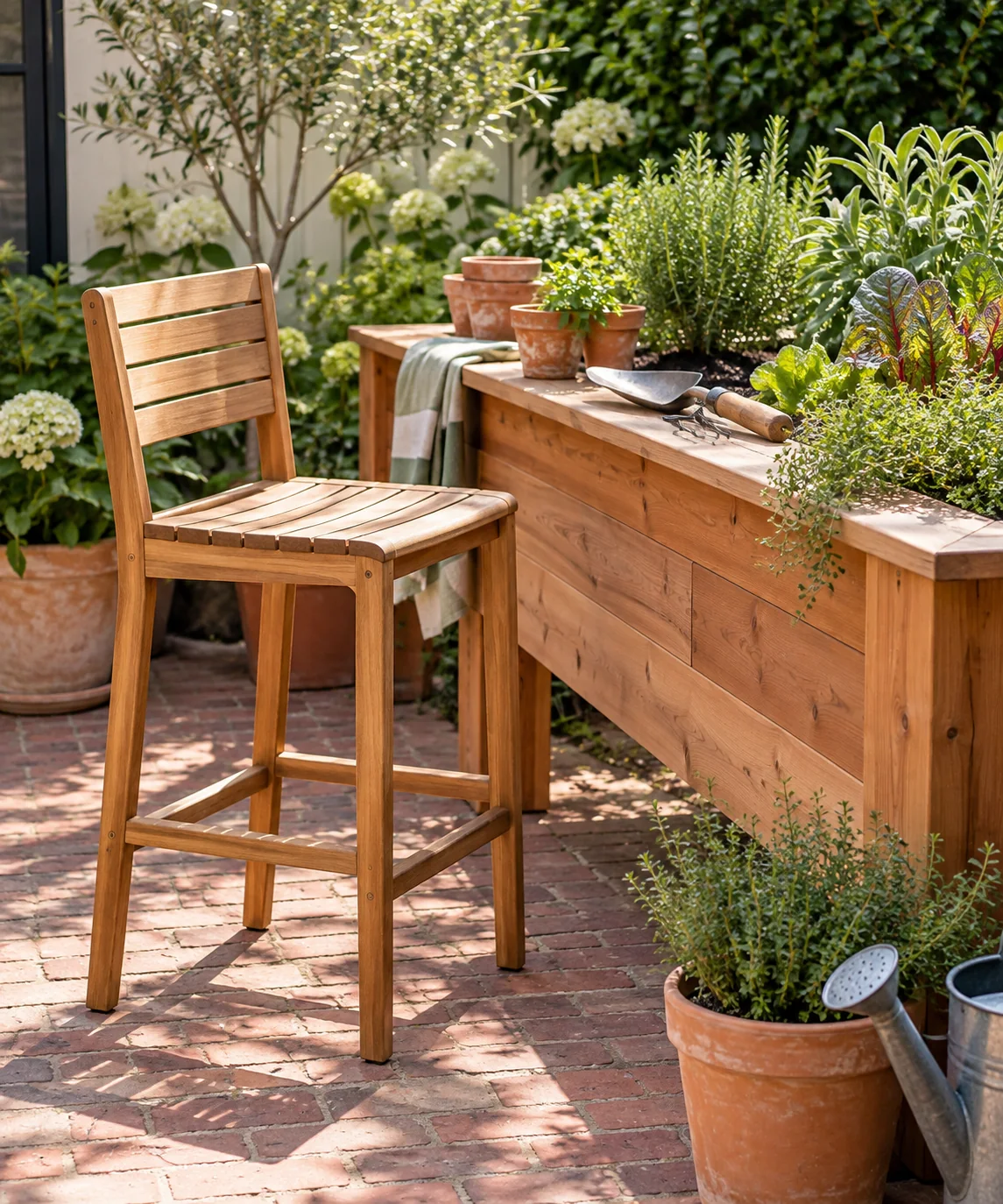
Assessing Stool Proportions Beside Planters
Raised planter troughs vary widely in height, often measuring around thirty inches or taller depending on the model. When choosing an elevated perch or stool, measure the height of your specific planter rim before selecting furniture. As a general starting point, aim for a seat that places your forearms in a relaxed position near the work surface without hunching your shoulders. Because individual body proportions and planter depths differ, test potential seat heights with adjustable seating or temporary supports before committing to a permanent purchase.
Footrests and Knee Space Considerations
Elevated seating naturally leaves feet off the ground, making a supportive footrest rung or ring valuable for sustained comfort. Look for stool designs that include sturdy, manufacturer-installed lower rungs suited to your leg length. Additionally, evaluate the clearance beneath the planter trough. Planters with open framework or recessed legs permit closer seating, whereas solid-sided box troughs require sitting parallel or angling the stool outward to avoid bumping knees against the cabinet face.
Organizing Work Surfaces Responsibly
A planter rim offers limited surface area, so organizing supplies safely helps keep potting tasks orderly. Rather than balancing seed packets, markers, or shears on narrow ledges or soil beds where they can fall, utilize freestanding side tables or portable garden caddies placed nearby. If you use removable trays or clip-on organizers, verify that they do not tip under load or obstruct drainage holes. Keeping hand tools and recording materials within comfortable arm reach minimizes awkward reaching while seated.
Stability and Surface Irregularities
Taller stools naturally carry a higher center of gravity than standard patio chairs, which means uneven ground can cause noticeable instability. Patios made of textured stone, cobblestone, or wide paver joints require careful stool placement. Choose models with broad leg stances and inspect each foot to ensure it rests evenly on solid ground. Threaded leveling glides can help balance minor patio slopes, but the furniture should always feel secure and wobble-free before you begin precision garden tasks.
Weather Exposure and Seasonal Storage
Outdoor seating exposed to sun, rain, and fluctuating temperatures requires regular maintenance and sensible off-season care. Materials such as powder-coated metals or weather-rated woods like cedar or teak still benefit from routine cleaning and manufacturer-recommended protective finishes. Because elevated stools are more prone to tipping in strong wind gusts, store them indoors, in a garden shed, or laid horizontally in a protected area when severe weather or winter dormancy approaches.
YOUR STARTING POINT
A little checklist.
Original editorial guidance. Images are AI-generated concepts, not photographs of completed projects. Our sources and approach.
Questions to consider
Can standard indoor bar stools be used beside an outdoor garden trough?
Indoor stools are rarely constructed to withstand exterior moisture, direct sunlight, or temperature swings. Outdoor-rated perches feature weather-resistant finishes, drainage-friendly hardware, and materials that resist premature rot, rust, or joint failure.
How can I tell if a planter rim is wide enough to rest tools on?
Narrow planter rims typically provide inadequate stability for tools or containers. It is safer to use an adjacent small utility table or a separate caddy rather than risking dropped tools, damaged plants, or spilled soil.
What stool features offer the best mobility for patio gardening?
A lightweight frame allows you to reposition the stool easily along the trough length, while swivel seats can facilitate reaching without moving the base. Always confirm the stool remains stable on your specific patio paving before leaning or turning.