Container Vegetable Gardens · THE GUIDE
Drainage Tray Base System for Clean Tile Balconies
Container vegetable gardening on tiled balconies often results in stubborn water rings, algae buildup, and mud streaks beneath large planters. Elevating containers on solid pot feet positioned inside shallow gravel trays provides an organized, protective barrier for outdoor flooring. When containers rest directly on outdoor tiles, trapped moisture damages grout lines and restricts oxygen flow to the bottom drainage holes. Raising the planter allows water to drain freely into a contained pebble layer while circulating air underneath. This dual-layer system catches escaping soil fines, prevents runoff from staining floor tiles, and keeps balcony vegetable setups clean and easy to maintain.
Jump to the checklist ↓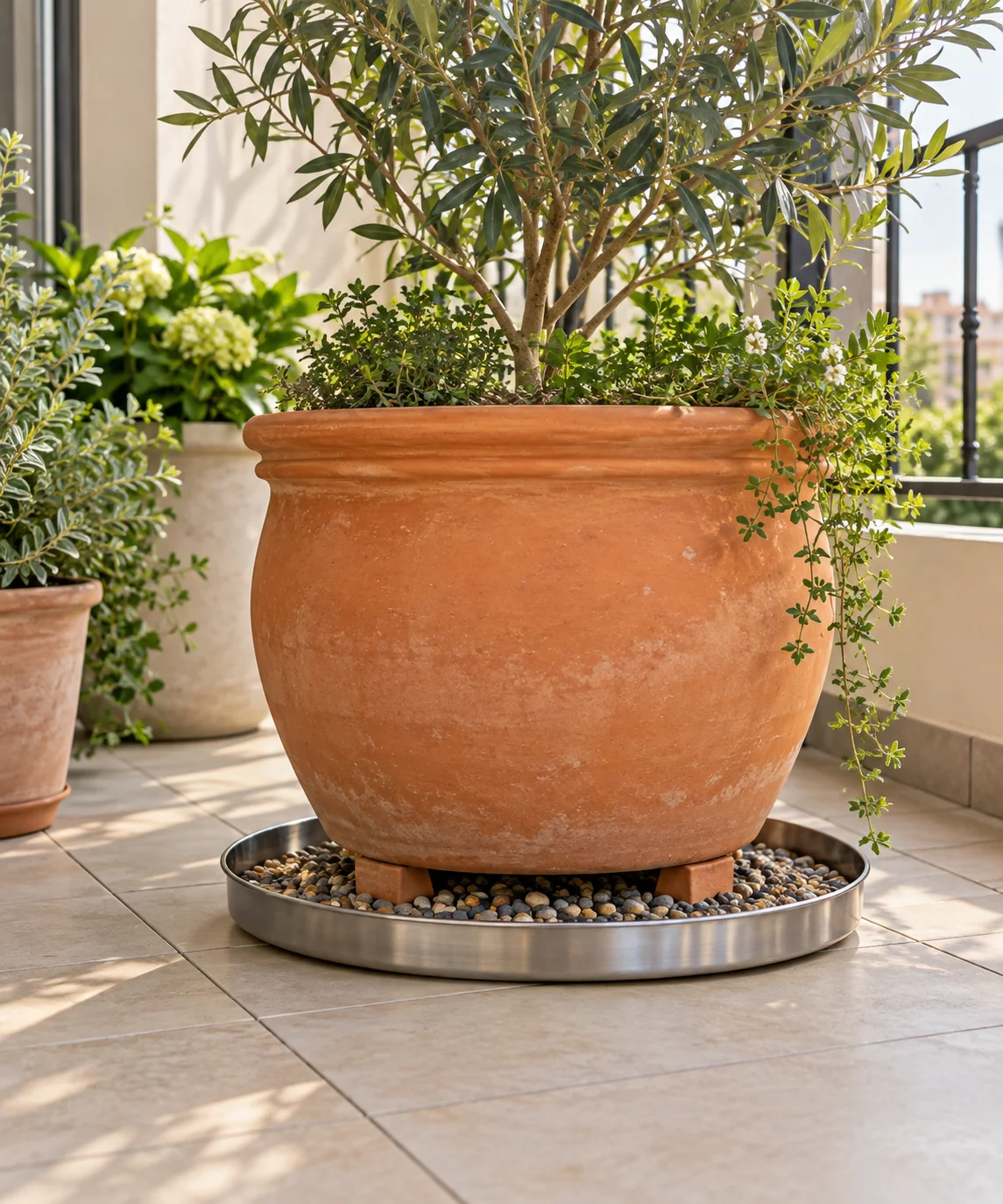
Balcony Weight Verification and Tray Selection
Balcony structures have strict live-load limits that govern how much cumulative weight can be placed on the deck. Before assembling gravel-filled drainage trays and large containers, consult your property management, homeowners association rules, or an appropriate structural professional to verify permissible load limits for your specific outdoor space. When selecting trays, choose shallow, durable polypropylene or corrosion-resistant stainless-steel pans that sit completely flat and match the diameter of your container base without spilling into walkways. Fill the tray with a shallow, single layer of smooth pea gravel or tumbled river stone to catch runoff without adding unnecessary bulk.
Pot Feet Placement and Planter Balance
Place three or four commercial ceramic or vulcanized rubber pot feet evenly spaced within the tray across the gravel bed. Position the empty planter firmly onto the feet, making sure the bottom drainage hole sits entirely open and unblocked. Elevating the pot slightly above the tray surface allows excess irrigation water to drip freely and prevents the planter base from resting in collected runoff. Test the planter for steady balance before filling it with growing media, confirming that the container does not wobble, shift, or lean when gentle side pressure is applied.
Soil Filtration to Prevent Runoff Mud
Vegetable containers can shed fine compost particles and dark tannins during heavy irrigation, creating muddy residue that discolors tiles and clogs tray gravel. Cut a small piece of porous landscape fabric or synthetic mesh screen and place it directly across the interior drainage opening prior to adding potting mix. This permeable layer allows water to filter through while keeping loose peat, perlite, and soil particles inside the container. Trapping sediment at the pot base keeps the gravel bed clear and minimizes muddy streaks across outdoor flooring.
Moisture Drainage and Tile Care
Water accumulating in the pebble pan disperses across the surface of the stones where it naturally evaporates into the surrounding air. Keeping water contained within the pan protects underlying tile grout from prolonged saturation, which helps limit efflorescence, mineral crusts, and slippery surface film. Ensure the drainage tray itself does not scratch the tile or trap condensation beneath its base. Placing low-profile rubber pads or glides beneath the pan allows air to circulate under the tray and helps protect tile glazes from friction marks.
Routine Inspection and Seasonal Maintenance
Check drainage pans regularly during active growing periods, especially following heavy rainfall, to verify that collected water is evaporating rather than stagnating. If sediment accumulates over several months, move the pot off its feet, empty the stones into a bucket, and rinse them clean with fresh water before returning them to the tray. Never allow drainage water to rise above the pot feet, as prolonged immersion can saturate the base of the potting media. Simple seasonal cleaning keeps the system hygienic and protects your balcony surfaces.
YOUR STARTING POINT
A little checklist.
Original editorial guidance. Images are AI-generated concepts, not photographs of completed projects. Our sources and approach.
Questions to consider
Can mosquitoes breed in the water collected in the gravel tray?
Shallow water in sunny outdoor trays often evaporates within a couple of days, but standing water after repeated rains can attract pests. Inspect trays weekly and empty any lingering drainage before insects can complete a breeding cycle.
Do gravel trays make planters too heavy for typical balcony limits?
Gravel, water, and saturated potting soil all add substantial mass. Because structural capacities vary significantly between buildings, always check balcony weight limits with building management or a qualified professional rather than estimating load safety yourself.
Can I use this drainage setup on wooden balcony decking?
This setup can be used on wood decking if adequate airflow is maintained. Placing small risers beneath the tray prevents trapped moisture from resting against the wood planks, though building and decking manufacturer guidelines should always be confirmed first.