Indoor Plant Styling · THE GUIDE
Dress an Unused Fireplace Hearth with Layered Foliage and Ceramics
An unlit, decorative fireplace hearth often becomes an awkward architectural void during warmer months or in homes where chimneys are decommissioned. Dressing this recessed alcove with potted foliage and ceramic vessels provides visual depth, replacing shadows with varied organic textures. Because fireboxes inherently receive diminished natural light, successful styling relies on tolerant plant selections combined with deliberate vertical layering. Integrating matte earthenware alongside leafy plants softens hard brick or tile surfaces without permanent alterations. By treating the firebox floor and outer hearth as a stepped display zone, you can establish a balanced composition that remains functional and easy to maintain.
Jump to the checklist ↓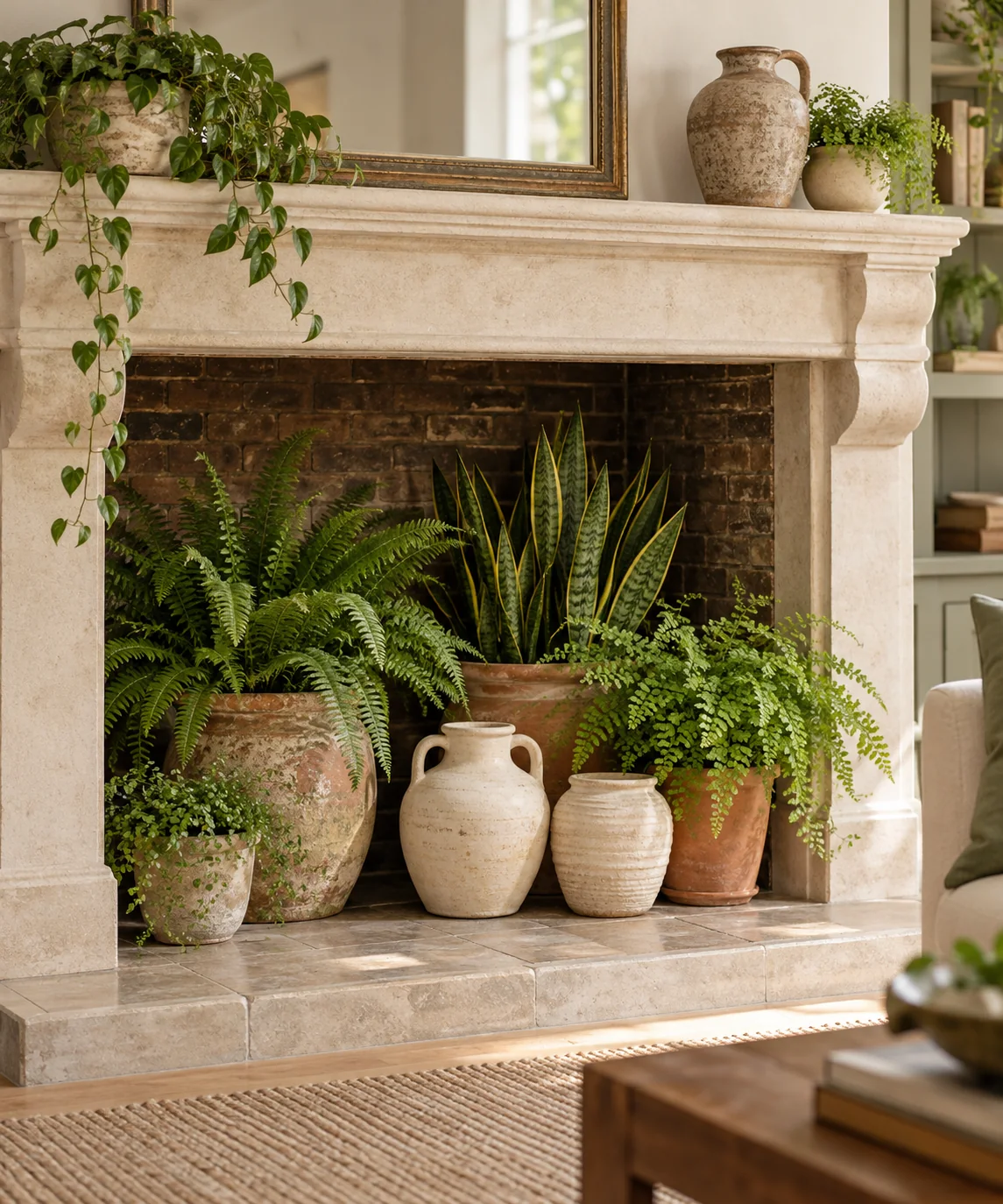
Light Assessment and Species Choice
Recessed hearths receive drastically reduced natural light compared to open rooms, often resembling the dim understory of a forest. When selecting plants, prioritize species proven to endure low, indirect exposure rather than flowering varieties. Snake plants and cast-iron plants tolerate shaded conditions gracefully while maintaining structured vertical foliage. Boston ferns can work if the room receives bright ambient light, softening the hearth opening with arching fronds. Treat this interior footprint as a low-light staging zone, avoiding sun-craving species that stretch or drop leaves.
Step-Level Staging and Elevation
A flat arrangement inside an alcove looks sunken and cluttered. To create architectural depth, vary pot heights using stable, flat-surfaced risers such as solid wooden blocks or inverted earthenware crocks. Position your tallest foliage at the rear corners of the firebox to frame the space without crowding the center. Place mid-height planters in front, stepped downward toward the outer hearth rim. This layered elevation ensures every plant catches ambient light while transforming a dark void into a structured botanical focal point.
Blending Ceramics for Balance
Pairing living greenery with empty, neutral ceramics creates visual breathing room, preventing the hearth from feeling like an overcrowded plant nursery. Smooth stoneware jugs, cream earthenware crocks, and textured unglazed urns provide light-toned contrast against dark iron firebacks or blackened brickwork. Cluster two or three ceramic pieces of varying heights alongside foliage clusters rather than scattering them evenly. The matte finishes reflect soft ambient room light into the recess, highlighting the sculptural outlines of both leaves and clay.
Protecting Hearth Surfaces from Moisture
Fireplace hearths made of unsealed slate, brick, or historic encaustic tiles are easily stained by trapped water. Never place nursery pots directly onto masonry. Instead, set each grower pot inside a fully glazed ceramic container or atop a deep, non-porous saucer. Attach adhesive felt bumpers or cork rounds beneath every vessel to permit micro-ventilation and prevent scratches. When watering, lift the inner grower pot out entirely or use a moisture meter to avoid overflowing the saucers hidden deep within.
Routine Maintenance and Rotation Plan
Dim hearth environments slow plant metabolism, which alters normal care routines. Plants placed inside the recess dry out much slower than those on windowsills, meaning you must check soil moisture by touch rather than adhering to rigid calendar schedules. Dust also settles quickly within enclosed fireplace openings; wipe broad leaves monthly with a damp microfiber cloth to preserve light absorption. Rotate recessed plants to a sunnier window for a weekend every few weeks to refresh their vitality.
YOUR STARTING POINT
A little checklist.
Original editorial guidance. Images are AI-generated concepts, not photographs of completed projects. Our sources and approach.
Questions to consider
Which houseplants cope best with the reduced light inside a deep firebox?
Cast-iron plants, snake plants, and ZZ plants tolerate the low ambient light of recessed hearths best. For frilly texture, choose plastic-potted Boston ferns only if your room provides reliable indirect sun, or plan regular rotations.
How do I stop moisture from damaging decorative hearth brick or slate?
Always place pots inside glazed, non-porous drip saucers rather than raw terracotta, which sweats. Add cork mats or felt bumpers underneath each saucer to prevent water condensation and scratches against historic hearth tiles.
How often should plants placed inside a hearth be rotated?
Rotate your plants a quarter-turn weekly to keep growth upright. For deeper, dimmer fireboxes, swap interior pots with plants from brighter windowsills every two to three weeks to keep foliage healthy long-term.