Patio Seating Ideas · THE GUIDE
Drop-Front Planter Perch for Micro Kitchen Patios
In compact outdoor dining areas, permanent garden benches can congest walkways and restrict access to exterior doors. While the idea of folding a temporary seat against a garden feature is appealing, human seating requires dedicated structural engineering and secure footing that standard planter boxes cannot safely provide. Instead of attempting unrated DIY bracket attachments to soil beds, homeowners can look toward purpose-built combination planter-benches or slim, movable resting perches. This planning approach preserves open circulation, respects structural limits, and provides flexible resting spots for tending container gardens without cluttering precious patio floor space.
Jump to the checklist ↓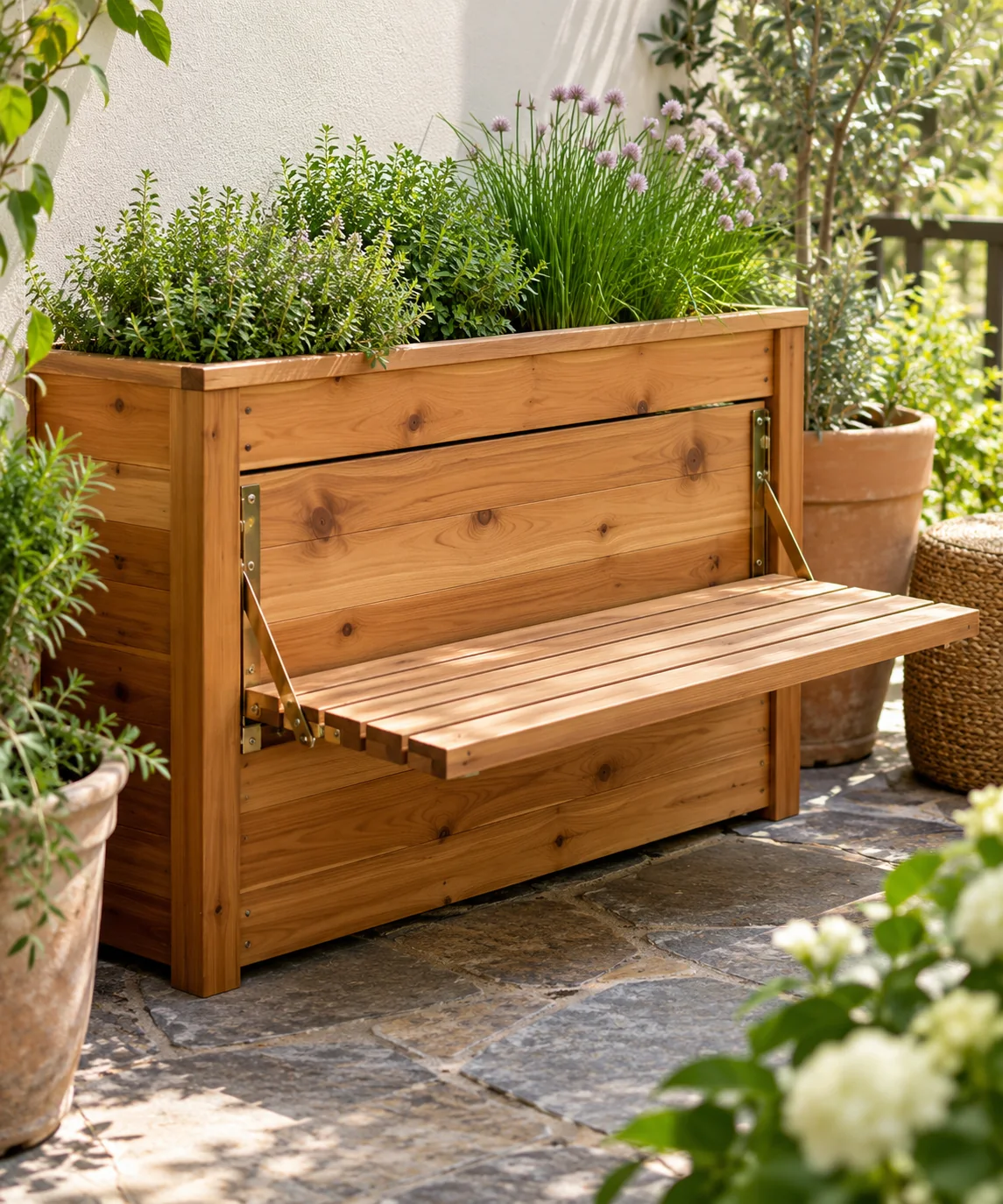
Planning Pathways and Spatial Clearances
Before adding any seating near container plantings, examine the primary footpaths between doors, outdoor faucets, and dining zones. Temporary perches work best when situated outside main circulation corridors where they will not block doors or egress routes when in use. Test potential seating locations by standing or placing temporary cardboard markers on the paving. Rather than adhering to rigid formulas, ensure that household members can walk past comfortably with gardening trays or dining supplies while the seating area is occupied.
Understanding Structural and Load Limitations
A frequent DIY misconception is that a soil-filled planter provides sufficient ballast to support a hinged drop-front seat. In reality, human seating exerts substantial dynamic forces that can loosen fasteners, twist timber framing, or cause unanchored planters to tip forward unexpectedly. Planter boxes are designed to retain soil and moisture, not to serve as structural anchors for human weight. For safe seating, use purpose-engineered combination planter-bench units rated by the manufacturer for adult loads, or rely on freestanding benches.
Selecting Herb Plantings Around Seating Areas
Positioning seating near container plantings lets you enjoy aromatic foliage while taking a brief rest. Compact culinary herbs such as thyme, chives, upright rosemary, and dwarf sage thrive in containers and tolerate occasional accidental contact from shoulders or arms. Avoid spreading plants with delicate stems, thorny canes, or varieties that produce sticky sap that could transfer to clothing. Ensure container drainage drains away from the seating surface to prevent muddy splashes and water staining.
Evaluating Reversible and Movable Seating Options
Rather than mechanically drilling into walls or garden structures, consider reversible seating solutions that preserve flexibility. Slim backless benches, foldable wooden perches, or movable garden stools can be set adjacent to tall planters during harvesting and quickly tucked away when open floor space is needed. This strategy avoids permanent modifications to property structures, eliminates tipping hazards, and lets you rearrange your patio layout as seasonal sunlight patterns shift.
Moisture Management and Hardware Inspection
Planter environments involve continuous moisture, organic matter, and soil microbes, all of which accelerate the deterioration of adjacent wood and hardware. If using an integrated manufacturer-designed bench planter, inspect all structural joints, seat slats, and factory fittings every spring and autumn. Clean away trapped leaves and potting soil from around seating supports to prevent moisture retention, and treat exposed timber elements with breathable exterior wood oils as directed by the product manual.
YOUR STARTING POINT
A little checklist.
Original editorial guidance. Images are AI-generated concepts, not photographs of completed projects. Our sources and approach.
Questions to consider
Can you attach a folding seat directly to a standard wooden planter box?
No. Standard planters are not engineered to resist the dynamic tipping forces or screw-pullout stresses caused by human seating. Attaching a seat to an unanchored planter creates a significant tipping and structural failure hazard.
What is a safe alternative for seating in a very tight patio garden?
Look for purpose-built, factory-engineered planter benches with certified weight ratings, or select a narrow, freestanding garden stool that can be tucked away when not in use.
How do you protect wood seating placed near watered plants?
Ensure planters have isolated drainage pathways that direct runoff away from the seat, avoid splashing wood surfaces when watering, and regularly clean soil debris from contact points.