Container Vegetable Gardens · THE GUIDE
Dual-Trough Space Divider with Trellised Snow Peas
Dividing an elongated balcony into functional zones requires thoughtful planning and reversible elements that respect structural and building rules. Using two parallel rectangular trough planters supporting a freestanding center wire panel provides an adaptable method to distinguish a seating corner from a utility area. Planting vertical snow peas adds a seasonal green screen during cool weather, displaying white blossoms and edible pods. Before assembling multi-container layouts, check building rules and property management guidelines regarding balcony load allowances, approved materials, and required walkway clearances.
Jump to the checklist ↓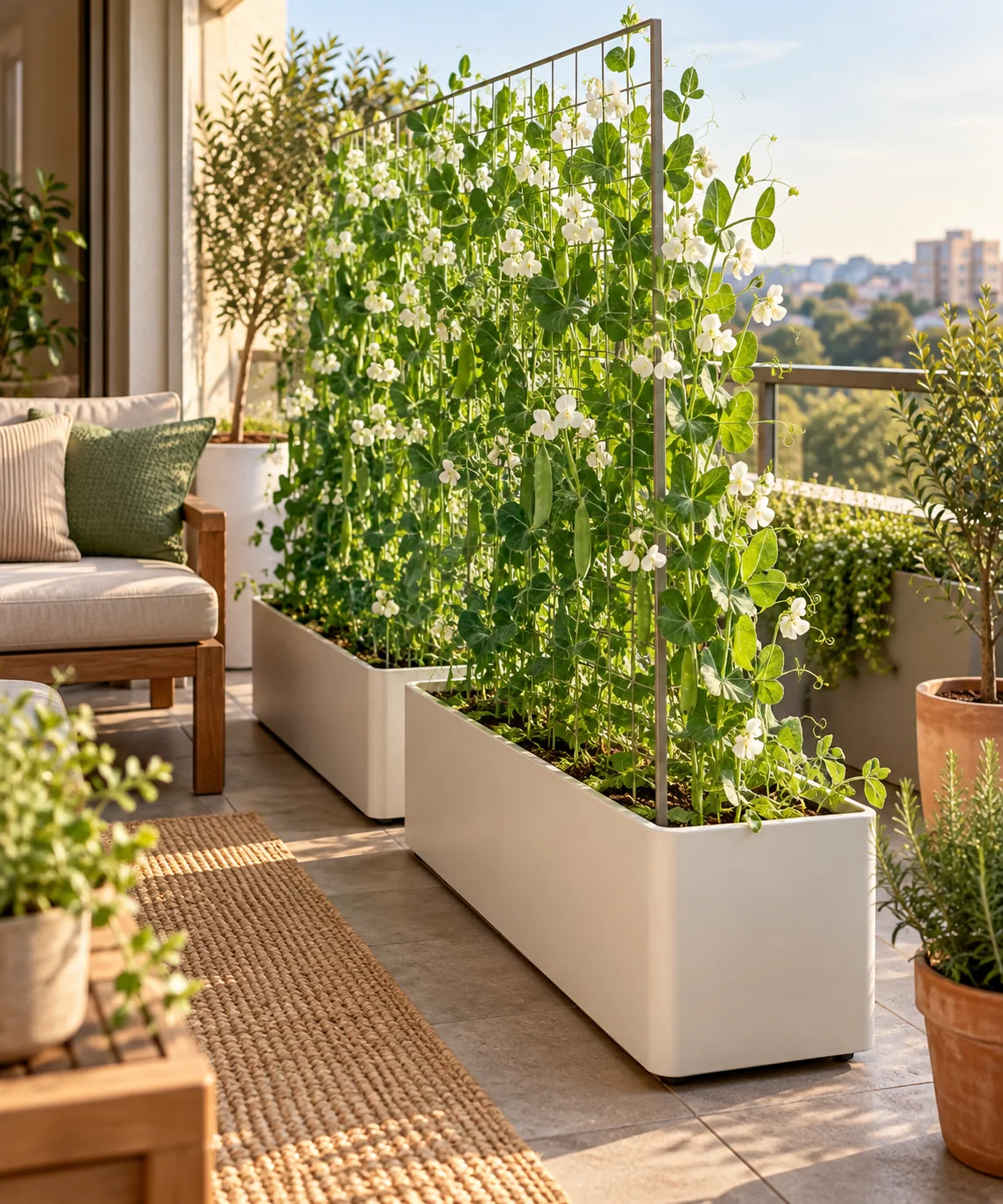
Trough Placement and Zone Planning
Position twin rectangular troughs parallel to one another across the balcony surface to visually mark functional zones. Confirm that the arrangement preserves an unobstructed, comfortable walking path across the balcony floor and complies with local emergency egress and property rules. Avoid setting heavy planters right against railings or in locations that interfere with drainage outlets or balcony access doors. Keeping the containers freestanding ensures they can be rearranged quickly for routine balcony maintenance or building inspections.
Trellis Frame and Mesh Selection
A freestanding wire mesh panel supported directly by internal trough slots or stable base anchors provides vertical climbing area without modifying the building exterior. Avoid drilling into exterior masonry, siding, or balcony railings, as piercing building envelopes can void warranties and violate lease covenants. An open grid mesh allows tendrils to grip easily while reducing surface area compared to solid panels. Wind forces increase at higher elevations, so monitor panel stability in changing weather rather than relying on planter base weight alone.
Substrate Selection and Load Verification
Balcony load capacities differ significantly depending on the age, design, and construction of the structure. Always consult property management or a qualified structural engineer to confirm allowable floor loads before sourcing large troughs. Saturated potting soil, mature foliage, and wet containers weigh substantially more than dry materials. Select a quality potting mix based on peat or coconut coir with perlite to maintain good aeration and drainage without adding dense field topsoil. Pair each trough with an effective drip tray to prevent dirty runoff from cascading down to lower balconies.
Sowing and Guiding Snow Pea Vines
Sow snow pea seeds directly into the prepared troughs in early spring or early autumn, placing seeds spaced along the planting line according to packet instructions. As young shoots produce tendrils, loosely steer them toward the bottom wire rows using gentle twine ties or plant clips. Once peas establish contact with the grid, they climb readily without aggressive tying. Staggering seed sowing between the two troughs by several weeks can extend harvest timing and maintain vegetative coverage over a longer window.
Seasonal Care and Transition Planning
Snow peas thrive in cool conditions and naturally fade once sustained summer heat arrives. Rectangular planters exposed to balcony breezes lose moisture steadily, requiring frequent soil checks to keep the root zone moderately damp without waterlogging. When foliage begins to decline at the end of their lifecycle, cut the vines at the soil surface to avoid disturbing the root profile. Replant the trellis reversibly with warm-season annual climbers or remove the panel during seasonal transitions.
YOUR STARTING POINT
A little checklist.
Original editorial guidance. Images are AI-generated concepts, not photographs of completed projects. Our sources and approach.
Questions to consider
How should balcony wind exposure be managed with this trellis setup?
Freestanding trellises remain vulnerable to unexpected gusts at elevated heights. Place containers where building walls offer some buffer, use open wire grids instead of solid privacy boards, and inspect attachments frequently. If strong storm warnings occur, lower or dismantle removable trellis panels to prevent tipping.
How much sun do trellised snow peas need on a balcony?
Snow peas generally produce best with four to six hours of direct sunlight daily. In partially shaded balcony areas, foliage can remain green and healthy, though blossom counts and overall pod yields will typically be lighter than in fully exposed spots.
What can replace snow pea vines after summer temperatures rise?
Once cool-season peas decline, cut the vines at soil level and replace them with warm-season climbers such as runner beans or miniature indeterminate tomatoes. Ensure any follow-up crops remain within the physical support capacity of your freestanding trellis.