Container Vegetable Gardens · THE GUIDE
Dwarf Blueberry Bushes in Acidic Peat Patio Containers
Blueberries require an acidic growing medium, typically between pH 4.5 and 5.5, which can be difficult to maintain in native garden soil. Growing dwarf blueberry bushes in standalone resin containers solves this issue by isolating the root zone. Resin pots are lightweight, durable, and non-porous, preventing lime leaching that commonly alters soil chemistry in concrete or unsealed terra cotta. Positioned in a sunny corner of a stone patio, an isolated container allows precise control over soil composition, drainage, and seasonal moisture. This arrangement keeps fruit production accessible in modest backyard footprints without disrupting surrounding ornamental landscape beds.
Jump to the checklist ↓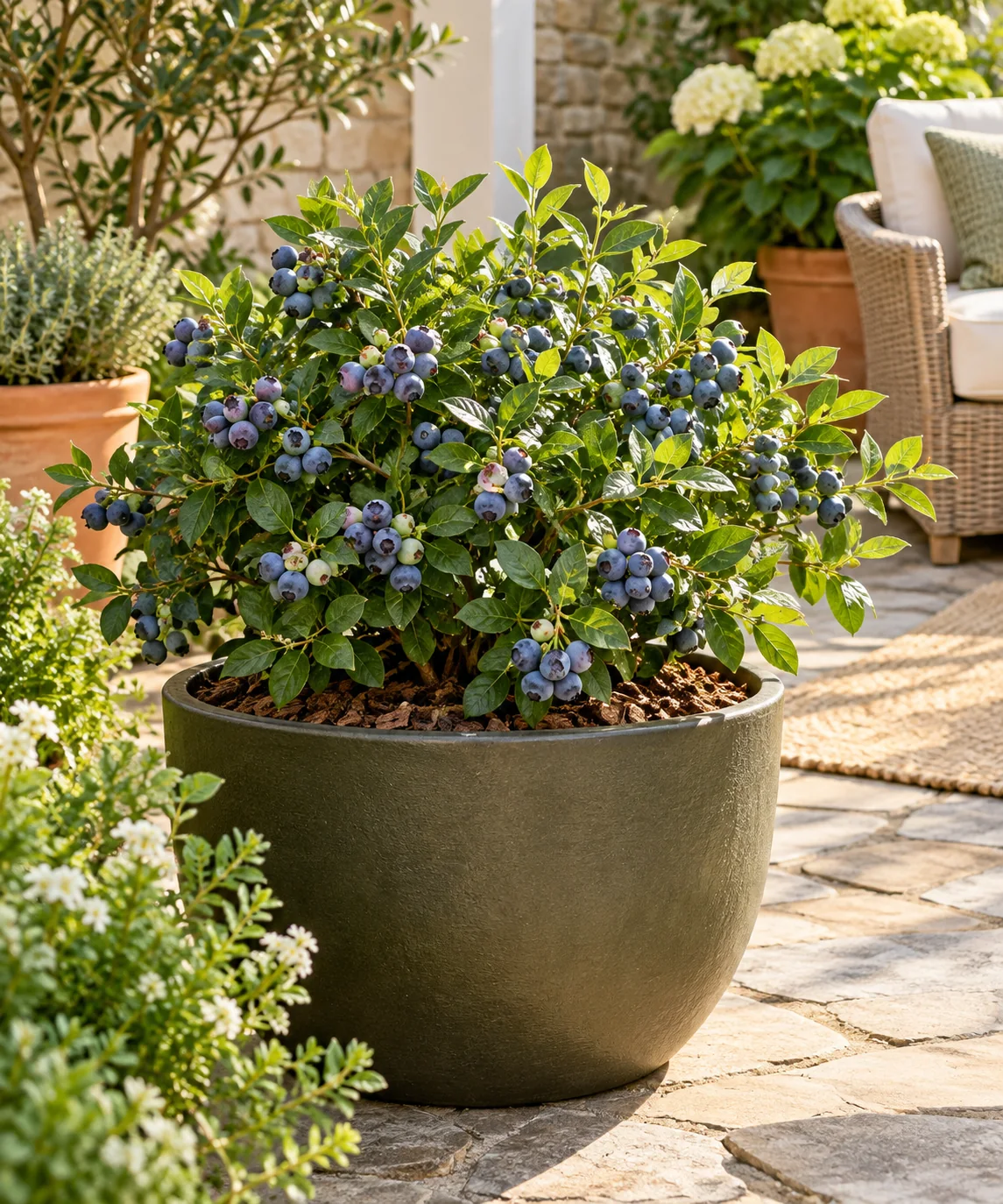
Container Selection and Volume
Dwarf blueberry varieties thrive in containers of adequate volume, generally 10 to 15 gallons or roughly 16 inches in diameter, which accommodates their shallow root structure. Fibrous ericaceous roots spread outward rather than plunging deeply, making broad planters preferable to deep, narrow vessels. Confirm that the pot contains functional, unobstructed drainage holes across the base. Avoid filling the bottom with gravel, as coarse layers hinder water movement through fine container substrates. Placing low-profile pot risers under the base ensures drainage holes remain clear against flat patio stone.
Formulating the Acidic Potting Blend
Fill the planter with a dedicated acidic substrate, such as a blend based on sphagnum peat moss or aged pine bark fines combined with perlite or coarse sand for aeration. Standard general-purpose potting mixes usually have near-neutral pH levels that hinder iron uptake in blueberries, resulting in interveinal leaf chlorosis. Testing the blended mix with a reliable soil pH meter before planting confirms whether it falls within the recommended 4.5 to 5.5 range, allowing adjustments before shrubs are established in the container.
Sun Exposure and Site Selection
Position blueberry containers in a location that receives full sun, aiming for six or more hours of direct exposure daily to encourage flower bud initiation and fruit sweetness. Place pots where they can receive unobstructed light without impeding doorways or primary walking routes, reducing accidental contact with brittle fruiting branches. Ensure adequate open space around the foliage to allow gentle breezes to dry morning dew, observing how surrounding structures cast shade across the patio throughout the season.
Hydration and Water Quality
Uniform moisture is critical for container blueberries because peat-rich media can resist re-wetting once thoroughly dried out. Irrigate thoroughly until excess water drains from the bottom ports, assessing the top inch or two of soil before watering again. Where municipal tap water contains high levels of dissolved carbonates or alkalinity, regular application can gradually raise substrate pH. Gardeners can use harvested rainwater or periodically verify substrate acidity to prevent slow shifts away from optimal acidic growing conditions.
Seasonal Maintenance and Pruning Limits
Young dwarf blueberries require minimal pruning during their first few years, requiring only the removal of crossing, diseased, or damaged twigs during late-winter dormancy. Applying a light surface mulch of pine needles or shredded pine bark helps retain moisture without introducing alkaline materials. Because container root balls experience greater ambient temperature swings than ground soil, monitor winter exposure closely, shifting pots into sheltered patio corners or unheated protected areas if severe extended freezes threaten containerized roots.
YOUR STARTING POINT
A little checklist.
Original editorial guidance. Images are AI-generated concepts, not photographs of completed projects. Our sources and approach.
Questions to consider
Can I use garden soil mixed with sulfur in patio containers?
Garden soil compacts heavily inside containers, impairing drainage and aeration. Elemental sulfur takes months to alter soil chemistry via microbial action. A dedicated peat-and-perlite potting mix establishes the necessary low pH immediately without risking root suffocation.
Do I need two dwarf blueberry plants to get fruit?
Many dwarf cultivars are self-fertile, but growing two compatible bushes nearby encourages cross-pollination. Cross-pollination typically yields larger individual berries and heavier overall harvests without demanding significant extra patio space for the second resin container.
How often should I test the soil pH in the container?
Test the potting mix twice per season using a calibrated probe. Check once in early spring before leaf emergence and once in midsummer. Periodic testing catches pH rise early, especially if using alkaline municipal tap water for routine irrigation.