Container Vegetable Gardens · THE GUIDE
Dwarf Sweet Pepper Display in Terracotta Long Pots
Balcony gardeners often look for ways to cultivate fruiting vegetables within limited footprints while keeping main walkways clear. Arranging elongated terracotta trough planters along sunny interior building walls provides a linear growing area for compact crops. Dwarf sweet pepper cultivars produce fruit on stocky frames that suit the dimensions of these rectangular containers. Unglazed terracotta is naturally porous, which facilitates root-zone aeration and moisture evaporation. However, long terracotta planters holding wet soil add substantial weight and face exposure to outdoor gusts. Careful planning of container weight against building guidelines, along with attentive moisture monitoring and plant spacing, creates a productive culinary display without compromising balcony safety or accessibility.
Jump to the checklist ↓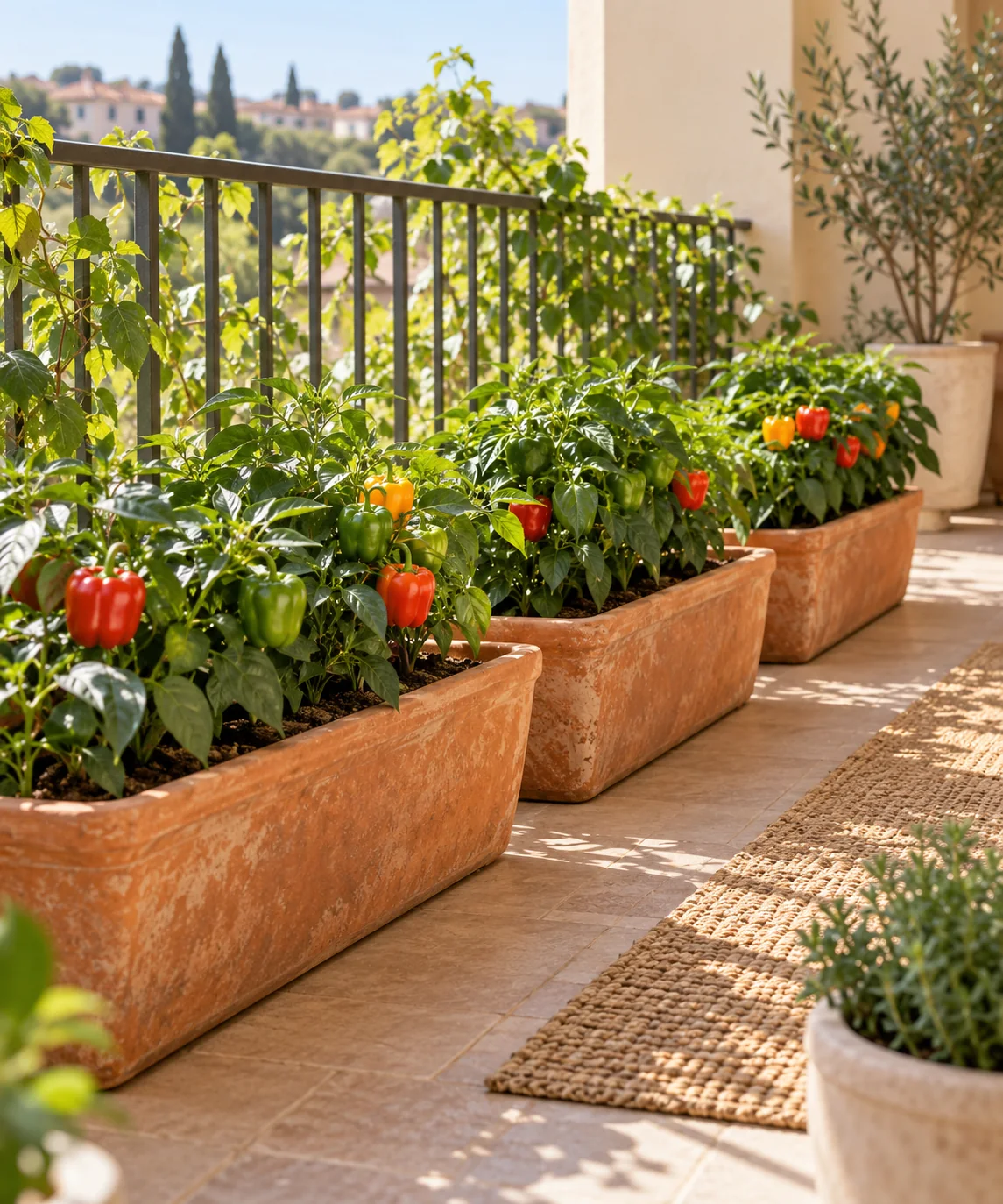
Selecting Proportioned Terracotta Troughs
Choose low, rectangular terracotta long pots that measure at least eight inches deep and eight to ten inches wide to accommodate the lateral root spread of compact peppers. Unglazed terracotta allows air and moisture transfer through its walls, which helps prevent prolonged water saturation around roots. However, filled terracotta troughs are significantly heavier than synthetic alternatives. Before purchasing and positioning multiple large troughs, consult property management or building guidelines to confirm your balcony's permissible load capacity. Ensure every planter includes functional drainage holes along the base so surplus water can exit freely into matching collection saucers without pooling on the deck surface.
Balcony Sunlight and Pathway Planning
Sweet peppers generally perform best with six to eight hours of direct sunlight daily to encourage flowering and fruit development. Observe light conditions across your space to identify floor areas where exposure is strongest throughout the day. Place planters firmly on the floor along solid interior walls rather than positioning them along railing edges or exterior ledges where wind speeds and drop hazards increase. Keep troughs clear of emergency egress routes, entryways, and primary paths, consulting local residential codes and building rules to maintain required walkway clearances across the deck.
Spacing and Potting Dwarf Pepper Varieties
Choose true miniature or dwarf sweet bell pepper cultivars bred to maintain mature heights under eighteen inches. Space transplants approximately ten to twelve inches apart along the length of the trough, providing sufficient room for side branches to develop without overlapping excessively. Use a high-quality, lightweight container potting mix engineered for moisture retention and drainage in edible crops. Fill the trough while leaving approximately one inch of space between the soil line and the container rim, which prevents potting mix from washing over the edges during regular watering.
Supporting Stems Under Fruit Load
Even sturdy dwarf pepper varieties can begin to tilt when holding multiple dense, developing fruits. Insert slender bamboo canes or small wire ring supports adjacent to each plant during initial planting to avoid disrupting root systems later in the season. Secure the main stems loosely to the supports using soft garden twine, leaving adequate slack for stems to thicken naturally. Staking keeps fruit off damp soil, reduces physical strain on branching points during turbulent conditions, and keeps foliage upright for even light interception.
Moisture Management in Porous Containers
Porous terracotta walls allow soil moisture to evaporate more rapidly than non-porous containers, an effect amplified on exposed balconies by heat and air movement. Check soil conditions daily by feeling the top two inches of mix; provide water whenever that upper layer feels completely dry. Water slowly and evenly along the length of the trough until moisture begins draining into the saucers below. Always discard standing runoff from saucers after watering to protect deck flooring, prevent root suffocation, and maintain healthy wet-to-dry soil transitions.
YOUR STARTING POINT
A little checklist.
Original editorial guidance. Images are AI-generated concepts, not photographs of completed projects. Our sources and approach.
Questions to consider
Can standard large bell pepper varieties grow in these long pots?
Standard bell peppers develop extensive root systems and taller branch canopies that generally require larger, deeper containers. In shallow troughs, standard plants quickly become root-bound and top-heavy. Compact dwarf varieties bred specifically for patio cultivation remain more manageable within restricted soil volumes.
How do I prevent terracotta troughs from drying out too rapidly?
Apply a light layer of organic mulch, such as shredded bark or clean straw, over the potting mix surface to slow surface evaporation. Grouping containers near protected interior walls can also reduce the drying effects of direct balcony winds without blocking sunlight.
Do terracotta troughs need protection from balcony winds?
While filled terracotta troughs have noticeable mass, strong balcony gusts can still topple tall foliage or shift narrow containers. Keep troughs set directly on level floor surfaces against primary structural walls, monitor weather forecasts during storm warnings, and avoid elevating long pots on narrow benches or unstable stands.