Container Vegetable Gardens · THE GUIDE
Earthy Ceramic Pot Cluster for Varied Culinary Herbs
Planting culinary herbs in a single shared container often leads to failure because different species require vastly different moisture levels. Unglazed terracotta and porous ceramic vessels provide an ideal balance of breathability and root insulation, but their true operational strength lies in modular arrangement. Grouping individual, mismatched earthenware pots on a sunny patio or deck gives you precise control over irrigation while maintaining a cohesive, organic aesthetic. This approach allows Mediterranean perennials like rosemary and sage to dry out thoroughly between waterings, while adjacent moisture-loving annuals receive the frequent hydration they demand in direct sun.
Jump to the checklist ↓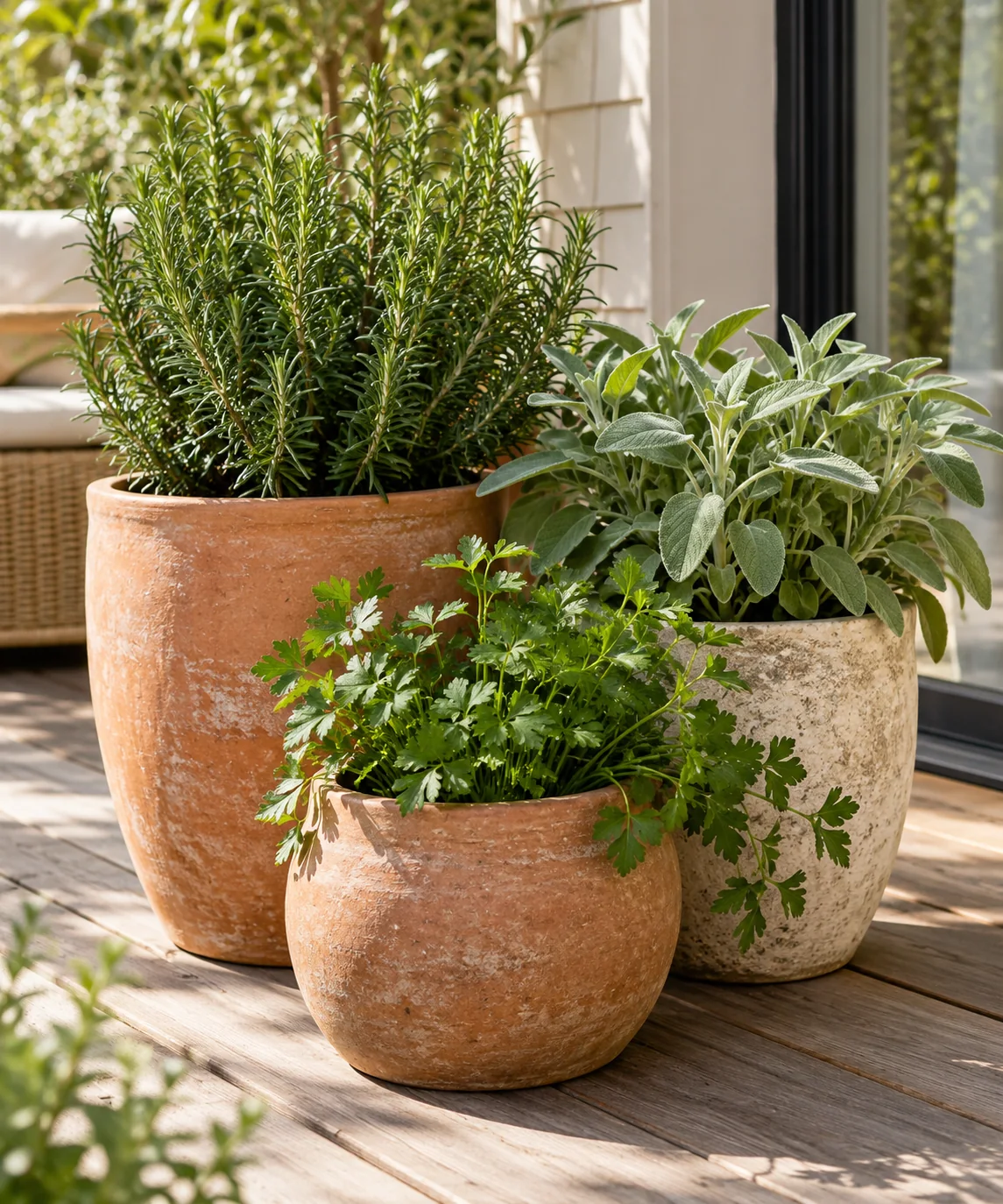
Assessing Vessel Porosity and Volume
Select earthenware pots with distinct wall thicknesses and glaze treatments to match each herb's biology. Unglazed terracotta pulls moisture away from soil rapidly, making it the premier choice for woody herbs like rosemary and sage that develop root rot in stagnant moisture. Lightly glazed or denser stoneware pots slow down evaporation, creating a stable environment for broadleaf herbs like parsley. Always ensure every vessel has an unobstructed bottom drainage hole, filling each pot with a quality potting mix rather than gravel to preserve active root volume.
Mapping Moisture Needs Across Species
Place your individual pots in close visual harmony while treating each container as an isolated microclimate. Position drought-tolerant rosemary and thyme in the warmest, most exposed edge of the grouping where airflow is highest. Tuck parsley and chives slightly inward to shield their containers from rapid wind drying, though all containers must receive full sun. Because their root systems never mingle, you can saturate the parsley thoroughly while leaving the rosemary completely dry, eliminating the common compromises of mixed planters.
Arranging for Sunlight and Air Circulation
Culinary herbs demand at least six to eight hours of direct, unfiltered sunlight daily to produce essential oils and maintain compact growth. When clustering vessels together, stagger pot heights using shallow pedestals or varied pot proportions so taller specimens do not shade smaller neighbors. Maintain at least two inches of open air space between vessel rims. This circulation prevents fungal leaf issues, allows solar warmth to heat the ceramic walls evenly, and lets you rotate individual pots weekly for uniform growth.
Managing Runoff and Surface Protection
Resting porous ceramic vessels directly on wooden decking or painted patios invites trapped moisture, staining, and rot. Pair each pot with its own shallow saucer fitted with small rubber risers or pot feet underneath. This elevates the saucer, allowing ambient airflow beneath the earthenware cluster while catching surplus irrigation. Empty collected water from the saucers fifteen minutes after irrigating, preventing the bottom soil layer from reabsorbing saturated drainage and ensuring unglazed bases do not wick excess moisture upward.
Seasonal Adjustments and Root Inspections
Modular earthenware clusters simplify routine root maintenance and seasonal transitions. By midsummer, active roots may begin circling the interior walls of smaller pots; simply lift the individual vessel to inspect drainage holes without disturbing adjacent plants. If a particular herb outgrows its space or shows heat stress during peak afternoon temperatures, you can shift that single container to temporary dappled shade or step up to a slightly larger pot without excavating or damaging neighboring root zones.
YOUR STARTING POINT
A little checklist.
Original editorial guidance. Images are AI-generated concepts, not photographs of completed projects. Our sources and approach.
Questions to consider
Can I cluster these earthenware pots in a low-light outdoor corner?
No. Culinary herbs like rosemary, sage, and flat-leaf parsley require full, direct sunlight to synthesize aromatic oils and prevent weak, leggy stems. Relocate your pot cluster to an open, south-facing deck or unshaded patio location.
How do I clean mineral deposits off the exterior terracotta walls?
Gently scrub dry exterior surfaces with a stiff nylon brush and a mild solution of warm water and plain dish soap. Rinse thoroughly with clean water, avoiding harsh commercial cleaners that could leach into your potting substrate.
Will terracotta pots crack if left outdoors during freezing winter temperatures?
Yes. Porous earthenware absorbs residual moisture, which expands when frozen and shatters the clay walls. Clean, dry, and move terracotta pots into a frost-free shed or basement storage area before the onset of hard winter freezes.