Kitchen Herb Gardens · THE GUIDE
Edible Flower and Herb Duo Pot for Gourmet Finishing
Combining culinary foliage with edible blossoms in a single broad vessel brings living ingredients directly to a kitchen preparation island. Pairing compact edible pansies or trailing nasturtiums with compatible, gentle herbs like sweet basil or chervil creates a functional harvesting bowl under bright kitchen illumination. Because both components require similar moisture schedules and adequate sunlight, a wide, shallow stone basin allows their root systems to spread horizontally without crowding. This arrangement streamlines finishing dishes with fresh, aromatic garnishes while serving as an organized centerpiece on expansive kitchen workspaces.
Jump to the checklist ↓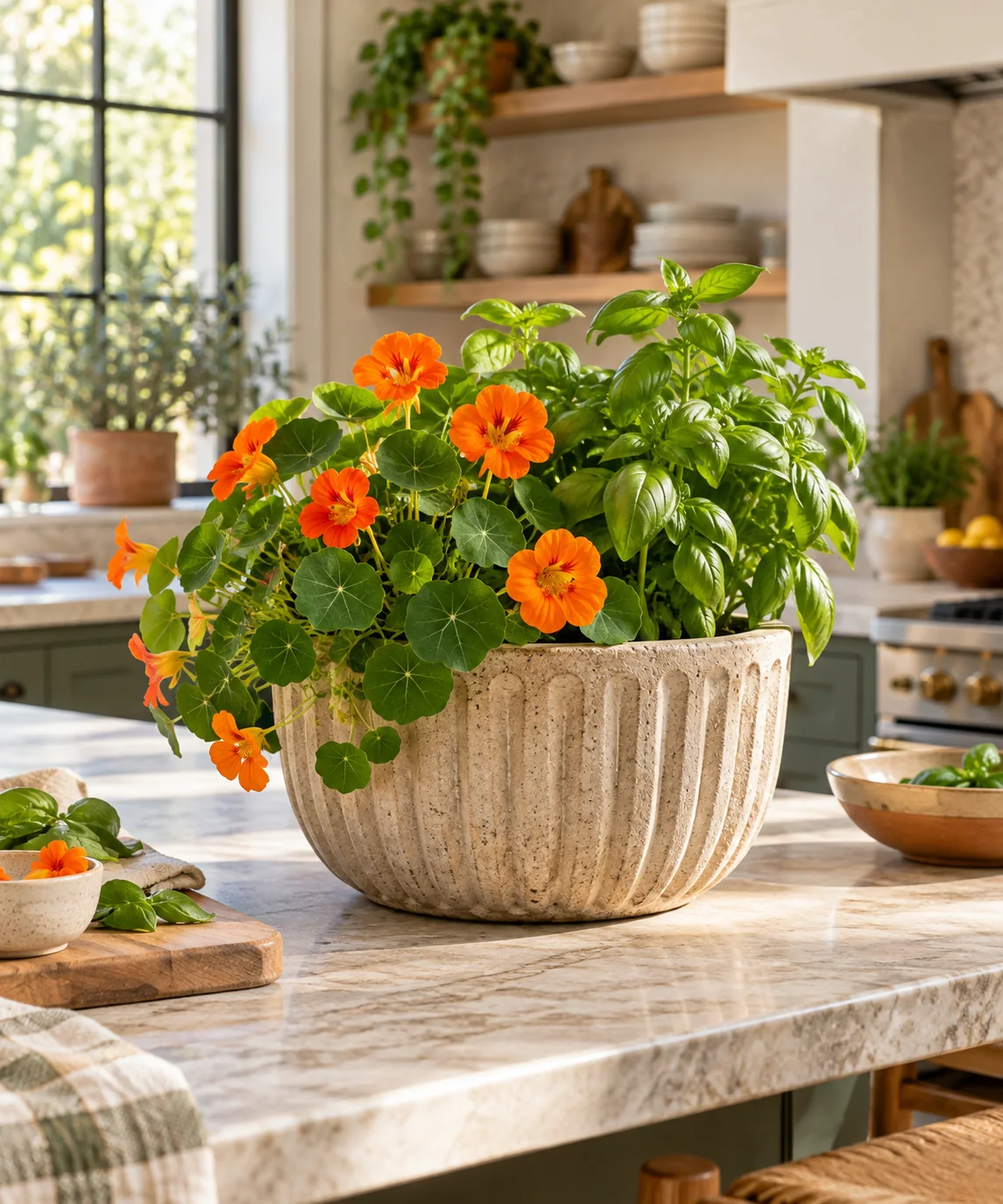
Basin Proportion and Space Allocation
A successful duo planting requires a low, wide stone or composite container measuring at least twelve to fourteen inches across and five to six inches deep. Wide dimensions provide adequate surface real estate for two distinct root systems without demanding excessive soil volume that stays soggy. Divide the planter visually into distinct zones: assign the center or back half to upright herbs, and reserve the front edge for low-growing edible pansies or cascading nasturtium foliage.
Botanical Compatibility Considerations
Pair species with identical moisture and light requirements. Sweet basil and dwarf nasturtiums both thrive in rich, moderately moist soil under strong, warm sunlight. Alternatively, pair cold-tolerant edible pansies with chives or chervil during cooler spring months. Avoid pairing vigorous, drought-loving woody perennials like upright rosemary with moisture-demanding flowers, as their conflicting hydration requirements inevitably lead to root decline in one of the companion plants within shared soil.
Potting Medium and Moisture Balance
Use a high-quality, peat- or coir-based potting mix amended with perlite to maintain loose, well-aerated structure. Because kitchen islands are distant from exterior drainage, use a pot with a central drainage hole seated in a matching stone saucer lined with protective pads. Water the pot evenly with a narrow-spout watering can when the top inch of soil feels dry to the touch, ensuring hydration reaches both the flower and herb root zones.
Kitchen Island Placement and Light
Kitchen islands rarely receive enough natural sunlight unless situated directly beneath a large skylight or adjacent to south-facing glass patio doors. Both culinary herbs and flowering plants require strong direct sun to develop blooms and concentrated aromatic oils. If natural window illumination delivers less than five hours of direct sun to the island counter, relocate the pot to a sunny kitchen windowsill between cooking presentations.
Harvesting Cycles and Regrowth
Harvest edible blossoms and culinary leaves simultaneously using clean micro-tip floral shears. Snip individual nasturtium or pansy flowers just as petals open fully, cutting the stem near the crown to encourage continuous flower bud development. Pinch basil tips above leaf nodes to maintain compact branching. Regular harvesting prevents either plant from becoming leggy, prolongs bloom cycles, and provides crisp, clean garnishes for salads, soups, and plated appetizers.
YOUR STARTING POINT
A little checklist.
Original editorial guidance. Images are AI-generated concepts, not photographs of completed projects. Our sources and approach.
Questions to consider
Can I eat all nasturtiums and pansies grown indoors?
Only consume plants raised specifically from seed with food-safe potting soils. Nursery-bought ornamental flowers often receive systemic chemicals or non-food pesticides not rated for culinary consumption. Start your own plants from certified organic seed.
How do I keep nasturtiums from overtaking the basil?
Select dwarf, non-trailing nasturtium varieties. Regularly pinch back vigorous leafy runners at the soil base, harvesting both the pepper-flavored leaves and the flowers to maintain an equal spatial balance inside the shared container.
Why are my edible pansies stopping flower production indoors?
Pansies reduce flowering if indoor temperatures rise above 75 degrees Fahrenheit or if light levels are too weak. Keep them in cool, brightly lit areas and remove spent, fading blooms promptly to encourage continuous new buds.