Entryway Organization · THE GUIDE
Elevate Commuter Work Bags Off the Entryway Floor
Dropping heavy work satchels and laptop backpacks onto the entryway floor is a common habit after exhausting commutes, but it quickly creates hallway bottlenecks and scuffs baseboards. When bags sit on the floor, they collect dust, risk spills from wet shoes, and encourage family members to kick them aside. Transitioning to an elevated off-floor system protects expensive electronics and leather straps from unnecessary floor wear. By establishing a dedicated hanging or low-ledge zone calibrated specifically for heavy daily loads, you maintain an open, safe walkway while simplifying the routine of unpacking and repacking for the next workday.
Jump to the checklist ↓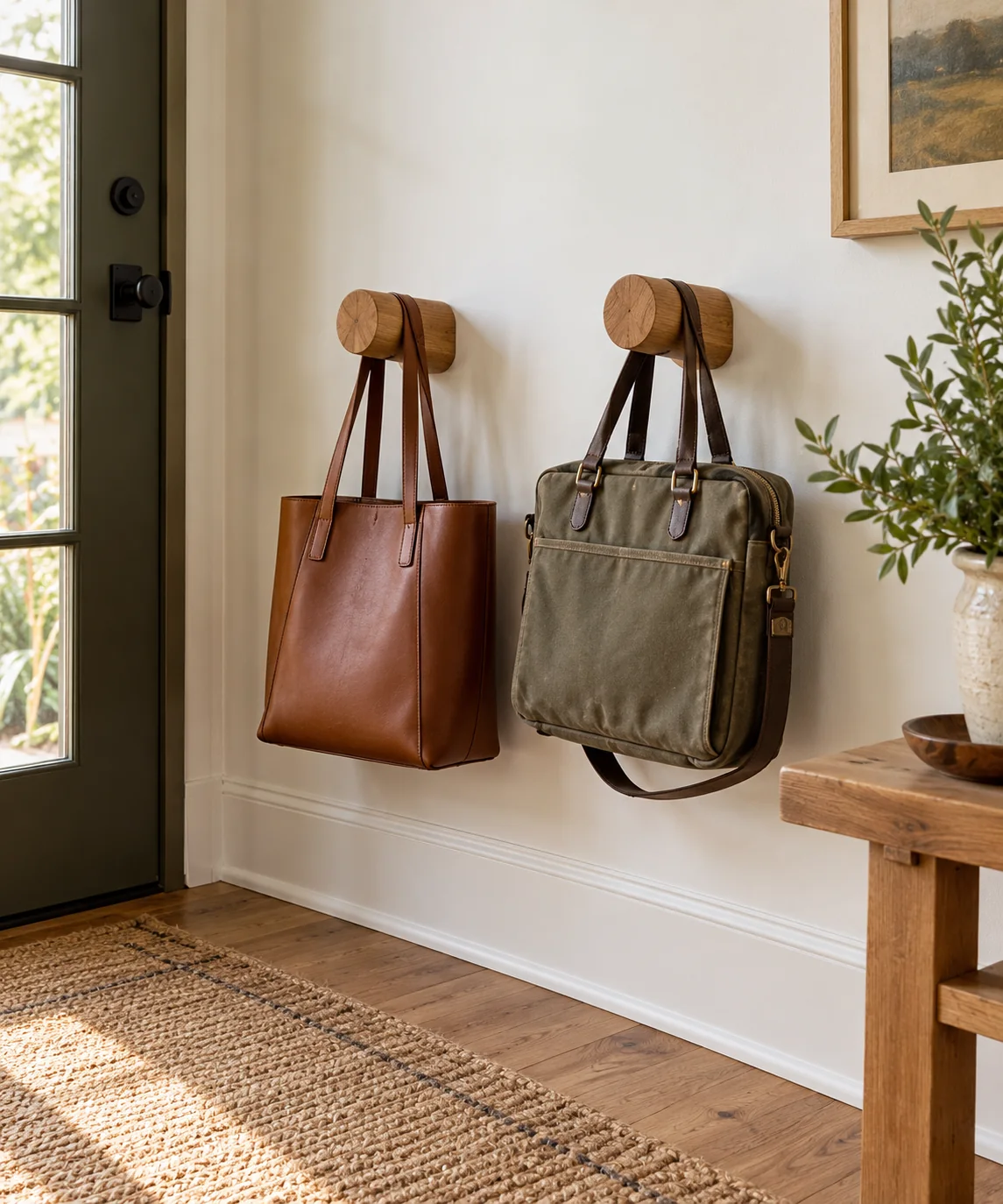
Designate the Drop Line Near Entry Flow
Habitual floor dropping happens because the storage target is inconvenient. If your coat closet is closed or hooks are placed in another room, bags land instantly on the floor beside the entrance. Establish an elevated drop zone along the natural entry path, within two strides of closing the door. Position hooks or resting ledges at hip height, roughly thirty to thirty-six inches above the floor. This eliminates awkward bending while providing an immediate, effortless unloading station for daily work gear.
Select Broad Supports to Protect Bag Straps
Commuter bags loaded with laptops, chargers, and documents often weigh fifteen pounds or more. Narrow metal wire hooks concentrate downward pressure onto a tiny strip of fabric or leather, causing permanent creasing, stretching, or torn stitching. Choose wide-profile wooden pegs, broad curved hooks, or rounded dowels with a contact surface of at least one to two inches. Broad surfaces distribute weight evenly along the carry handle or shoulder strap, preserving the bag structure over months of repetitive daily hanging.
Utilize Low Settle Ledges Instead of High Hooks
Extremely heavy backpacks can be awkward to hoist onto tall wall hooks every evening. A sturdy low-profile wall ledge or narrow floating bench set twelve to eighteen inches off the floor offers an ergonomic alternative. This minimal elevation keeps bag bases away from floor dirt, vacuum cleaners, and damp boots without requiring an overhead lift. Ensure the platform depth measures at least ten inches so structured laptop totes sit fully upright against the wall without tumbling forward into the hallway.
Account for Bag Protrusion in Narrow Walkways
Unlike flat raincoats, a fully packed briefcase or rolling commuter bag extends significantly into the corridor. Measure the depth of your bag when packed with daily work gear, which frequently reaches eight to twelve inches. Verify that hanging the bag leaves adequate clearance for family members to pass comfortably without catching pockets or elbows. If space is tight, angle the bag flat against the wall using a side swivel hook rather than hanging it straight out from a perpendicular peg.
Establish an Emptying Habit at Arrival
Hanging a fully loaded work satchel overnight places constant static tension on bag handles and hanging mounts. Make it a routine to extract heavy items upon entry. Remove water bottles, thermoses, and heavy electronics, transferring them to kitchen or office charging stations. Leaving only the empty bag, commuter transit card, and notebook suspended off the floor reduces stress on hardware. This simple routine protects wall fixtures, prolongs bag lifespan, and keeps morning departure prep organized and predictable.
YOUR STARTING POINT
A little checklist.
Original editorial guidance. Images are AI-generated concepts, not photographs of completed projects. Our sources and approach.
Questions to consider
Can standard adhesive hooks hold a heavy commuter laptop backpack?
Most adhesive hooks are rated for lightweight coats or keys. Heavy laptop bags frequently exceed adhesive shear limits over time, risking sudden detachment. Always use mechanically secured broad hooks or dedicated furniture platforms for packed commuter bags.
How high off the floor should commuter bag hooks be placed?
Hanging hooks are generally best positioned between thirty-six and forty-eight inches high. This keeps bag bottoms at least ten inches off the ground while allowing you to lift or grab bags naturally without stooping or reaching excessively high.
Will hanging a leather tote bag by its handles damage the material?
Thin hooks will indent and stretch leather handles over time. To avoid damage, hang the bag by its broad shoulder strap across a wide, smooth wooden dowel, or place it upright on an elevated low ledge instead.