Indoor Plant Styling · THE GUIDE
Elevate Floor Plants on Slim Timber Stands to Clear Vacuum Paths
Floor plants bring visual structure to living areas, yet placing heavy containers directly on rugs or timber flooring can complicate daily floor maintenance. Robotic vacuums often bump into containers, redirect their paths, and leave untouched dust along floor edges. Elevating medium-sized floor planters onto low, stable timber stands can ease cleaning access while giving plants distinct placement in a room. Raising containers creates accessible floor space beneath foliage, allowing manual cleaning wands and autonomous vacuum sensors to navigate around the perimeter more predictably. Achieving a practical setup requires matching the stand's footprint and stability to the room's traffic patterns, container weight, and the specific clearance requirements of your cleaning equipment.
Jump to the checklist ↓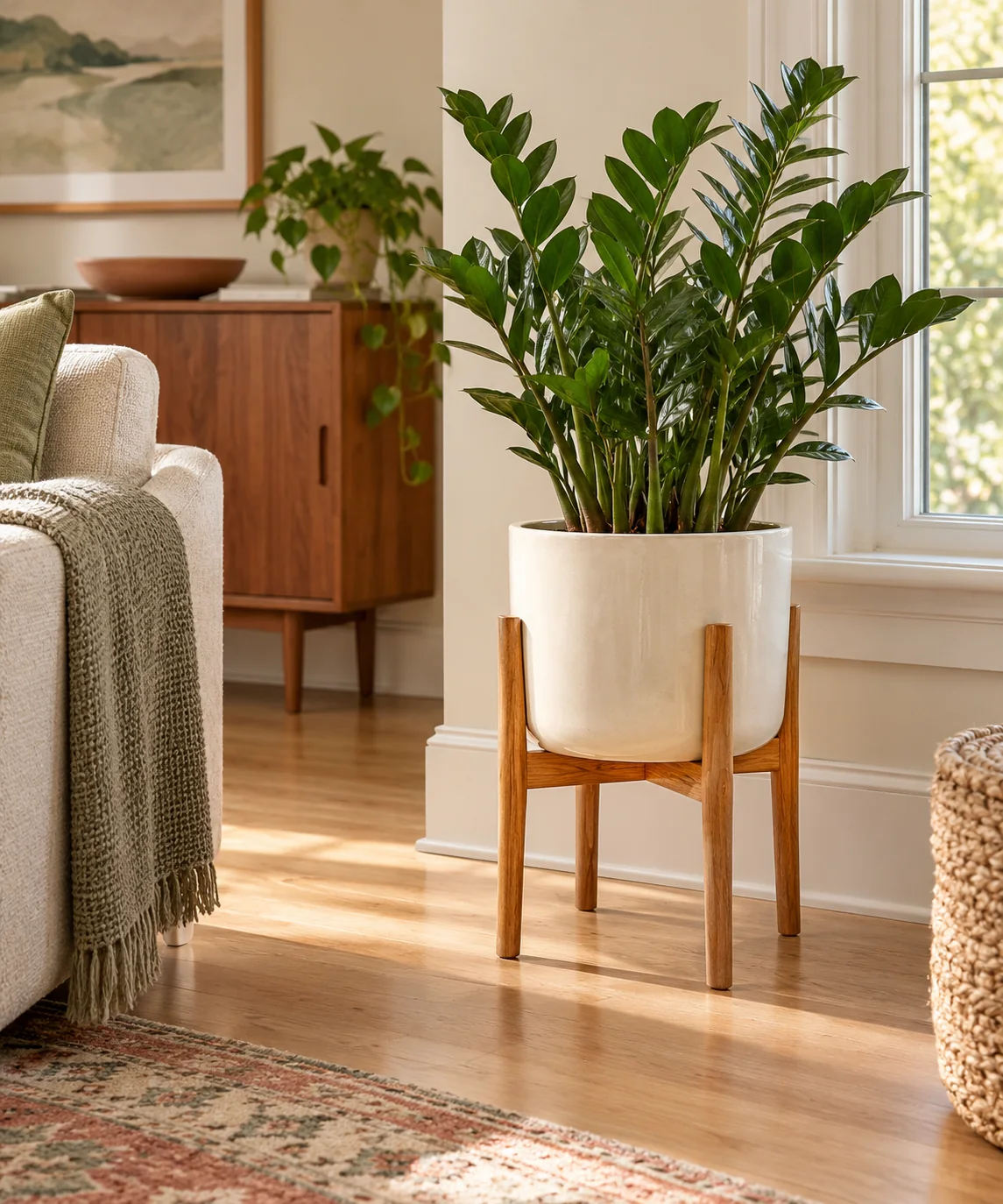
Evaluating Cleaning Clearances and Device Profiles
Review the manufacturer specifications and navigational behavior of your vacuum cleaner before selecting plant stands. Automated vacuums feature varied profiles, sensor heights, and bumper sensitivities; models with top-mounted laser towers often require considerably more vertical space than low-profile bumper units. Rather than relying on standard height estimates, measure your specific machine at its highest point and observe its navigation pattern around furniture legs. Choose a stand that comfortably clears your device while maintaining a low center of gravity. Remember that automated vacuums often bump into furniture legs during perimeter tracing, so the stand must be sufficiently stable to withstand minor contact without shifting or wobbling.
Balancing Base Width and Container Proportions
Stability is the primary consideration when elevating planters off the floor. A broad, three-legged or four-legged base provides reliable contact on level flooring, but the planter must rest securely within the stand's support structure. Avoid placing tall, top-heavy, or narrow-based ceramic containers on high stands where accidental contact from people, pets, or cleaning tools could cause a tip-over. Match the base diameter of the pot to the inner resting surface of the stand so weight distributes evenly across all contact points. Keeping the overall plant and container height modest relative to the stand base significantly lowers the risk of tipping.
Flooring Protection and Moisture Management
Planters placed directly on floor surfaces can trap ambient condensation or minor moisture leaks against floorboards and carpet fibers. Lifting pots onto stands promotes air movement under the container base, helping keep floor finishes visible and dry. To protect hardwood, laminate, or tile from scuffs, inspect the contact feet of the timber stand and apply durable, manufacturer-approved felt or rubber pads. On carpeted surfaces, verify that the stand legs settle evenly without tilting or wobbling under the full weight of a watered plant, and periodically inspect the carpet underneath for moisture or indentation.
Selecting Plant Growth Habits for Elevated Stands
Upright, compact houseplants generally suit elevated stands better than spreading or trailing varieties when positioned in regular cleaning pathways. Upright specimens like snake plants, cast-iron plants, or compact cultivars maintain their structure within the vertical footprint of the container rather than dropping stems into the path of cleaning equipment. In contrast, wide, low-hanging foliage can trigger obstacle-detection sensors on robotic vacuums or tangle in sweeping brushes and manual vacuum wands. Choosing contained growth habits keeps the floor perimeter visible and accessible.
Safe Watering Routines and Runoff Prevention
Elevated displays require disciplined watering practices to avoid moisture damage to stands and surrounding floors. Always use an inner nursery pot set inside a sealed cachepot or combine the planter with an appropriately sized, leak-proof drip saucer placed beneath the drainage hole. Before watering, assess the moisture level of the potting mix rather than watering on a fixed schedule. If a container lacks an integrated reservoir, lift the inner pot out completely and water it at a sink or utility basin, allowing excess water to drain thoroughly before returning the plant to its timber stand.
YOUR STARTING POINT
A little checklist.
Original editorial guidance. Images are AI-generated concepts, not photographs of completed projects. Our sources and approach.
Questions to consider
Can automated vacuums knock over elevated plant stands?
Yes, robotic vacuums can bump into stand legs with enough force to shift or unbalance top-heavy arrangements. To reduce this risk, select heavy, low-profile stands with broad bases, avoid tall or narrow vessels, and configure virtual no-go zones around the plant if your vacuum software supports it.
Can indoor timber plant stands be used on an exterior balcony?
Indoor timber stands are generally not built to withstand exterior weather conditions, UV exposure, or moisture buildup on outdoor surfaces. For exterior spaces, consult building guidelines regarding balcony furnishings, check weight restrictions, and select weather-rated outdoor materials designed for exterior exposure.
How can I tell if a container is too heavy for a wooden stand?
Consult the stand manufacturer's rated weight capacity and compare it to the combined weight of your container, potting medium, and fully saturated soil. If the stand exhibits any wobbling, joint creaking, or flexing under load, move the plant to a lower, heavier base designed for larger loads.