Indoor Plant Styling · THE GUIDE
Elevate Windowsill Pots Using Slotted Wooden Risers
Apartment windowsills offer prime light for small sun-loving plants, but setting pots directly on painted woodwork often leads to peeling finishes, condensation rings, and trapped moisture. Introducing a slotted wooden riser lifts containers off the sill, establishing continuous airflow beneath planter bases while catching light runoff. The slatted platform maximizes narrow window ledge depth by bridging minor surface irregularities and organizing containers into an intentional line. This reversible styling upgrade protects architectural trim, elevates foliage closer to direct window glass, and creates a clean display for culinary herbs requiring consistent sunlight.
Jump to the checklist ↓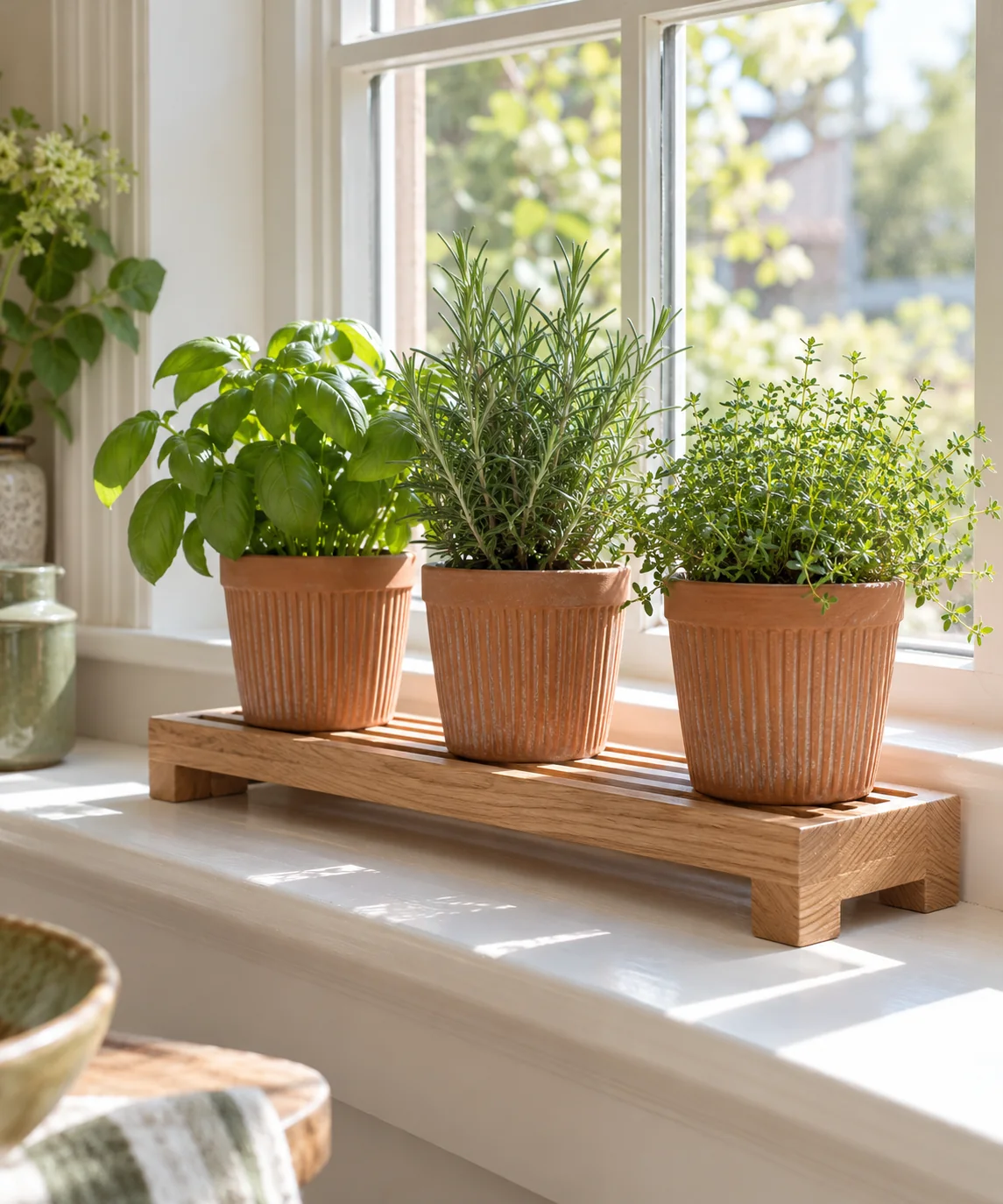
Protecting Paintwork from Moisture Traps
Direct contact between plant saucers and painted window boards can trap moisture against acrylic or enamel finishes. Porous terracotta and ceramic saucers may slowly transfer dampness, which can soften paint or cause discoloration over extended periods. A slotted wooden riser lifts container saucers off the sill, creating a continuous gap where trapped humidity can evaporate. Adding small silicone or felt pads underneath the riser feet isolates the wood stand from the sill, reducing surface friction and helping maintain the painted finish beneath.
Optimizing Narrow Sills with Slatted Geometry
Many residential windowsills provide only five to six inches of usable depth, which can make round saucers feel unsteady near edge bevels. A slotted riser made of stable hardwood creates a flat, elevated platform that spans small trim contours. The parallel slats support planter saucers evenly, helping stabilize pots that might otherwise rock on sloped stool molding. Measure both your sill depth and saucer diameters carefully to ensure containers rest fully on the platform without overhanging the edge.
Light Exposure and Window Clearance Considerations
Culinary herbs such as thyme, rosemary, and basil thrive with consistent direct sunlight. Raising containers on a low riser aligns shorter pots closer to clear window glass, especially where deep frames or raised bottom sashes cast shade across the lower sill. However, ensure that elevated pots do not sit directly against drafty sash joints or unsealed glass during freezing weather, as cold glass contact can stress tender foliage. Allow adequate clearance around containers so leaves do not press against window panes or window coverings.
Checking Clearance with Window Coverings
Before arranging containers on an elevated platform, observe how window treatments operate throughout the day. Place pots on the sill to check that their elevated height will not interfere with falling blinds, shades, or drapery fabric. Ensure that opening or closing window sashes does not dislodge containers or bump fragile stems. This simple dry placement confirms whether a one-to-two-inch riser height leaves sufficient vertical clearance beneath existing blinds or curtain rods without crowding window hardware.
Weight Limits and Material Maintenance
Slotted wooden risers are intended for small, lightweight containers such as three-to-five-inch herb pots. Heavy stone or large terracotta planters filled with saturated potting mix add substantial localized weight, which may exceed what delicate trim or detached sill boards can reasonably support. Consult building guidelines or trim specifications if you are uncertain of your sill's integrity. Additionally, natural wood risers require regular upkeep; apply a light coat of mineral oil or water-resistant finish, and always use glazed saucers to prevent water pooling on the wood slats.
YOUR STARTING POINT
A little checklist.
Original editorial guidance. Images are AI-generated concepts, not photographs of completed projects. Our sources and approach.
Questions to consider
Can I place unglazed terracotta pots directly onto the wooden riser?
No, unglazed terracotta breathes moisture through its base and sides. Always place a waterproof saucer beneath terracotta pots to prevent water rings and wood staining on the slatted riser during watering routines.
Will elevated risers make plants more vulnerable to window drafts?
Elevating pots actually shields roots from direct contact with chilly sill paint. However, keep herbs away from unsealed, drafty window sash gaps during extreme freezes by pulling the riser back slightly from the glass.
What wood species works best for humid windowsill environments?
Dense, moisture-tolerant hardwoods such as ash, white oak, or teak perform best. These woods resist warping from indoor temperature fluctuations and humidity far better than softwoods like untreated pine or particleboard composite materials.