Small Kitchen Organization · THE GUIDE
Enamel Tub for Stowing Cleaning Brushes and Natural Sponges
Kitchen sink cabinets often struggle with damp organization, where wet sponges and dish brushes drip onto cabinet floors or crowd the counter rim. A vintage-style enamel tub serves as an effective, impermeable caddy that gathers wet cleaning supplies into one transportable vessel. Its non-porous glazed surface protects interior cabinet woodwork from lingering water damage while allowing brushes and sponges to air-dry between tasks. When tackling heavy dishwashing or countertop cleanup, lift the entire basin onto the counter, keeping suds contained and keeping essential washing tools organized in one unified, easily cleaned spot.
Jump to the checklist ↓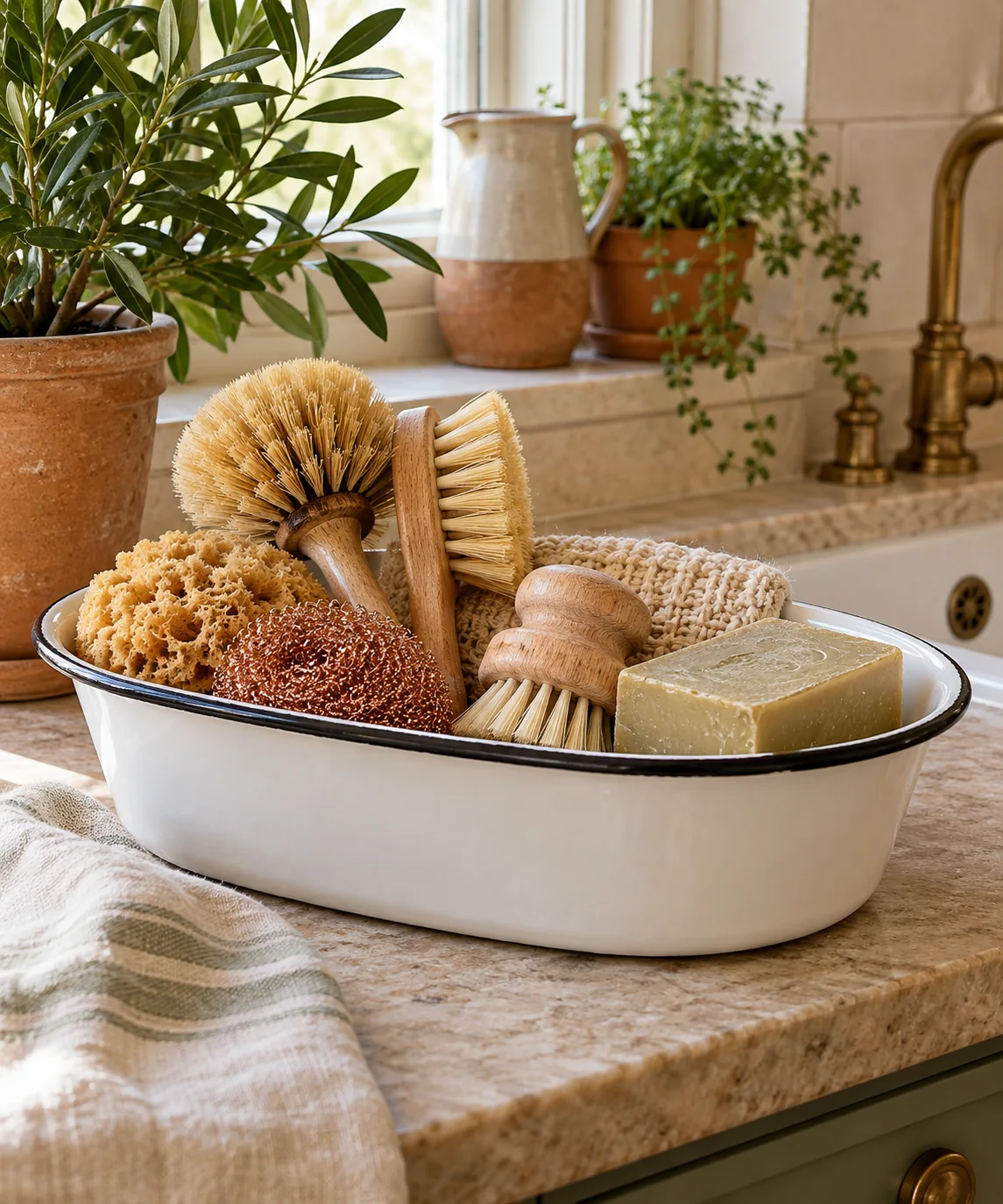
Selecting Basin Size and Material
Standard porcelain-enameled steel basins offer water resistance, structural durability, and a compact footprint suitable for tight under-sink spaces. Choose an oval or shallow rectangular tub roughly ten to twelve inches long and four to six inches deep. This volume accommodates several standing brushes, a scouring pad, and bar soap without occupying the entire cabinet floor. The vitreous coating prevents rust provided the enamel remains unchipped, making it far more durable in moist environments than unpainted galvanized metals or unfinished wooden boxes.
Tool Organization and Airflow
To prevent natural bristle brushes and cellulose sponges from staying wet, arrange them thoughtfully inside the tub. Stand handled dish brushes bristle-end up or rest them diagonally so damp fibers receive constant air exposure. Natural sea sponges and loofahs dry best when propped against the tub wall rather than stacked flat on the bottom. Add a small stainless steel or slatted ceramic soap dish inside the basin to elevate solid dish soap above any drainage droplets that gather below.
Under-Sink Clearance and Plumbing Access
Before designating a storage spot, check clearances around under-sink plumbing traps, shutoff valves, and garbage disposal units. Position the enamel tub near the front edge of the cabinet floor so you can retrieve it with one hand without bumping water supply lines. If cabinet space is tight, verify that the basin handles clear closed cabinet doors. Placing a thin silicone pad beneath the tub protects cabinet laminate from scuffing when sliding the heavy basin in and out.
Drainage Management and Hygiene
Because enamel basins lack drainage holes, water will pool at the bottom over several days of dishwashing. Empty standing liquid every morning or immediately after major cleanup sessions to prevent bacterial growth and stale odors. Wash the interior weekly using mild dishwashing liquid and a soft sponge. Never use harsh abrasive powders, wire wool, or acidic vinegar soaks on enamelware, as aggressive scrubbing dulls the shiny vitreous finish and wears away the protective surface coating over time.
Practical Limitations and Enamel Care
Enamel over steel is durable against water, but dropping heavy cast iron pans or metal tools into the basin can chip the glazed surface. Once enamel chips down to the raw base metal, exposure to standing water will eventually cause rust spots. Inspect the basin periodically for damage, and avoid leaving wet copper or steel wool pads sitting directly against wet enamel for days, as metal oxidation can leave stubborn surface stains that require gentle buffing to lift.
YOUR STARTING POINT
A little checklist.
Original editorial guidance. Images are AI-generated concepts, not photographs of completed projects. Our sources and approach.
Questions to consider
Will pooled water in the basin rust the enamel?
Genuine vitreous enamel is fired glass over metal, making it completely waterproof and rustproof. However, if the interior enamel chips or cracks, exposed underlying steel can rust. Empty standing water regularly to keep tools dry and protect chipped areas.
How do I sanitize natural sponges inside an enamel caddy?
Rinse sponges thoroughly after each use, squeeze out excess water, and stand them upright. To sanitize, soak sponges periodically in boiling water or run them through a gentle wash cycle, then let them dry completely before returning to the basin.
Can I carry a full basin by its side handles safely?
Yes, enameled metal handles are structurally sturdy. Ensure handles are dry to maintain a secure grip, and avoid overloading the tub with excessively heavy stone scrubbers or large liquid bottles that might make single-handed transport clumsy or unbalanced.