Container Vegetable Gardens · THE GUIDE
Enclosed Courtyard Citrus and Potted Vegetable Pocket
Enclosed courtyards and townhome breezeways can offer partially sheltered microclimates that moderate wind exposure, creating practical settings for potted citrus and compact vegetables. Placing a containerized dwarf lime tree as an anchor alongside movable pots of edible greens makes efficient use of paved ground. Rather than planting vegetables directly in the citrus container where roots compete for moisture and soil nutrients, arranging separate surrounding pots helps maintain suitable growing conditions for each crop. This modular arrangement facilitates light management, maintains clear access pathways according to local requirements, and introduces manageable edible plantings into paved outdoor spaces.
Jump to the checklist ↓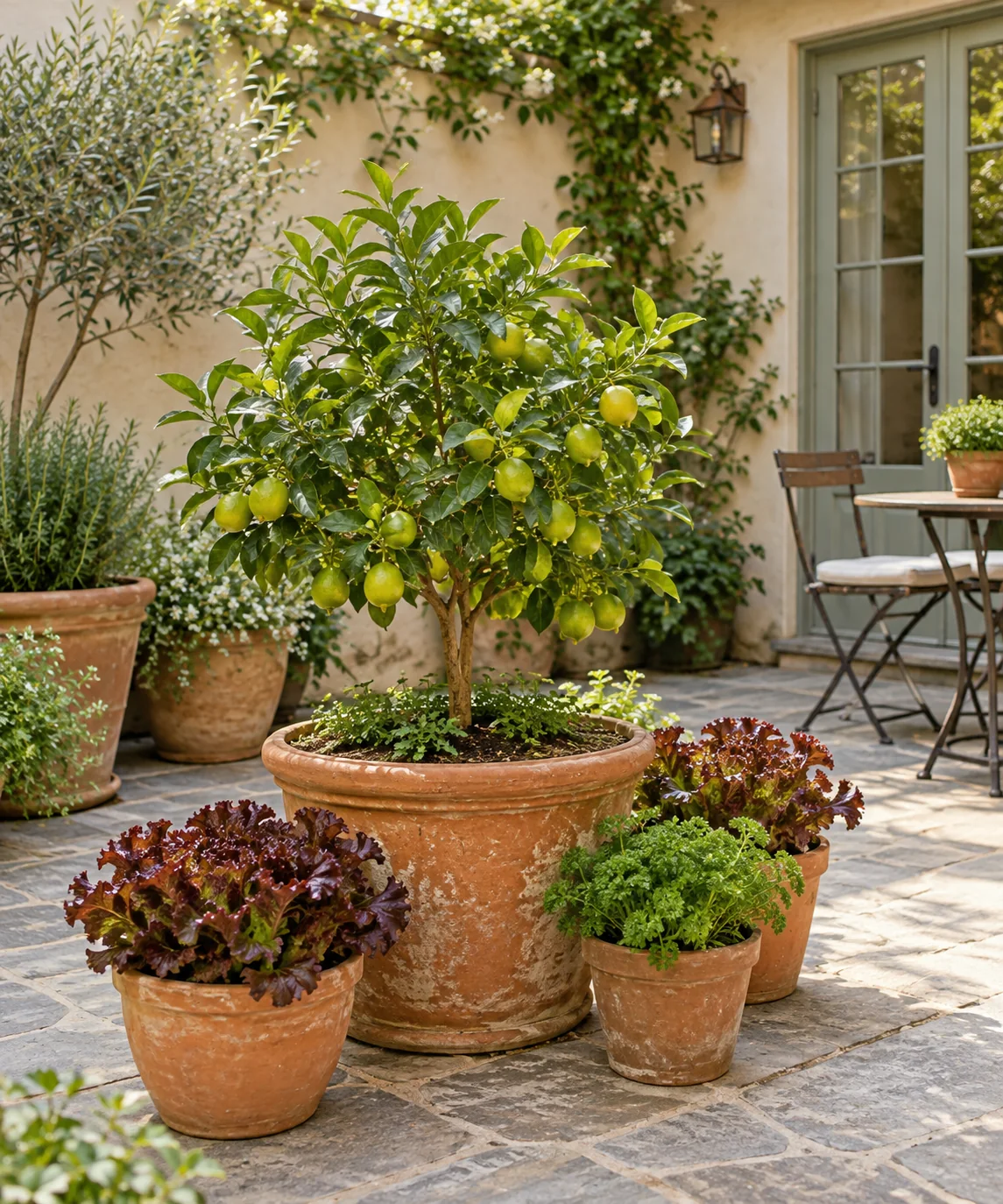
Courtyard Sun Evaluation and Clearance Planning
Courtyards often have varying sun patterns throughout the year due to surrounding walls and building overhangs. Before positioning containers, track direct sun across the paved surface over several sunny days. Most potted dwarf citrus cultivars perform best with substantial direct sunlight, often six or more hours daily. Position the main citrus container where solar exposure is highest and most consistent. Ensure all containers remain clear of primary egress routes, doors, and utility access points in accordance with property guidelines and local safety codes.
Separating Tree Roots from Potted Vegetables
Growing greens or herbs directly in the topsoil of a container citrus tree can disrupt root health. Citrus trees feature shallow, delicate feeder roots that are sensitive to root competition and disturbance during routine vegetable harvest and replanting. Housing companion crops like loose-leaf lettuce, parsley, and spinach in independent, portable containers allows you to tailor watering schedules, potting substrates, and fertilizer formulations to each plant species without interfering with citrus root development.
Selecting Containers and Mobile Planter Bases
A dwarf citrus tree requires adequate root volume to remain healthy over multiple seasons, generally demanding a sizable container with dedicated drainage openings. Sizable terracotta or glazed ceramic pots provide physical stability in gusty breezeways, but their combined weight when filled with moist potting mix makes lifting difficult. Placing the citrus pot on a sturdy, weather-rated wheeled plant caddy before filling allows for seasonal repositioning to capture shifting sunlight or temporary relocation when extreme weather threatens.
Drainage and Runoff Management on Paving
Courtyards paved with stone, brick, or concrete require thoughtful water management to prevent surface discoloration and slip hazards. Standing water beneath planters can leave mineral deposits, encourage moss or algae growth, and impede container drainage. Elevating pots with discreet pot feet or utilizing monitored saucer trays helps excess water exit cleanly. Citrus roots require thorough watering followed by moderate surface drying, whereas many leafy greens require more frequent, consistent moisture.
Seasonal Shifts and Frost Precautions
As seasonal temperatures drop, courtyard shade patterns lengthen and ambient temperatures fall. While stone walls can release stored heat gradually, courtyards can also trap cold night air in low-lying pockets. Cool-season greens often tolerate moderate chill, but citrus foliage, flowers, and developing fruit can suffer damage near or below freezing temperatures. Utilizing independent containers allows you to shift greens to bright locations and wheel sensitive citrus into a protected indoor space or garage during cold periods.
YOUR STARTING POINT
A little checklist.
Original editorial guidance. Images are AI-generated concepts, not photographs of completed projects. Our sources and approach.
Questions to consider
Why avoid planting greens directly in the citrus tree pot?
Planting directly into the citrus soil introduces nutrient and water competition while disturbing the tree's shallow root system during planting and harvest cycles. Separate containers allow individual care for each crop.
How much sunlight does a courtyard dwarf citrus require?
Most dwarf citrus cultivars thrive best when receiving six to eight hours of direct daily sunlight. Observe your courtyard across seasons to place the container in the area with the fewest building shadows.
How should drainage be handled on courtyard pavers?
Raise containers slightly on pot feet or place them in drainage saucers to keep water moving freely away from the base. This reduces standing moisture that can cause paver staining, algae growth, or waterlogged roots.