Reading Corners · THE GUIDE
Equip a Laundry Room Window Corner for Micro-Breaks
Utility rooms frequently feature underutilized niches near natural light sources that can serve as restorative retreats during wash cycles. Equipping a sunny laundry room window corner with a compact cane-back chair and a fold-down wall desk creates a functional micro-break destination. This setup allows you to read a few chapters or review notes without disrupting laundry sorting or appliance pathways. By selecting materials that withstand ambient humidity and utilizing collapsible furniture, you can easily repurpose tight utility footprints into practical, quiet rest stations that fold away whenever full workflow access is needed.
Jump to the checklist ↓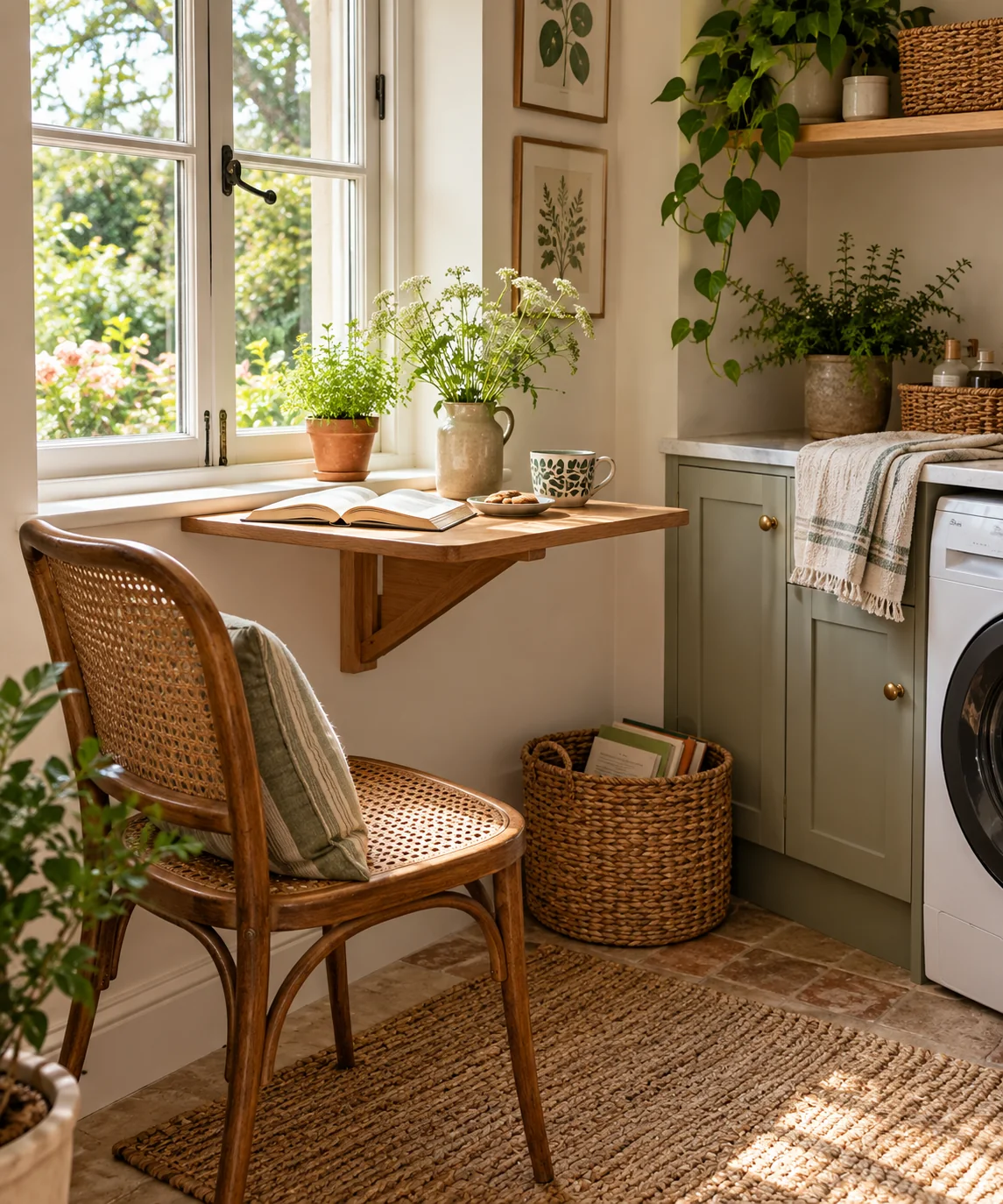
Assessing Clearances and Appliance Paths
Before introducing any seating, measure the functional working envelope around laundry appliances. Door swings and service access vary widely between front-loading and top-loading machines, so verify the manufacturer’s clearance recommendations and swing arcs before planning your layout. Position your chair and table surface well outside primary basket transfer lanes, utility sink splash zones, and supply access points. Keeping movement corridors open prevents tripping hazards while ensuring that regular utility chores and brief rest breaks can take place in the same space without friction.
Selecting Humidity-Resistant Seating
Utility rooms experience recurring shifts in ambient temperature and humidity that can degrade dense, non-removable upholstery. A cane-back chair or slatted wood frame provides airflow around the seat and back, helping the materials dry quickly between wash cycles. Inspect vintage cane frames for signs of brittleness or loose weaving before relying on them for regular seating. Adding a thin, removable seat pad covered in washable cotton or linen provides comfort during short reading pauses while remaining easy to launder when exposed to humidity or laundry dust.
Planning a Fold-Down Leaf or Narrow Freestanding Surface
A compact drop-leaf table or narrow freestanding console creates a stable resting spot for a book, pencil, or timer without dominating open floor space. If considering a wall-mounted drop-leaf surface, check manufacturer specifications and consult building guidelines or a qualified professional before modifying drywall or tile. For rental homes or spaces where wall modifications are restricted, prioritize freestanding slim drop-leaf tables or folding stands. These reversible options fold flat or tuck away easily when laundry sorting baskets require maximum floor clearance.
Managing Lint and Book Storage
Dryer venting and clothing handling release airborne lint that settles across nearby horizontal surfaces. Open book ledges can gather dust and stray detergent droplets rapidly in active utility zones. Store reading materials in a lidded basket, a closed storage bin, or an interior cabinet rather than out in the open. Keeping current reading material enclosed between breaks protects binding glue and paper pages from moisture, lint, and chemical splashes from detergents or fabric softeners.
Airflow and Window Management
Operating dryers can generate noticeable warmth and moisture, making comfort variable across seasons. Opening an operable window slightly during long cycles supports fresh air circulation and helps regulate room temperature. Position your seating so that natural breeze moves through without placing you in front of appliance exhausts or blocking exterior venting paths. If direct glare obscures text, check window casing depth and manufacturer mounting guidelines before selecting a tension-held or surface-mounted window covering, or use a repositionable folding privacy screen.
YOUR STARTING POINT
A little checklist.
Original editorial guidance. Images are AI-generated concepts, not photographs of completed projects. Our sources and approach.
Questions to consider
Will laundry room humidity damage books kept in the space?
Frequent humidity changes can cause book pages to curl or cockle over time. Store reading volumes inside a lidded storage tote or an enclosed utility cupboard, and ensure the room exhaust fan or window stays open during high-heat drying cycles.
What size drop-down surface is practical for compact utility corners?
A surface measuring roughly twelve to fourteen inches deep and twenty to twenty-four inches wide generally holds an open volume or notepad without obstructing door pathways when folded down against the wall.
Can an upholstered chair work in a laundry room corner?
Heavily padded foam chairs tend to absorb airborne moisture and trap lint fibers. If you use an upholstered seat, opt for a removable, washable slipcover over a firm frame so you can launder it frequently.