Indoor Plant Styling · THE GUIDE
Equip a Sunroom Armchair with an Integrated Side-Table Planter
Sunroom reading nooks often suffer from cluttered tabletops when beverages, books, and potted plants compete for the same flat surface. An accent table designed with a dedicated lower plant basin or shelf preserves usable tabletop room while keeping greenery within arm's reach. Positioning a leafy specimen below the top surface establishes natural layering without blocking natural light or elbow room. When selecting a companion armchair, matching arm height to table height creates ergonomic convenience. This configuration delivers the calming ambiance of nearby foliage while maintaining a functional reading station free of spills and soil residue.
Jump to the checklist ↓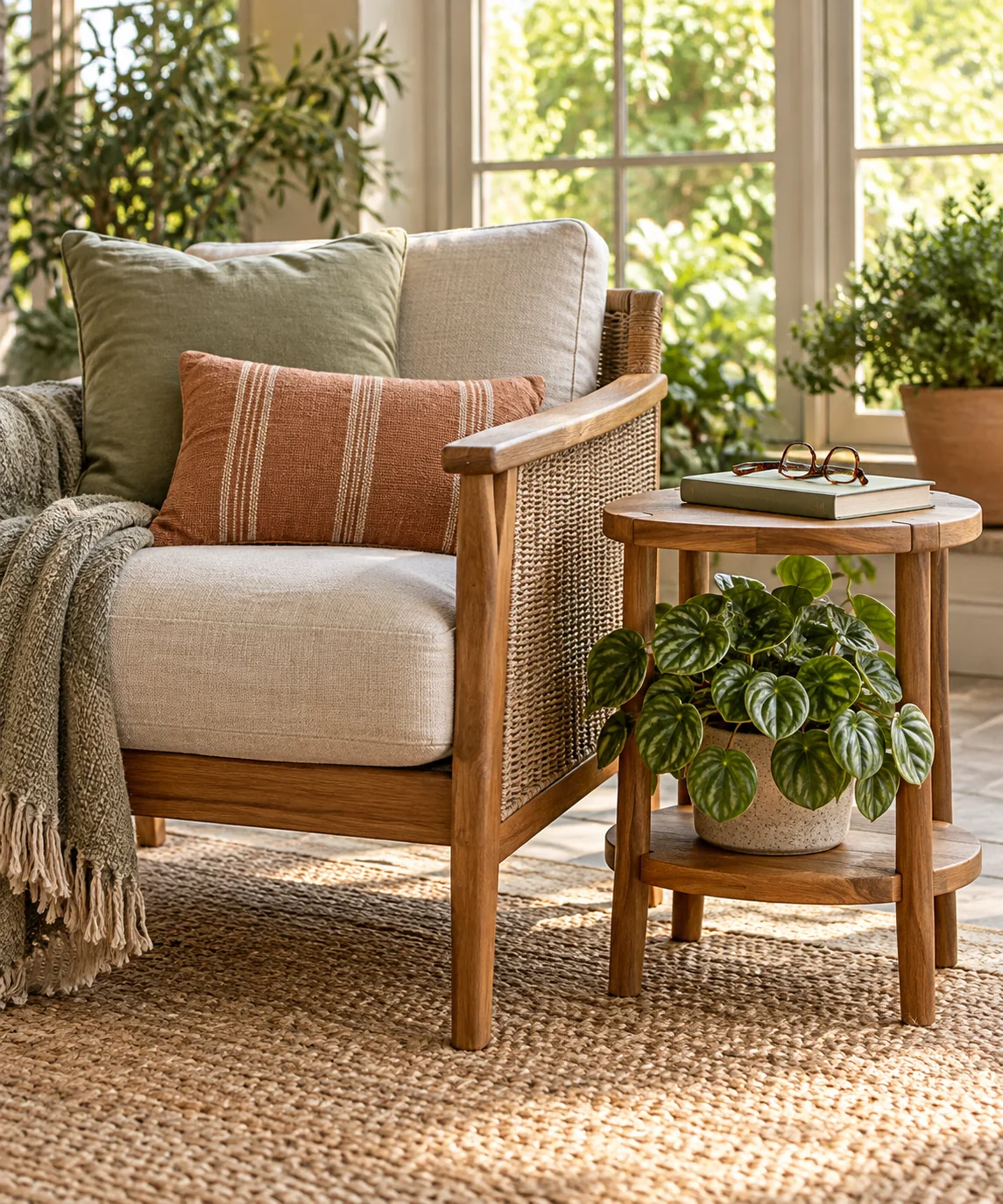
Assessing Table Height and Armrest Proportions
Position the side table so its top surface sits level with or slightly below the armchair's armrest, typically between twenty and twenty-four inches high. This vertical alignment ensures you can set down a book or cup without awkward reaching. The lower planter shelf must provide at least ten to twelve inches of vertical clearance before meeting the underside of the tabletop. Ample vertical clearance guarantees that your chosen houseplant receives adequate ambient air circulation and will not rub its foliage against the upper structure.
Choosing Low-Mess, Moderate-Light Houseplants
Select compact, upright houseplants that thrive in the indirect sunlight common to sunroom perimeters. Peperomia obtusifolia, small bird's nest snake plants, and compact calatheas offer broad, attractive leaves without aggressive outward spreading. Avoid fast-growing vining varieties that might tangle around chair legs or drop frequent leaf litter onto your flooring. By choosing species with sturdy, waxy foliage, you minimize routine tidying and reduce the risk of stray soil or dry leaves brushing against your reading chair upholstery.
Safeguarding Furniture Surfaces from Excess Moisture
Never plant directly into the integrated cavity unless the table features a removable, fully waterproof liner. Instead, keep the houseplant in its plastic nursery container and slip it into an unglazed or glazed cachepot fitted with a non-porous saucer. Place a thin cork pad or felt barrier beneath the saucer inside the table's planter tier. This multi-layered barrier protects wooden or metal table components from condensation, moisture stains, and scratches whenever the pot shifts during routine cleanings.
Managing Light Exposure Near Sunroom Windows
Sunrooms can fluctuate dramatically in light intensity and temperature throughout the day. Place your armchair and integrated table set at least two to three feet away from direct south-facing glass panes to prevent leaf scorch on lower tiers. The upper tabletop often casts a partial shadow over the lower planter pocket during midday. Observe light patterns over a weekend to verify that the plant receives bright, filtered illumination rather than intense, magnified rays that can overheat the container.
Practical Maintenance and Routine Plant Access
Watering a plant nestled inside a bi-level table requires caution to avoid splashing adjacent seating fabrics. Always lift the inner grow pot out of the table entirely when hydrating the root system. Carry the plant to a sink, saturate the potting medium thoroughly, allow all excess moisture to drain completely, and wipe the container bottom dry before returning it to the lower tier. This strict extraction routine keeps the sunroom chair dry and prolongs furniture integrity.
YOUR STARTING POINT
A little checklist.
Original editorial guidance. Images are AI-generated concepts, not photographs of completed projects. Our sources and approach.
Questions to consider
Can I plant directly into the built-in lower planter pocket?
Avoid direct planting because most integrated furniture pockets lack drainage holes. Without proper drainage, stagnant water collects around roots, causing root rot and damaging wood or metal furniture seams over time. Use an internal cachepot instead.
How do I prevent the lower plant from growing into the upper tabletop?
Select slow-growing or dwarf plant cultivars that stay under ten inches tall. Alternatively, perform gentle tip pruning once or twice a season to encourage bushy lateral growth rather than upward stems that bump against the top tier.
Will the lower shelf receive enough light for healthy plant growth?
Yes, provided the setup sits within a bright sunroom with diffuse, indirect sunlight. If the tabletop casts deep shade, select shade-tolerant varieties like cast iron plants or ZZ plants that perform reliably in low-light pockets.