Entryway Organization · THE GUIDE
Establish a Shared Drop Zone for Roommate Mail and Keys
Living with roommates often leads to cluttered entry surfaces where keys vanish, packages create trip hazards, and envelopes sit scattered in disorganized piles. A shared drop zone transforms chaotic front entryways into a dependable, functional transit hub. By establishing designated, clearly delineated channels for each occupant's personal items, you remove the friction of mixed-up mail and misplaced accessories. Implementing this system requires evaluating available wall space, selecting proportionate organizers, and creating collective agreements on daily usage. The result is a calm, streamlined entry that respects every roommate's daily routines.
Jump to the checklist ↓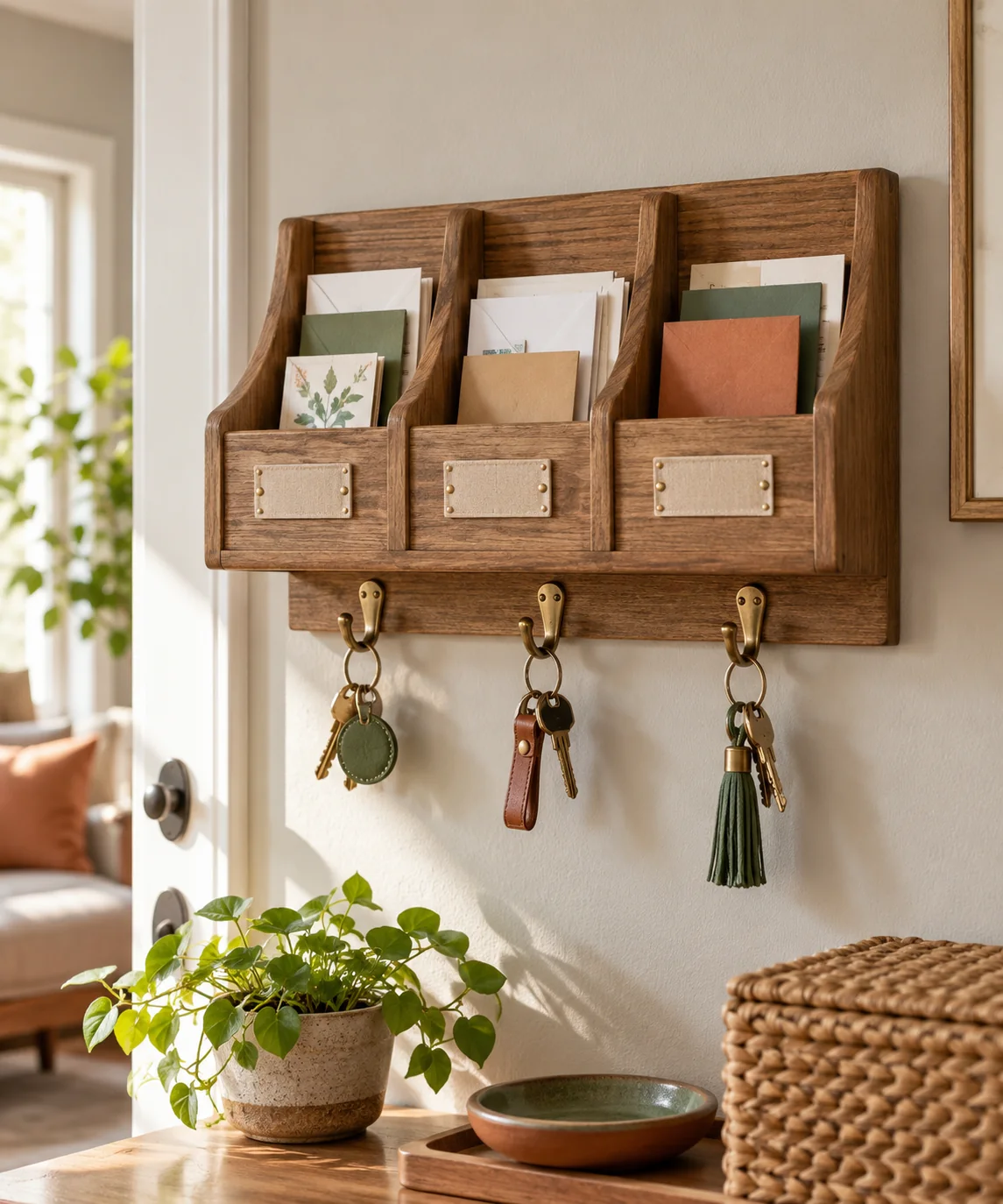
Mapping Shared Entryway Traffic and Sightlines
Begin by observing how each household member naturally enters and exits the apartment. Notice where individuals drop their bags, hang coats, and place outgoing items. Choose a dedicated staging wall or console table area located directly beside the primary entrance but clear of door swings. Avoid placing organizers behind inward-swinging doors where access requires awkward maneuvering. The goal is to provide a visible, intuitive stopping point within two strides of the threshold, ensuring occupants naturally deposit their keys and correspondence without carrying clutter deeper into shared living rooms.
Allocating Distinct Individual Sorting Channels
To prevent misplaced letters and mixed-up house keys, assign an identical, discrete holding zone to every tenant. A multi-slot wall caddy or a series of matching desktop letter trays works well. Label each division clearly using neutral linen tags, adhesive labels, or chalk markers. Position corresponding key hooks beneath or adjacent to each letter slot. Standardizing the allocated volume ensures fair space distribution. When each individual possesses a distinct, non-overlapping boundary, personal items remain separated, substantially reducing the morning scramble for transit cards, keys, and time-sensitive bills.
Establishing Communal Sorting Protocols
A sorting system thrives only when the entire household observes a shared collection routine. Agree collectively that the person who brings in the daily mail immediately sorts letters into individual occupant slots. Circulars, commercial flyers, and unclaimed solicitations should never enter individual bins; direct them immediately to a shared recycling basket stationed beneath the drop zone. Package deliveries should rest in a designated floor footprint nearby rather than blocking shared pathways. Simple, clear agreements keep the drop zone functioning smoothly without placing an unfair burden on any single resident.
Managing Overspill and High-Volume Mail Days
During peak shipping periods or subscription deliveries, compact entry organizers can quickly overflow. Set an explicit boundary for non-standard items, such as large padded envelopes or parcels. Use a low-profile wire basket on a lower shelf or floor runner to hold oversized deliveries temporarily. If an individual's mail compartment fills to capacity, encourage a quick transfer of documents to private bedrooms. Resisting the temptation to expand shared entry storage prevents the corridor from degrading into an unsightly storage locker that encroaches on communal living standards.
Periodic Purges and Station Maintenance
Even well-managed drop zones experience drift over time, collecting dead batteries, abandoned receipts, loose coins, and forgotten access fobs. Schedule a monthly household check-in to clear out unclaimed circulars and wipe down common surfaces. A microfiber cloth removes fingerprints from hooks, key trays, and sorting dividers. Encourage roommates to review their slots weekly and file or shred tax papers, medical notices, and personal correspondence. Consistent light maintenance prevents physical accumulation and preserves mutual trust regarding the handling of sensitive household correspondence.
YOUR STARTING POINT
A little checklist.
Original editorial guidance. Images are AI-generated concepts, not photographs of completed projects. Our sources and approach.
Questions to consider
What should we do if one roommate ignores their overflowing mail?
Address the pileup during a casual household check-in. Agree on a standard timeline, such as transferring letters to their private desk after seven days, keeping shared entryway organizers uncluttered and functional for everyone.
How do we prevent roommates from accidentally taking the wrong keys?
Pair distinct, labeled hooks with personal key fobs or color-coded key rings. Keeping hooks spaced at least three inches apart prevents rings from tangling and ensures each resident grabs only their personal set.
Can rental apartments support multi-hook drop organizers without wall damage?
Yes, use heavy-duty removable adhesive strips rated for the organizer's weight, or choose a freestanding tabletop mail organizer with integrated hooks that rests securely on an existing entryway console table.