Pantry Organization · THE GUIDE
Establish an Accessible Kids' Self-Serve Snack Zone on the Lowest Shelf
Lower pantry shelves often collect disorganized overflow or sit underutilized, making them a practical location for an organized, child-accessible snack station. Arranging designated, pre-portioned dry snacks on lower tiers helps foster independence and can reduce the temptation for children to scale kitchen counters or chairs to reach upper cabinets. Using lightweight fabric bins or soft-sided baskets can help contain loose packaging and crumbs while avoiding heavy containers that may be difficult for small hands to pull forward safely. By establishing a rotating selection of whole-grain crackers, dried fruit, and pouches, household routines run more smoothly while keeping general pantry storage neat and predictable.
Jump to the checklist ↓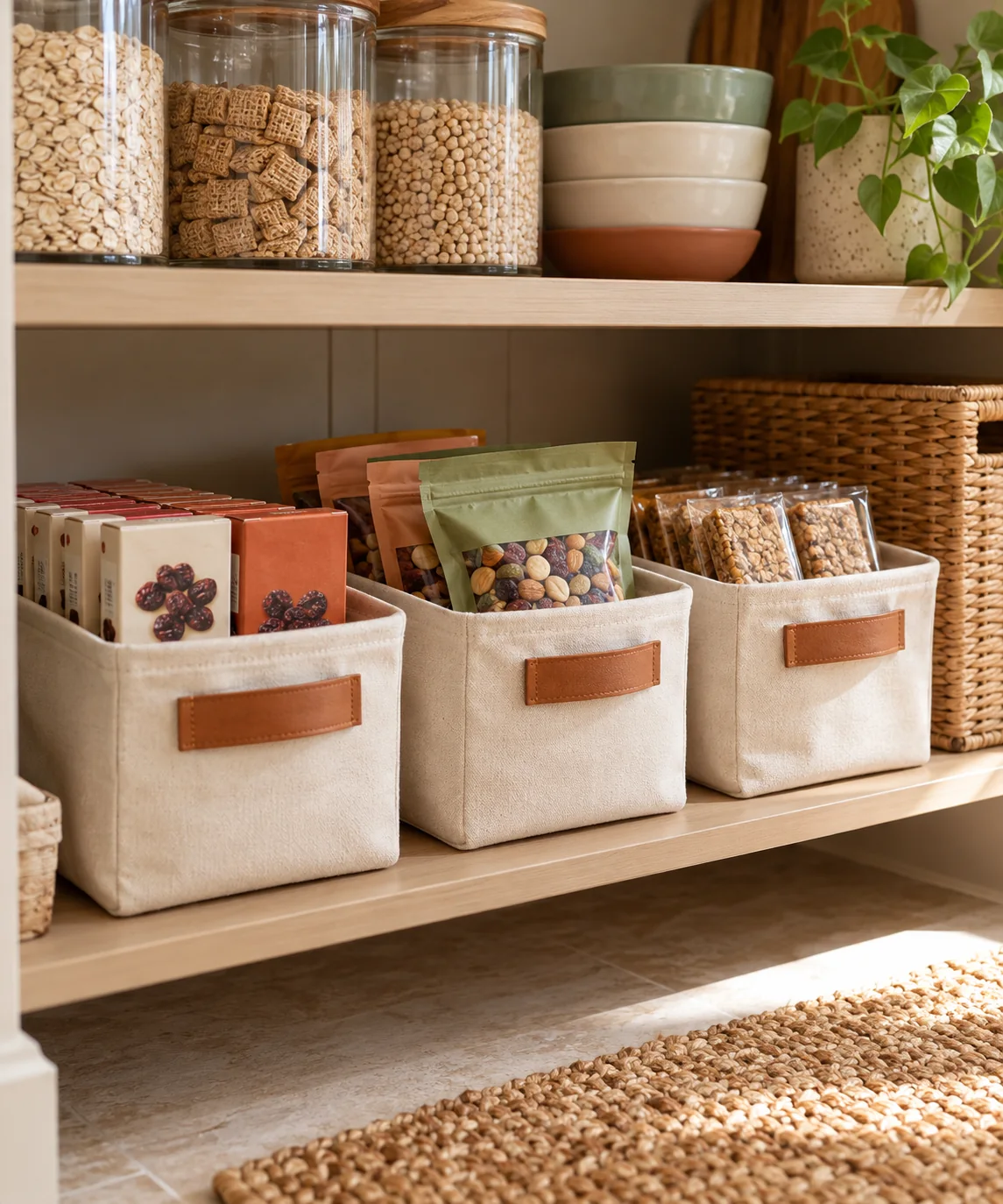
Assessing Reach and Doorway Clearances
Evaluate the usable height of your lower pantry shelving by observing your child's natural standing reach rather than relying on rigid dimensional formulas. The target shelf should allow children to view items comfortably from above without tugging containers downward toward their faces. Ensure that pantry doors open fully to provide a stable, unobstructed standing area free from threshold transitions or nearby appliance swings. Selecting shallow, open bins makes contents visible immediately, which discourages aggressive digging or tipping heavy containers off the shelf edge.
Categorizing Snacks for Everyday Selection
Divide snack categories into separate, clearly identified containers to keep items orderly and easy to browse. A three-part division often works well: one container for dried fruits and fruit bars, a second for grain-based dry snacks such as whole-wheat pretzels or crackers, and a third for shelf-stable fruit or pureed pouches. Separating softer pouches and fragile crisps prevents heavier boxes from crushing delicate contents underneath. This arrangement helps young family members understand where specific items belong during tidy-up and simplifies daily lunchbox packing.
Managing Spills with Washable Liners
Dry snack storage inevitably accumulates salt, seed hulls, and stray crumbs over time. Storage baskets fitted with removable, washable fabric liners help keep debris from dropping through wire shelving or accumulating in hard-to-clean shelf corners. When crumbs gather, remove the liner to shake it out over a compost bin or wastebasket, then launder according to the fabric care label before returning it to the shelf. For solid wood or laminate shelves, non-adhesive wipeable shelf liners offer an easy-to-clean secondary barrier beneath the bins.
Pacing Restock Quantities and Rotation
Rather than placing entire bulk boxes into low, accessible bins, stock only the quantity needed for two or three days. Keeping bulk reserve boxes stored securely on upper shelves allows caregivers to monitor consumption rates and dietary balance while preventing the lower shelf from becoming crowded. Restock the station during routine evening meal preparation or after weekly grocery trips. This rotation preserves freshness, limits packaging clutter in active pantry zones, and keeps snacks organized within designated boundaries.
Separating Snack Areas from Household Hazards
Maintain strict separation between child-accessible food zones and any potential household dangers. Cleaning supplies, laundry detergents, pet food, glass containers, and known choking hazards must never share lower shelving and should remain secured in locked or high cabinets. Keep the floor immediately in front of the lower shelf completely clear of electrical cords, recycling bins, and loose floor rugs to prevent tripping. Regular checks help ensure that non-food items or unapproved items have not migrated into the self-serve space.
YOUR STARTING POINT
A little checklist.
Original editorial guidance. Images are AI-generated concepts, not photographs of completed projects. Our sources and approach.
Questions to consider
What types of storage containers work best on lower pantry shelves?
Lightweight woven rope baskets, fabric bins, or durable BPA-free plastic tubs with integrated handles work well. Look for open-topped designs without sharp edges or heavy lids so contents can be accessed without pulling heavy items from the shelf.
How can caregivers guide portion choices in a self-serve station?
Stock only pre-portioned items intended for immediate daily access, and keep overflow quantities stored out of reach. Clear family routines around meal and snack intervals provide practical structure without requiring complicated bin locking mechanisms.
How frequently should snack bins and liners be cleaned?
Shake out crumb liners weekly during your regular grocery restocking routine. Wipe down plastic or laminate surfaces with a damp cloth, and wash fabric liners whenever sticky residues or spills appear.