Pantry Organization · THE GUIDE
Establish an Airtight Decanting Station for Grains and Flours
Decanting dry staples into dedicated containers creates an orderly pantry while helping protect grains, flours, and starches against pantry pests and ambient moisture. Paper bags and thin cardboard boxes absorb humidity from the air, which can accelerate staling and allow easy entry for common pantry pests. By standardizing on square-profile glass containers fitted with pliable silicone gaskets, you optimize shelf depth and establish a dependable moisture-resistant seal. A structured decanting station replaces mismatched packaging with visible inventory, making it straightforward to track staple quantities and avoid duplicate purchases.
Jump to the checklist ↓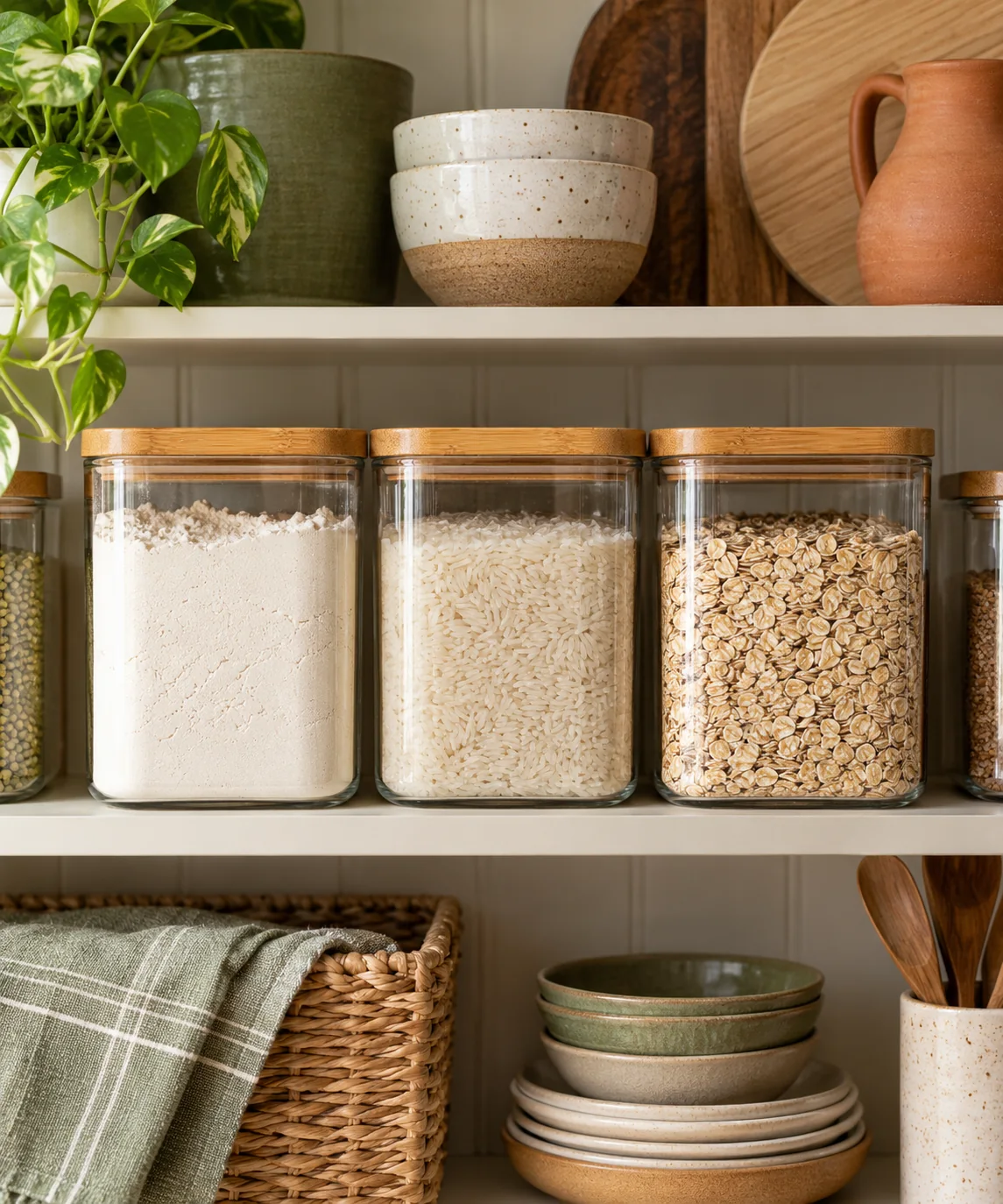
Container Shape and Footprint Optimization
Square and rectangular storage vessels make efficient use of pantry shelf depth compared to rounded canisters. Cylindrical containers create unusable triangular gaps along shelf surfaces, whereas straight-sided square containers nest side by side to establish a clean, compact arrangement. Before choosing containers, measure shelf depth, width, and vertical clearance, allowing at least two inches of overhead space for lifting vessels comfortably. Aligning container dimensions with your shelving helps avoid front overhang and prevents accidental tipping.
Gasket Inspection and Seal Integrity
Airtight performance depends on the mechanical compression of a flexible silicone gasket between the lid and jar rim. When selecting containers, check that the gasket makes smooth, unbroken contact without bunching, pinching, or shifting. Verify the closure by securing the latch or clamp and observing whether the lid sits level across the perimeter. Clean the silicone gaskets periodically during hand washing, as fine flour dust can accumulate in gasket grooves and compromise the seal over time.
Weight Distribution and Shelf Loading
Glass jars filled with dense ingredients such as whole wheat flour, rice, or dried beans add substantial weight to pantry shelving. A large four-liter container of flour or grain can weigh several pounds, and a full row quickly stresses shelf spans. Distribute heavy containers across sturdy lower or middle shelves directly over vertical supports or side brackets rather than across wide, unsupported shelf spans. Avoid stacking heavy glass vessels unless using rigid, independently supported risers designed for heavy loads.
Labeling and Rotation Protocol
Removing dry goods from their original commercial packaging requires clear labeling to track freshness and product types. Place discreet labels on the jar base or rear panel indicating the staple name, purchase date, and manufacturer expiration date. Follow a first-in, first-out rotation method: avoid pouring fresh flour or grain over older contents. Instead, allow the container to empty, transfer remaining grain to a small bowl, wash and dry the vessel, add new stock, and place the older portion on top for immediate use.
Moisture Management in Storage Areas
Pantry humidity requires careful management during the decanting process. Refill dry goods during cooler or drier periods of the day, or in climate-controlled spaces, to minimize trapping humid ambient air inside sealed containers. Ensure washed jars and lids dry completely before filling, as residual moisture can cause clumping and fungal growth. Store containers away from exterior walls subject to temperature swings, and discard any dry goods that show signs of moisture accumulation or off-odors.
YOUR STARTING POINT
A little checklist.
Original editorial guidance. Images are AI-generated concepts, not photographs of completed projects. Our sources and approach.
Questions to consider
Why are square glass containers commonly selected for pantries?
Square glass jars nest closely along shelves, minimizing unused space between containers. Non-porous glass does not absorb food oils or lingering aromas, and transparent walls provide instant visibility for monitoring ingredient levels.
How do I prevent fine flour dust from interfering with jar seals?
Use a wide-mouth funnel when transferring powdery ingredients to prevent particles from settling onto the container rim. Wipe the rim and silicone gasket with a dry microfiber cloth before closing and latching the lid.
How should I distinguish between similar white flours once decanted?
Apply clear, durable labels specifying the precise flour variety, such as unbleached bread flour, pastry flour, or all-purpose flour. Include the protein percentage or decant date on the label to avoid confusion during baking.