Small Balcony Layouts · THE GUIDE
Establish an Airy Galley Layout with Linear Metal Wire Furniture
Narrow galley balconies often present a spatial conundrum: standard solid outdoor furniture can choke circulation paths and block vital sunlight from entering adjacent interior living areas. By selecting powder-coated steel or wireframe armchairs and slim pedestal tables, you preserve optical sightlines through the balcony glass. The open grid structure allows natural breeze and light to pass unhindered across the threshold. Organizing these lightweight pieces linearly against the exterior wall or solid boundary keeps a continuous walking corridor unobstructed, providing comfortable seating while maintaining an open, uncluttered ambiance for small outdoor footprints.
Jump to the checklist ↓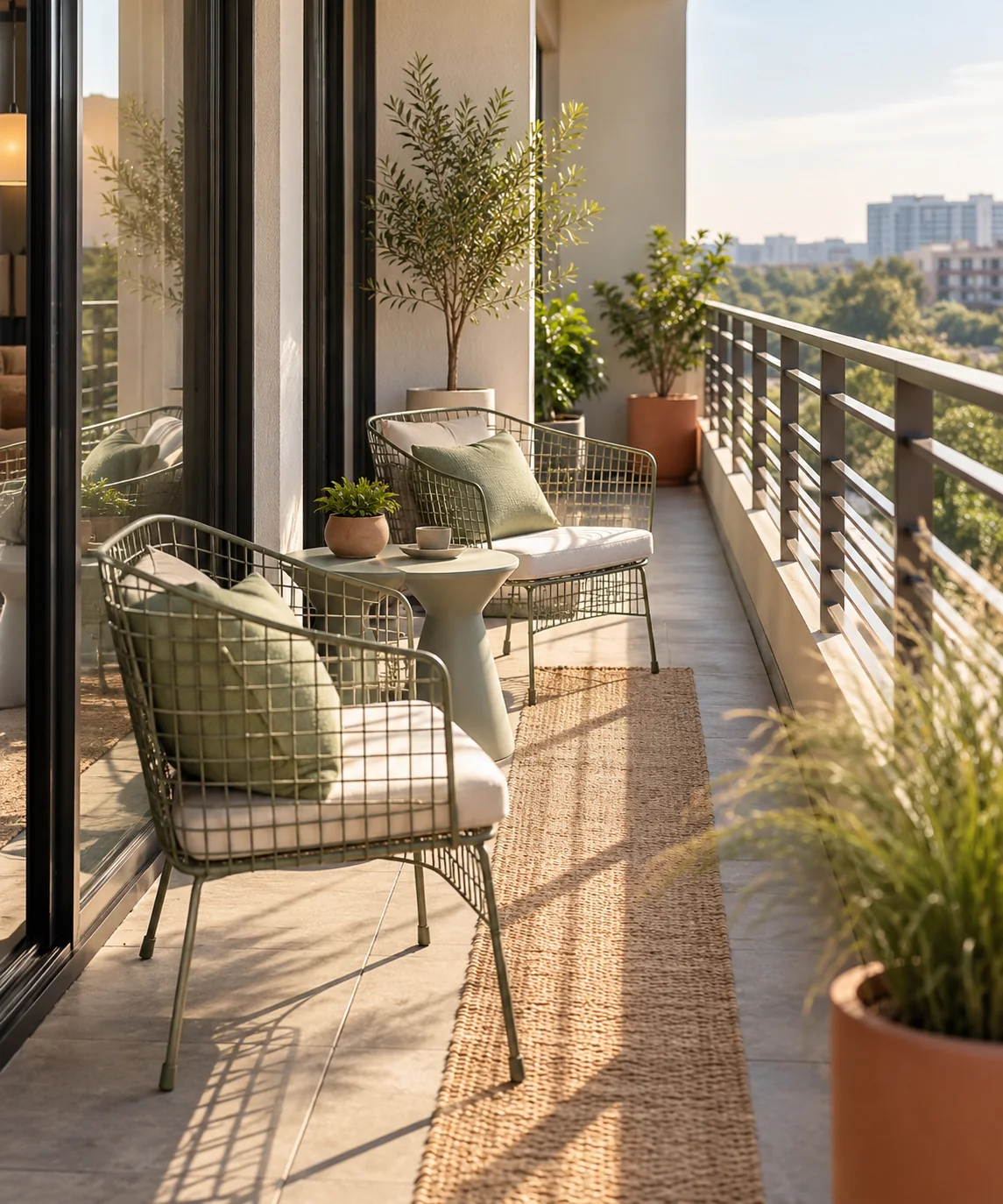
Planning Circulation and Practical Clearances
Before selecting furniture for a galley balcony, map out daily movement patterns and threshold access points. In narrow outdoor spaces, maintaining an unobstructed walking corridor is essential for comfortable transit and door operation. While design guides often suggest keeping roughly 50 to 60 centimeters of clear passage, actual space requirements vary depending on whether you have outward-swinging doors, sliding glass panels, or accessibility needs. Marking proposed furniture footprints on the balcony decking with removable masking tape allows you to test circulation paths and verify that door panels clear frames cleanly before committing to specific chair sizes.
Aligning Pieces to Preserve Natural Daylight
Solid resin panels and bulky timber furniture cast dense shadows that can significantly reduce natural light reaching adjoining interior rooms. In contrast, linear metal wire chairs feature open grid geometries that permit daylight to filter through toward your windows. Placing seating perpendicular to the threshold or along solid exterior side walls keeps the main glass line largely unobstructed. This orientation ensures natural light reaches deeper into your living area while framing clean, open silhouettes when viewing the balcony from indoors.
Evaluating Outdoor Finishes and Cushions
Exposed metal requires durable surface protection to withstand environmental moisture and seasonal temperature fluctuations. Look for factory-applied exterior polyester powder coatings or electro-galvanized treatments, and inspect joints regularly for finish wear or abrasions. Because bare wire seating can feel unyielding over extended sitting sessions, add thin, weather-resistant cushions secured with integrated ties. Storing cushions indoors during rainy periods prevents moisture from lingering between cushion fabric and metal contact points, minimizing the potential for localized rust.
Selecting Stable, Low-Profile Accents
Pairing wire chairs with a compact pedestal table helps preserve legroom and visual openness in a narrow galley footprint. A single central support post eliminates the perimeter clutter of four traditional legs, easing foot movement in restricted spaces. Choose table surfaces with perforated metal or slatted designs that allow rainwater to pass through rather than pooling on top. Ensure the overall table diameter allows comfortable passage without forcing residents to squeeze past edges or brush against outer railings.
Managing Wind Exposure and Storage Protocols
Although open-wire designs create far less wind resistance than solid panels, high-elevation balconies frequently encounter turbulent drafts and unexpected gusts that can shift unsecured furniture. Furniture weight alone cannot be relied upon to prevent movement during severe wind events. Check building regulations regarding outdoor furniture restraints. During storm warnings or extended periods away, nest stackable wire armchairs in a sheltered spot, bring lightweight items indoors, or secure them according to building management guidelines to keep balcony access clear.
YOUR STARTING POINT
A little checklist.
Original editorial guidance. Images are AI-generated concepts, not photographs of completed projects. Our sources and approach.
Questions to consider
How do I clean powder-coated wire furniture safely?
Wipe the metal grids with a soft microfiber cloth dipped in warm water and mild dish soap. Avoid abrasive scouring pads or harsh chemical cleaners, which can scratch the protective powder coating and expose bare metal to rust.
Can wire seating scratch balcony tiles or decking?
Yes, bare metal legs can mark stone or wood decking. Fit the base of each chair leg with durable UV-resistant rubber or nylon glide caps to cushion contact points and prevent scrape marks during repositioning.
Will wire chairs feel excessively hot in direct summer sun?
Dark metal surfaces absorb heat quickly under strong sun. Choose white, cream, or light grey powder-coated finishes, and use light-colored seat pads to maintain comfortable contact temperatures during peak sunny hours.