Rental-Friendly Decor · THE GUIDE
Establish an Entryway Drop Zone Using a Shallow Console Table
Narrow apartment hallways often become congested landing strips for daily clutter when homes lack dedicated entryway coat closets. Keys, incoming mail, and loose shoes quickly spread across the floor, compromising primary walkways. Establishing a streamlined drop zone with a shallow, freestanding console table resolves this organizational challenge without requiring major alterations. By choosing a table depth scaled carefully to corridor dimensions, you retain comfortable passage while gaining structured surfaces for everyday essentials. Combining divided surface containers with floor-level baskets creates an organized, low-impact system that collects outdoor accessories and protects walls and flooring in rental properties.
Jump to the checklist ↓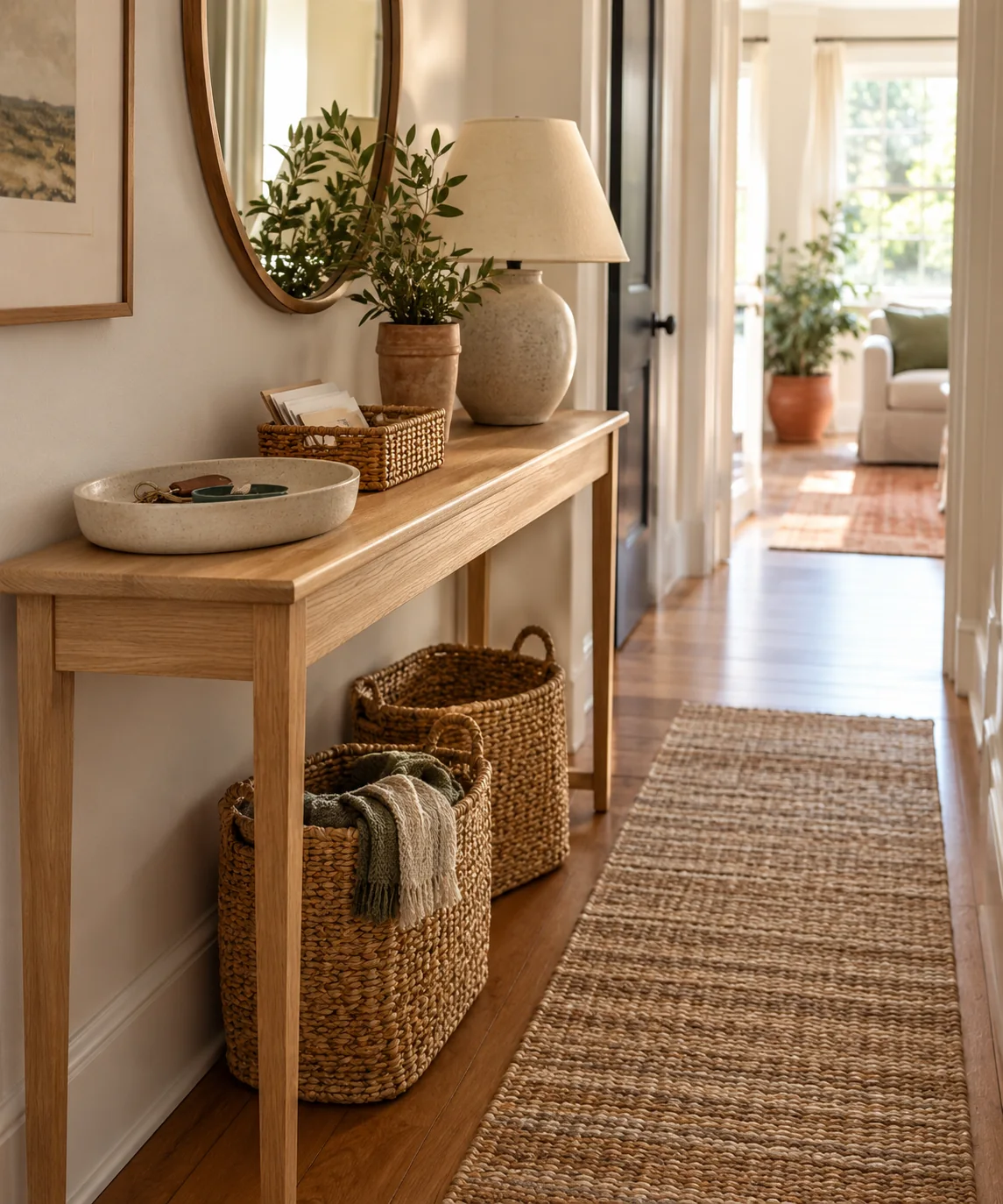
Evaluating Corridor Proportions and Clearance
Corridor dimensions vary widely between buildings, so measuring your specific walking clearance is essential before purchasing furniture. While many residential guidelines reference a standard corridor width of approximately thirty-six inches for comfortable movement, individual accessibility needs, door swings, and bulky deliveries may require more space. In a narrow entryway, selecting a console table with a depth between eight and eleven inches helps preserve an open pathway. Choosing an open-frame design with slender legs maintains clear floor visibility beneath the tabletop, preventing the hallway from feeling boxed in while leaving space for lower storage bins.
Organizing Surface Trays for Mail and Essentials
A slim console tabletop requires deliberate categorization to prevent daily pocket contents from spreading across the narrow surface. Place a shallow ceramic catchall dish near the front edge for house keys, transit cards, and small daily carry items. Adjacent to the dish, position a compact vertical letter sorter or small lidded tray dedicated to inbound mail. Sorting paper correspondence immediately upon entering—placing circulars directly into recycling and filing bills in designated folders—prevents paper stacks from accumulating and keeps the entry surface clean and functional.
Utilizing Low-Profile Floor Baskets for Footwear
When entryway closet space is unavailable, footwear easily scatters along hallway baseboards. Placing two low-profile, rectangular woven baskets on the floor beneath the table organizes shoes without impeding walking paths. Designate one basket for high-frequency footwear such as running shoes or slip-ons, and use the second basket for reusable tote bags, umbrellas, or pet gear. Because floor baskets sit directly beneath the frame, they keep loose items shielded from immediate line of sight and maintain a clear, orderly transition zone between the outdoors and your living space.
Protecting Finishes and Managing Stability
Tall, narrow accent tables have naturally small footprints and can shift or wobble under daily use. To protect rental surfaces, apply soft, self-adhesive felt or silicone bumpers to the back edges of the table frame where it rests near the wall to prevent paint scuffs from vibration. Non-skid rubber pads placed under each leg help prevent sliding on smooth hardwood or laminate. However, freestanding slim tables present a tip-over risk if bumped heavily or pulled by children or pets; always review manufacturer guidelines and consult your property management regarding approved anti-tip wall straps or low-profile anchoring hardware.
Establishing Consistent Reset Routines
A small-scale drop zone maintains its utility only when household routines prevent items from piling up beyond capacity. Because shallow tables offer minimal horizontal real estate, implement a brief evening reset to clear lingering receipts, grocery bags, and stray packaging. Periodically rotate footwear out of the floor baskets and into bedroom storage as seasons change to keep bins from overflowing. Keeping the tabletop mostly clear ensures that your entryway remains an open, accessible corridor that functions smoothly during busy departure and arrival times.
YOUR STARTING POINT
A little checklist.
Original editorial guidance. Images are AI-generated concepts, not photographs of completed projects. Our sources and approach.
Questions to consider
How can I improve stability for a slim console table?
Add non-skid rubber pads beneath each foot to reduce shifting on smooth floors, and install silicone bumpers along rear edges to cushion wall contact. For households with young children or active pets, review the manufacturer's manual and rental guidelines to install appropriate anti-tip anchoring hardware.
What depth works best for a narrow hallway console table?
Console depths between eight and eleven inches generally provide enough surface area for trays and mail holders while minimizing protrusion into the walkway. Measure your corridor before buying to confirm that family members and visitors can pass through comfortably.
How can I prevent shoe clutter from overflowing around the console?
Limit the contents of under-table baskets to two or three pairs of current, high-rotation shoes per household member. Relocate specialized, seasonal, or formal footwear to bedroom closets to keep floor baskets from spilling into the hallway.