Sage and Cream Interiors · THE GUIDE
Establish an Indoor Micro-Green Garden on a Tiered Wire Stand
Setting up a compact micro-green setup lets you harvest fresh greens from an apartment dining corner while blending utility into a sage-and-cream aesthetic. A freestanding tiered wire stand utilizes vertical space efficiently, elevating shallow growing trays toward direct window light without occupying dining tabletop area. Because wire shelving permits open air movement, moisture buildup around containers stays minimal. Establishing this edible corner involves assessing window exposure, selecting appropriately sized trays with drainage reservoirs, and staggering seeding intervals. With simple planning, you can organize a tidy indoor production cycle that looks intentional and supports steady weekly clipping.
Jump to the checklist ↓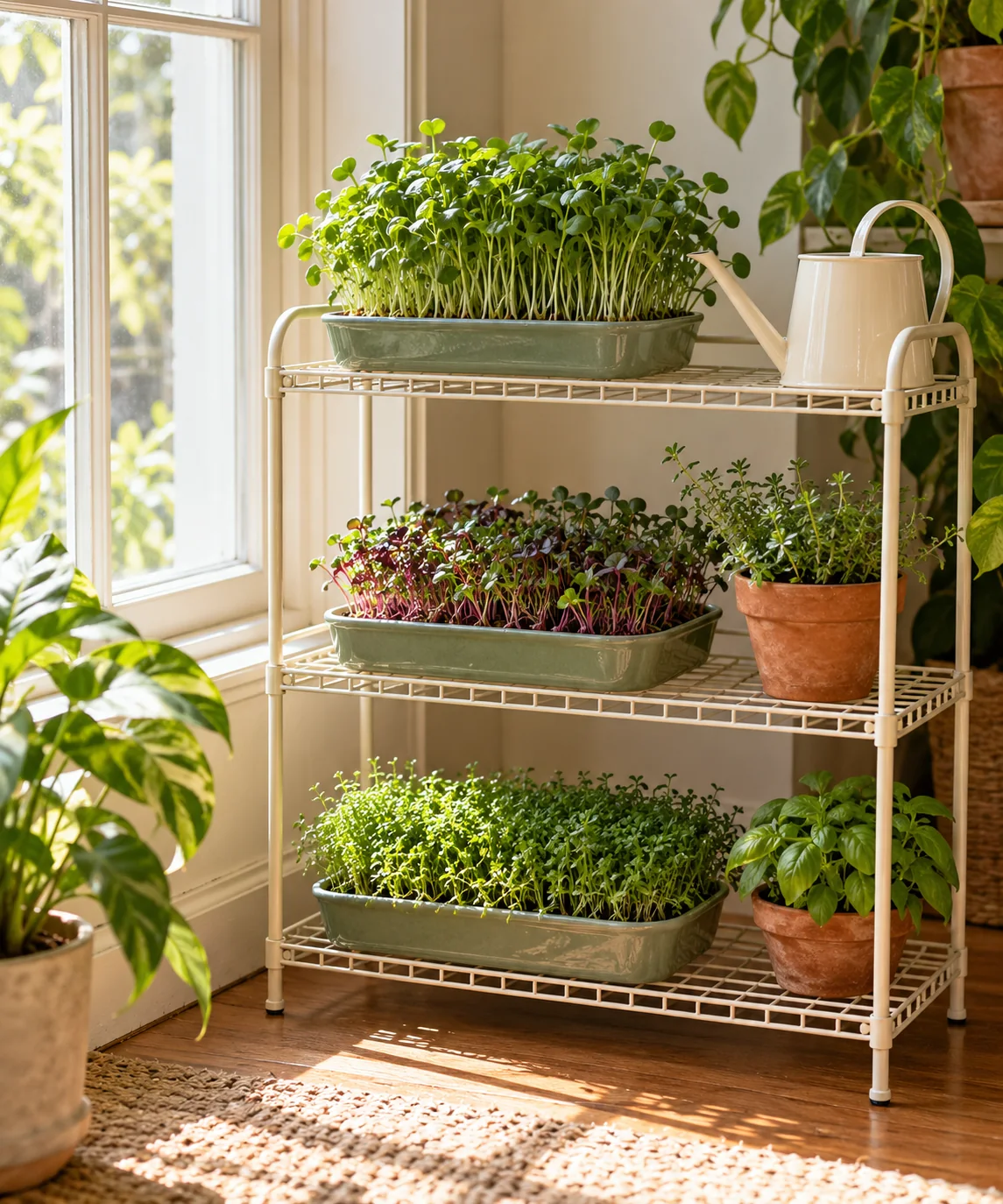
Evaluating Light and Floor Clearance
Position a freestanding wire stand adjacent to a bright east-facing or south-facing window where growing micro-greens can receive ample natural daylight throughout the morning or afternoon. Check that dining chairs can pull out comfortably and that household pathways remain clear of the frame's footprint. Avoid placing shelves directly over or against active heating vents or radiators, which dry out shallow soil quickly. Observing light patterns across several days helps confirm whether natural exposure is sufficient before finalizing your tiered arrangement.
Choosing Trays and Protective Liners
Shallow trays approximately one to two inches deep work well for micro-greens, offering adequate root space while avoiding excessive amounts of damp growing medium. Choose durable food-grade trays or glazed ceramic dishes in muted sage tones that rest flat across the wire shelf dimensions. Because wire tiers contain open gaps, place solid, leakproof drip saucers or solid trays beneath perforated seed flats. Confirm shelf depth and levelness so water drains predictably rather than pooling in corners during initial sprouting.
Arranging Seed Density and Substrates
Fill containers with a clean, pre-moistened seed-starting mix or fine coco coir formulated without dense outdoor garden soil, which can compact indoors and hinder root aeration. Scatter seeds such as radish, broccoli, or sunflower across the substrate according to the seed packet's recommended density, avoiding thick clumps that retain excess moisture. Press the seeds gently into contact with the damp surface and mist evenly with a clean spray bottle. Follow species-specific guidelines for initial darkness periods until seedlings germinate and anchor.
Establishing a Rolling Harvest Schedule
To maintain a continuous harvest, stagger plantings across different tiers by starting a new tray every few days. Reserve lower or lightly shaded shelves for trays that have just begun germinating, while moving vigorous, light-hungry greens to the highest shelves where window exposure is strongest. Harvest stems cleanly above the soil line with clean kitchen shears once the first true leaves emerge, checking seed packet timelines for typical maturity windows. Discard or compost spent root mats and clean trays thoroughly before reseeding.
Managing Moisture and Wire Stand Upkeep
Bottom-watering prevents delicate sprout stems from flattening and keeps surface foliage dry, reducing conditions that encourage mold or dampening off. Add water directly to bottom catch saucers, letting the substrate absorb moisture for ten to fifteen minutes before pouring off any pooling liquid. Wipe down powder-coated wire frames periodically with a dry microfiber cloth to remove stray dust and water splashes. Distribute heavier ceramic vessels across lower tiers to keep the stand's center of gravity stable.
YOUR STARTING POINT
A little checklist.
Original editorial guidance. Images are AI-generated concepts, not photographs of completed projects. Our sources and approach.
Questions to consider
Can micro-greens grow using standard potting soil?
Standard outdoor potting soil is often too coarse and contains slow-release fertilizers unsuitable for delicate sprout roots. Use a sterile, fine seed-starting mix or coconut coir to ensure proper aeration, consistent moisture distribution, and safe harvest hygiene indoors.
How do I stop mold from forming on seed trays?
Maintain active air circulation around wire shelves, avoid overseeding, and bottom-water trays so top stems remain dry. If mold appears, discard that crop immediately, sanitize the tray with hot soapy water, and increase the spacing between your containers.
Will micro-greens thrive in a north-facing window?
North-facing windows rarely provide sufficient natural light for micro-greens, causing them to stretch into pale, weak stems. If you lack bright east or south exposure, rotate trays closer to direct daylight or supplement with an adjustable daylight lamp.