Reading Corners · THE GUIDE
Establish an Offline Micro-Library Inside a Home Office
Working long hours at a home office desk can blur the boundary between focused computer tasks and restorative break time. Creating an offline micro-library within the same room establishes a distinct physical spot dedicated to reading physical media without requiring a separate room. Positioning a supportive chair facing away from desk monitors and pairing it with a small dedicated book display creates a clear visual separation between work and leisure. Stepping away from computer screens into a dedicated analog reading corner allows you to step back from ongoing digital inputs and enjoy uninterrupted reading during scheduled breaks.
Jump to the checklist ↓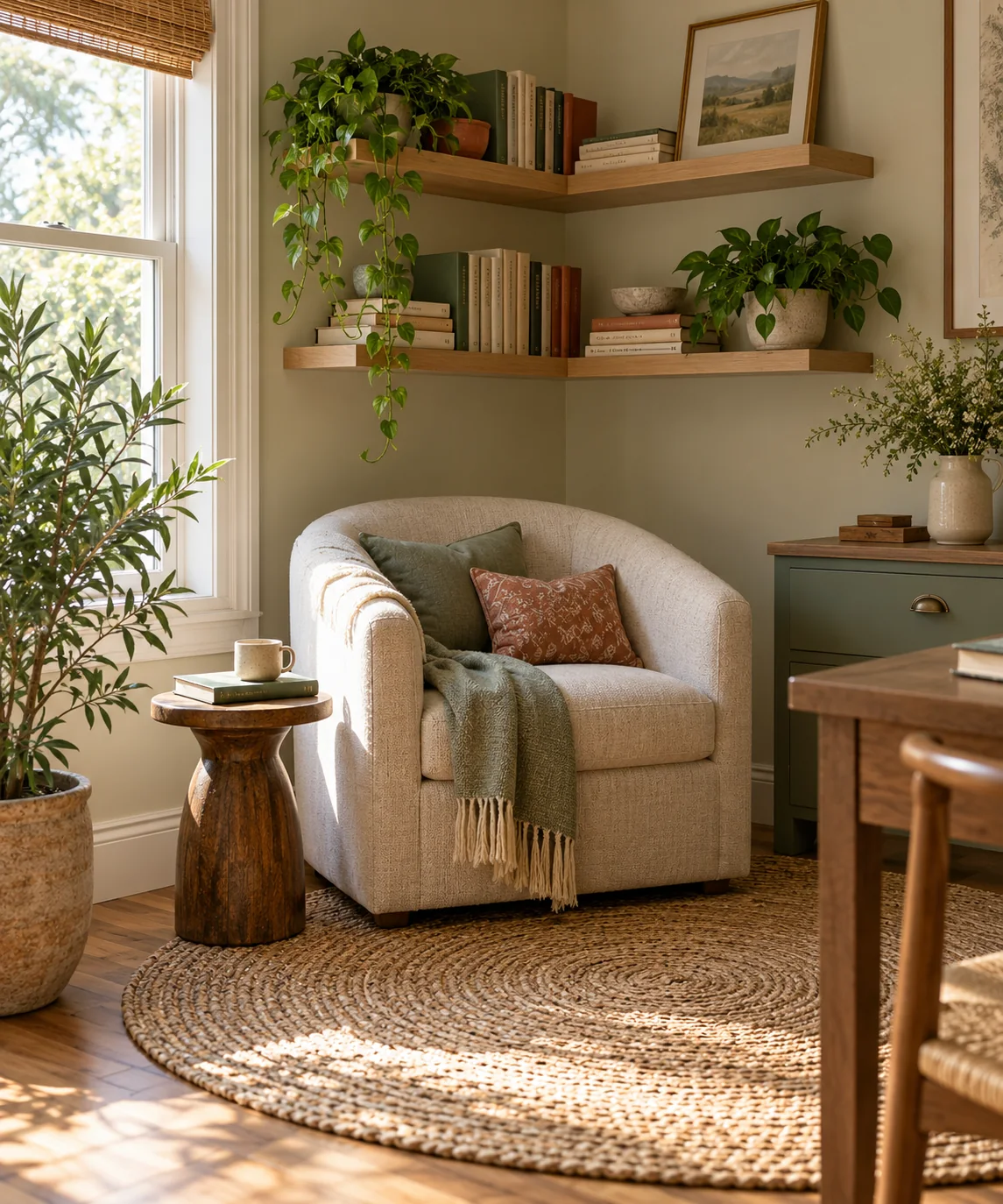
Defining Spatial Orientation Away from Screens
A practical approach for an office micro-library is establishing visual separation from the main workstation. Angle your reading chair away from computer displays, docking stations, and active peripherals so they fall outside your direct line of sight. Orienting the seat toward a window, an interior wall, or dedicated shelving minimizes the distraction of flashing alerts or sleeping monitor screens. This physical division helps mark the transition from active work tasks to quiet, self-paced reading without leaving the room.
Selecting Compact Seating for Sustained Posture
A structured tub chair or compact accent seat works well in home offices where floor area is shared with active desk routines. Unlike deep lounge chairs that encourage reclining and require substantial floor space, a compact chair provides supportive, upright seating suitable for reading physical books. Its modest dimensions tuck into secondary corners without encroaching on the rolling perimeter of your office task chair. Select upholstery that resists everyday friction and complements existing office furnishings.
Zoning the Floor with a Dedicated Area Rug
A small round or rectangular flat-weave rug helps define the reading nook as a self-contained zone within the office layout. Position the front legs of the accent chair on the edge of the rug to anchor the furniture arrangement. Verify that the rug edge stays well clear of the desk chair's rolling path to prevent casters from catching on the pile or curling the backing. Choosing a low-profile weave makes vacuuming simple while offering a comfortable surface underfoot.
Curating an Analog Shelf for Reading Breaks
Equip the micro-library with a compact bookcase or wall-adjacent shelving unit reserved exclusively for recreational reading. Stock the shelves with personal interests such as fiction, biographies, or notebooks, while keeping work-related binders, reference manuals, and project folders on separate office shelving. Keeping pens and paper bookmarks nearby makes it easy to note passages without reaching for electronic devices. Keep mobile phones and device charging cables away from this immediate area to preserve an uncluttered reading environment.
Managing Consistent Work and Rest Transitions
Making practical use of an office reading corner depends on simple, consistent routines. When stepping away from the desk for a brief break, put monitors into standby or lock your workstation to minimize background screen glow. Move directly to the reading chair with your chosen book, giving yourself an uninterrupted window to read printed pages. Separating computer tasks from casual reading helps keep work materials confined to the desk while reserving the corner as a functional, tidy retreat.
YOUR STARTING POINT
A little checklist.
Original editorial guidance. Images are AI-generated concepts, not photographs of completed projects. Our sources and approach.
Questions to consider
Why orient the reading chair away from the computer desk?
Orienting seating away from computer monitors removes active screens and status lights from view, reducing the impulse to monitor incoming messages while trying to read during personal breaks.
Can an adjustable office desk chair be used instead of dedicated seating?
While an office chair can be used, a separate accent chair creates a physical distinction between seated typing tasks and relaxed reading, making the corner feel distinct even within a shared room.
What if the home office lacks sufficient space for an extra armchair?
In tighter layouts, consider a slim slipper chair, a cushioned wooden bench, or a compact reading stool. Choosing furniture with narrow footprints provides dedicated reading seating without crowding office walkways.