Rental-Friendly Decor · THE GUIDE
Expand Dining Options with a Freestanding Drop-Leaf Kitchen Table
Tiny rental kitchens rarely accommodate permanent dining sets or bulky prep islands without obstructing natural traffic paths. A freestanding drop-leaf kitchen table offers a reversible solution by letting you alter the tabletop surface according to the task at hand. When both leaves rest downward, the unit functions as a slender console along an open wall or perimeter corner. Raising one or both leaves instantly provides dining space for one to four people or a sturdy surface for dry food preparation. Planning your room clearances carefully ensures your kitchen remains navigable while serving multiple everyday needs.
Jump to the checklist ↓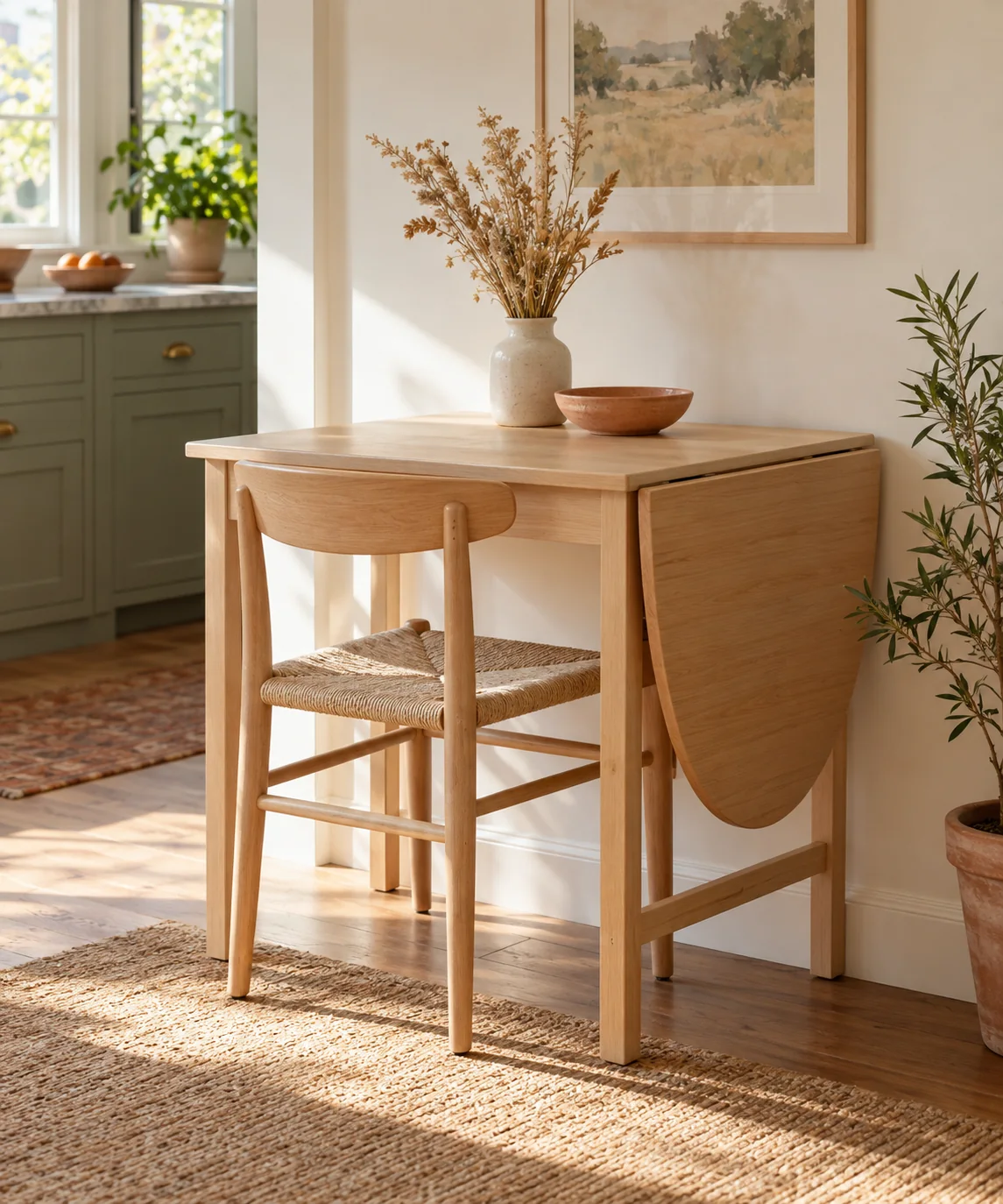
Assessing Room Flow and Practical Clearances
Usable floor area determines whether a drop-leaf table improves a small kitchen or introduces daily obstruction. Rather than relying on rigid universal measurements, assess how open paths function around your cooking triangle. Ensure that extended leaves still allow major appliance doors, lower cabinetry, and pantry entryways to open fully without collisions. Using low-tack painter's tape to mark the table's expanded perimeter on the floor for a few days lets you evaluate whether everyday traffic and meal preparation feel cramped before bringing the furniture home.
Evaluating Structural Base and Leaf Supports
A drop-leaf table's daily usability depends on the design of its underside supports and hinge hardware. Common configurations include pivoting gate legs, pull-out wooden support rails, and folding metal brackets. Gate-leg designs generally distribute weight directly to the floor, providing a steady dining platform, though leg placement may affect where seated diners position their feet. Slide-out wooden rails keep legroom open while providing reliable leaf support. Periodically examine hinge screws and brackets to ensure repeated folding and raising hasn't caused fasteners to loosen.
Selecting Complementary Compact Seating
Dining seating should align with the table's compact footprint to avoid cluttering walkways when not in use. Backless stools or slim dining chairs that slide fully under the center frame keep circulation open when leaves are lowered. In particularly tight kitchens, lightweight stackable chairs or folding chairs that store elsewhere between meals can free up valuable floor space. Before purchasing seating, measure the interior span between the table legs to confirm that chairs will slide cleanly underneath without scraping the legs or table frame.
Surface Protection and Everyday Maintenance
In compact living spaces, a drop-leaf table frequently serves as both a dining surface and an auxiliary preparation station. Avoid chopping foods directly on the tabletop; always use a stable, slip-resistant cutting board positioned over the central frame rather than out on the cantilevered leaf. Clean surfaces promptly after meals using a lightly dampened cloth with mild dish soap, drying the wood immediately to protect joints and finishes from moisture intrusion. Using heat trivets under warm cookware protects factory coatings from discoloration and heat damage.
Understanding Structural Load Limitations
Drop-leaf tables offer space flexibility, but their cantilevered wings have structural limitations compared to fixed tables. Outer leaves are intended for plate settings and dining use rather than concentrated heavy loads; avoid leaning heavily on extended edges or using them to support heavy kitchen appliances. On uneven rental flooring, tables may rock slightly; adjustable felt pads or leveling glides beneath the legs can stabilize the unit without scratching the floor. Recognizing these mechanical limits preserves the table hinges and ensures safe everyday dining.
YOUR STARTING POINT
A little checklist.
Original editorial guidance. Images are AI-generated concepts, not photographs of completed projects. Our sources and approach.
Questions to consider
Can a drop-leaf table serve as an everyday food prep island?
It can provide convenient extra prep space when tasks are kept to the central base. The center frame offers direct vertical support, whereas outer leaves are best reserved for light staging, dining, or holding lightweight ingredients.
How much walking clearance should be planned around an extended table?
Rather than following a single fixed number, ensure there is sufficient clearance for appliance doors, oven racks, and drawers to open completely, with enough walkway room for comfortable passage during cooking routines.
How can I prevent a drop-leaf table from shifting on smooth flooring?
Place non-marking silicone or rubber furniture pads under each leg. These provide traction against smooth tile or vinyl planks while preventing movement when leaves are raised or lowered.