Rental-Friendly Decor · THE GUIDE
Expand Food Prep Space with an Island on Lockable Casters
Compact rental kitchens often force frustrating compromises, offering barely enough uninterrupted counter area for a single cutting board. A freestanding kitchen island mounted on heavy-duty lockable casters introduces essential chopping, landing, and storage zones without modifying cabinetry or altering leased floor plans. Rolling islands can be stationed centrally during active meal preparation and rolled flush against a blank wall when entertaining or cleaning. Choosing durable butcher block tops and open slatted bases maintains a light visual profile while providing high-utility staging for mixing bowls, small appliances, and pantry dry goods.
Jump to the checklist ↓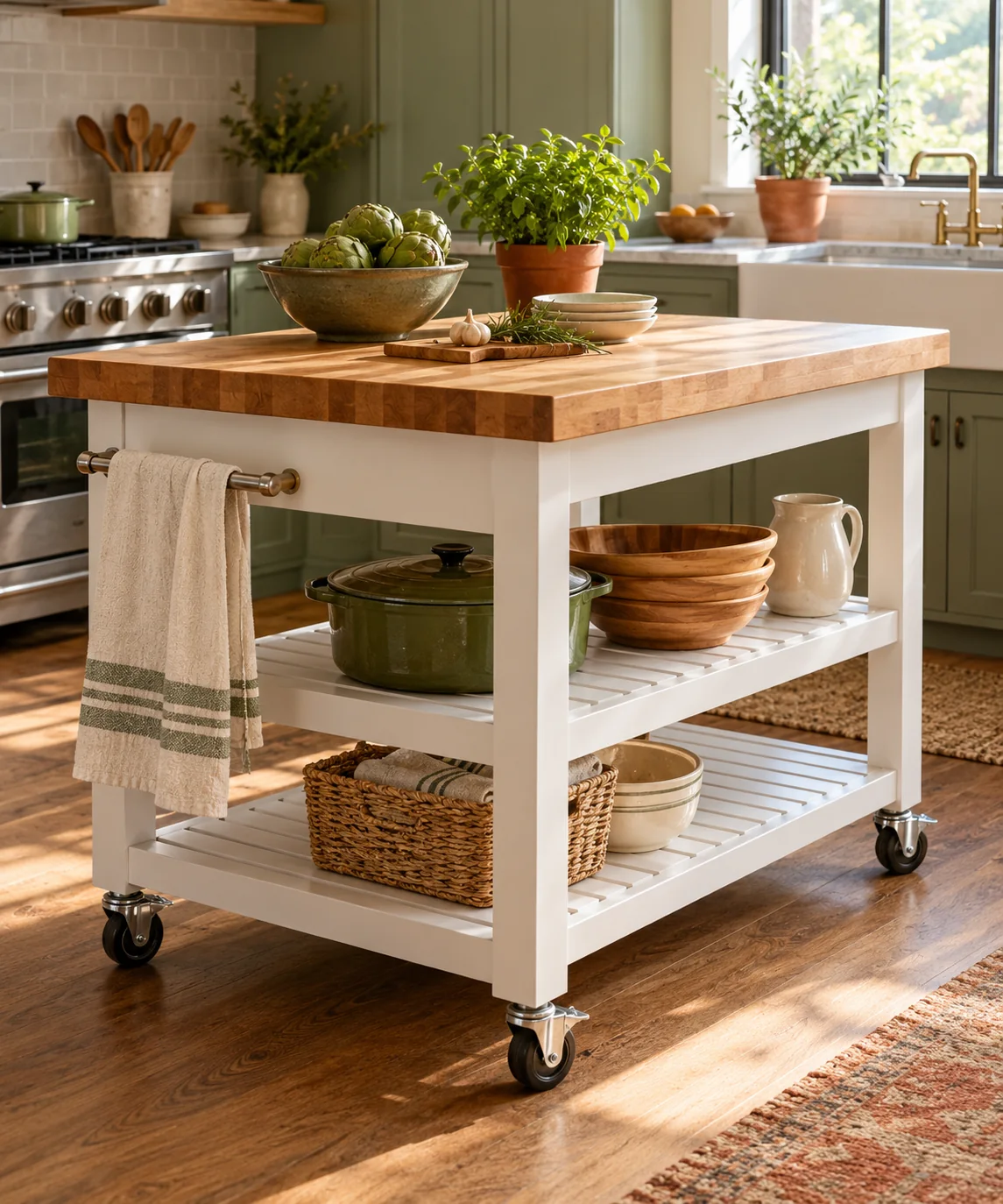
Traffic Lane and Clearance Verification
A rolling island requires adequate perimeter space to operate safely without obstructing primary kitchen workflows. In standard kitchen planning, thirty-six inches of walkway clearance is a common benchmark, but tight rental layouts may require flexible positioning where the cart is shifted depending on the task at hand. When testing layouts, outline the cart's footprint on the floor with painter's tape. Open every adjacent appliance door fully—including the oven, dishwasher, and refrigerator—to verify that doors and drawers can swing open without colliding with the cart or trapping you in a corner.
Caster Wheel Selection and Floor Safety
Standard hard plastic wheels can crack, scuff, or leave dark marks on rental linoleum, engineered wood, or tile grout. Look for casters with non-marking polyurethane or thermoplastic rubber treads rated to handle the combined weight of the cart and stored cookware. Ensure the wheels feature positive-locking mechanisms that brake the wheel roll and, ideally, the swivel rotation. While quality caster locks significantly reduce drift, keep in mind that rolling carts on smooth or dusty floors can still shift under forceful lateral pressure like heavy kneading.
Top Surface Care and Cutting Boundaries
Solid beech, oak, or rubberwood butcher block surfaces provide dependable prep areas but require clear boundaries to prevent damage. Avoid cutting directly on the island top; use separate, washable cutting boards to prevent deep score marks that trap food residue and moisture. Treat unsealed wood tops periodically with food-grade mineral oil according to the manufacturer's directions, wiping away excess after application. Always use trivets rather than placing hot pans or wet cookware directly onto the surface to prevent scorching, water rings, and localized grain swelling.
Lower Shelf Weight Distribution
Because mobile carts sit elevated on casters, poor weight distribution increases the risk of tipping during movement. Place the heaviest kitchen items—such as cast-iron pans, ceramic mixing bowls, and stand mixers—on the lowest shelf to maintain a low center of gravity. Reserve middle shelves or pull-out wire baskets for lightweight items like mixing spoons, dry towels, or parchment paper rolls. A low center of gravity stabilizes the cart as you guide it across floor transitions, grout joints, or low-profile threshold strips.
Relocation and Practical Flexibility
The main benefit of a caster-mounted island is full portability without altering rental property cabinetry. When moving between apartments, a freestanding island requires minimal preparation beyond emptying loose cookware from the lower tiers. Before transport, lock the wheels or remove threaded caster stems if needed to protect the hardware and meet transport clearances. In a future apartment, the cart can transition easily into a dining room coffee bar, utility storage station, or craft cart if the next kitchen already has built-in workspace.
YOUR STARTING POINT
A little checklist.
Original editorial guidance. Images are AI-generated concepts, not photographs of completed projects. Our sources and approach.
Questions to consider
Can I knead heavy bread dough on a mobile kitchen island?
While a mobile island provides helpful prep space, dynamic lateral forces like heavy kneading can cause even locked casters to skid or wobble on slick rental flooring. For tasks requiring high downward or lateral force, position the short side of the cart against a solid wall to help stabilize the frame, or use fixed perimeter countertops instead.
What is the best way to clean and maintain the butcher block top?
Wipe the surface with a cloth dampened with warm water and mild dish soap, then dry it immediately with a clean towel. Never let water pool on the wood seams. Reapply a food-safe mineral oil or butcher block conditioner periodically when the wood looks dry, following the manufacturer's application guidelines.
Are lockable casters reliable on uneven rental tile?
Casters with wider rubberized wheels generally navigate grout lines more smoothly than narrow plastic versions. However, if a locked wheel settles directly over a deep grout depression or uneven tile lip, it may sit slightly askew. Double-check that brake levers are fully depressed and that the cart feels steady before beginning meal preparation.