Patio Seating Ideas · THE GUIDE
Face-to-Face Dual Loveseats Separated by Seedling Shelves
Narrow patios often turn into disorganized catch-alls where outdoor lounging and container gardening compete for limited square footage. Arranging two compact, two-seater loveseats in a face-to-face configuration instantly creates an intimate conversational nook while establishing an orderly spatial axis. Placing an open, tiered seedling shelf between them—or anchoring one end of the conversational aisle—functions as a living privacy divider and micro-propagation station. This vertical layout lifts young plants up toward the sunlight without stealing precious floor area from human occupants, effectively uniting functional urban gardening and outdoor relaxation in a balanced, dual-purpose layout.
Jump to the checklist ↓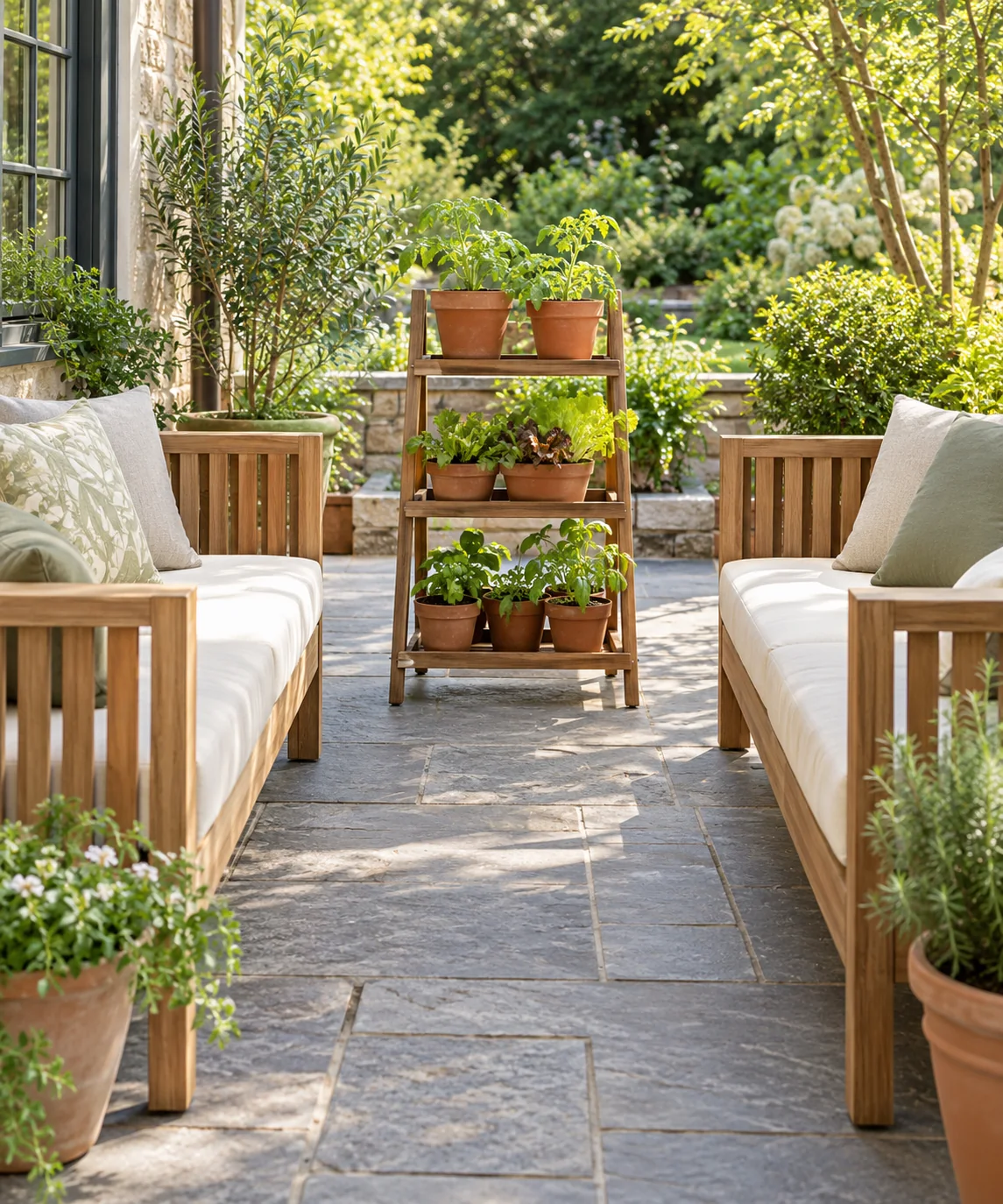
Planning the Seating Footprint
Arranging two compact loveseats opposite one another establishes a balanced social nook suited to narrow outdoor terraces. Before selecting furniture, measure your patio footprint to confirm there is adequate room for movement. Loveseats with slim arm profiles generally preserve more usable floor area than bulky lounge seating. When positioning the pieces opposite each other, leave enough space between seat edges so individuals can sit and stand comfortably without knocking knees. In addition, reserve a clear walking path along at least one boundary of the seating area to keep garden access and household doorways unobstructed.
Positioning Tiered Plant Shelves Safely
Placing a freestanding, tiered plant stand near one end of the conversational area introduces vertical greenery without encroaching on legroom. Freestanding shelves, however, present tip-over hazards in exposed outdoor environments. Check manufacturer guidance regarding maximum shelf capacities and outdoor placement, choosing broad-based, sturdy units over top-heavy wire stands. Avoid placing tall plant shelving directly in high-traffic entry routes or narrow pathways where an elbow or shoulder could unbalance the unit. In breezy or wind-prone courtyards, keep heavier containers on the lowest shelves to lower the unit's center of gravity, and be prepared to relocate or secure freestanding stands during high-wind advisories.
Sun Exposure and Seasonal Planting Considerations
Seedlings and tender young starts typically require consistent daylight to thrive, which requires assessing your patio's seasonal solar exposure. Observe how shadows from surrounding walls, fences, and overhead eaves move across the patio throughout the day before committing to furniture positions. Placing plant shelving where it receives morning or early midday sun can benefit developing plants without shading your main seating zone during late afternoon relaxation. In hot climates or high-summer conditions, tender seedlings may require partial protection from harsh overhead sun, meaning lightweight shade cloth or movable placement can be advantageous.
Managing Water Runoff and Moisture Protection
Regular watering schedules for developing seedlings can quickly introduce puddles, soil staining, and excess moisture near seating surfaces. Use deep drip saucers or solid trays beneath individual containers to capture drainage water before it runs across patio pavers or splashes nearby cushions. When watering, use a narrow-spouted can held close to soil level to minimize splashing onto upholstery. For seating positioned close to plant staging zones, choose outdoor cushions with water-repellent, washable covers that can be removed and laundered if soil or moisture transfers onto the fabric.
Seasonal Transitions and Flexible Storage
Seedling cultivation is usually concentrated in spring and early summer. As starts are transplanted into permanent garden beds or larger containers, the tiered shelf can be repurposed for mature potted herbs or ornamental containers that tolerate varying light levels. When transitioning into winter or periods of extended non-use, assess storage options. Folding loveseats and modular plant ladders can often be stored flat in a shed, garage, or under breathable, weather-resistant covers. Regular seasonal cleaning keeps drainage trays free of algae and prepares both furniture and shelving for subsequent growing cycles.
YOUR STARTING POINT
A little checklist.
Original editorial guidance. Images are AI-generated concepts, not photographs of completed projects. Our sources and approach.
Questions to consider
How can soil transfer onto nearby loveseats be minimized?
Complete transplanting, potting, and soil preparation away from upholstered seating on a potting tray or dedicated ground sheet. Only place pre-potted, wiped containers on the plant stand once excess loose potting mix has been brushed away.
What should be considered when choosing loveseats for a narrow terrace?
Prioritize compact loveseats with slender track arms, armless profiles, or open metal or slatted wood frames. These designs minimize visual and physical bulk while maintaining adequate seating width and preserving walkway clearances.
How can standing water and insects be managed around the seating nook?
Empty drip trays and saucers within thirty to sixty minutes after watering to prevent stagnant water accumulation. Promptly removing standing water discourages fungus gnats, mosquitoes, and mineral crusts from developing right beside your seating area.