Reading Corners · THE GUIDE
Fit a Book Rest Beside a Radiator Without Sacrificing Air Flow
Creating a reading nook near a household radiator offers a pleasant spot for cold-weather reading, but placing furniture and paper items too close to heating equipment requires caution. Radiators depend on unobstructed air movement to warm a room effectively, and direct heat can dry out furniture joints and damage book bindings. By using a breathable, freestanding chair and maintaining adequate separation from the heating unit, you can enjoy warmth without blocking room circulation. Keeping heat sources clear and following manufacturer safety guidelines protects your furnishings, reading materials, and home heating efficiency.
Jump to the checklist ↓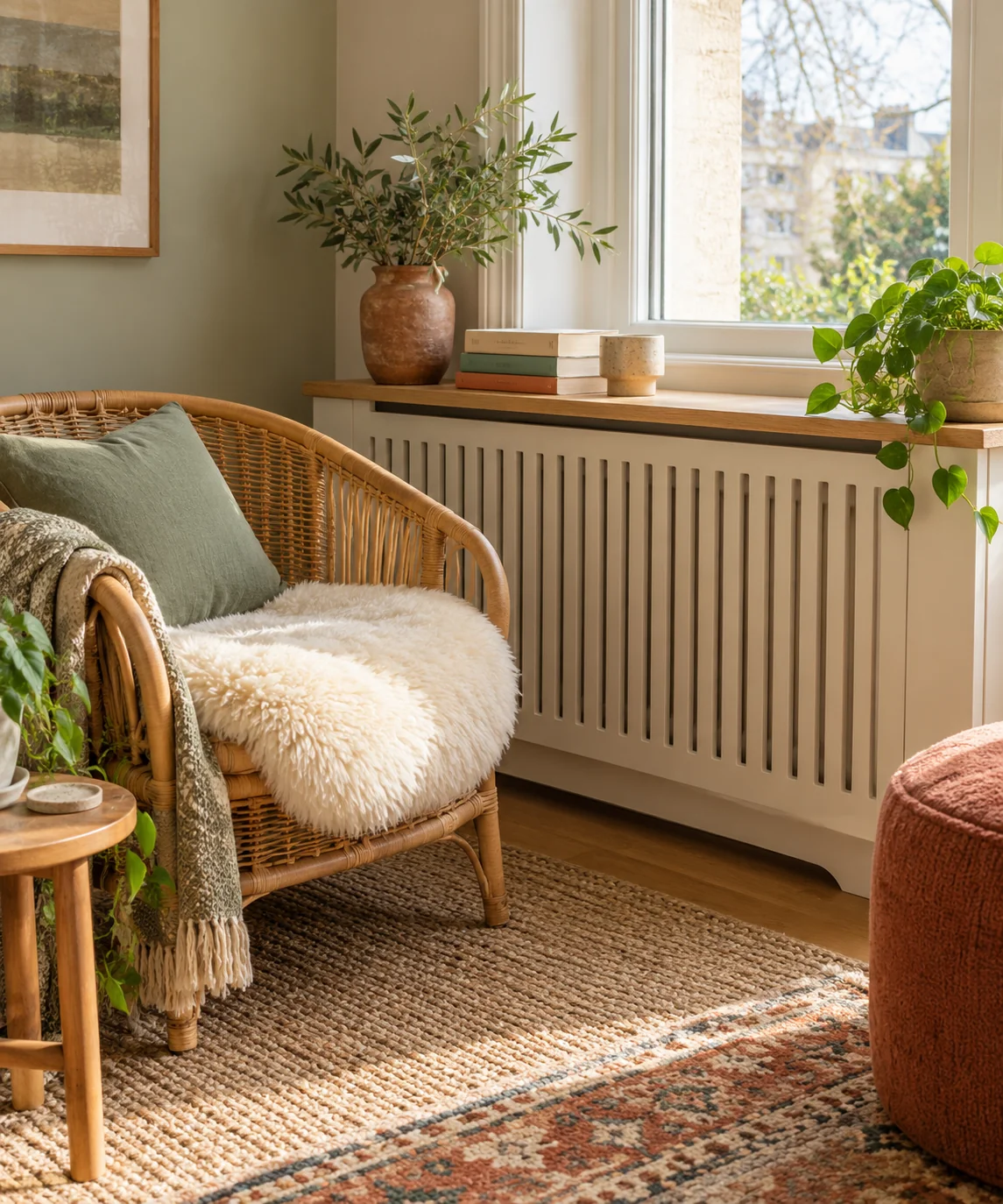
Understanding Convective Clearance and Air Movement
Hydronic and electric radiators rely on natural convective currents, drawing cooler air from floor level and dispersing warmed air upward into the living space. When planning furniture placement, never block the front face, top vents, or thermostatic controls of the unit. Refer to the radiator manufacturer's stated clearance specifications for minimum distances to walls and furnishings. Keeping chairs and tables spaced away from heating surfaces allows warm air to circulate freely into the room rather than becoming trapped against nearby objects.
Selecting Breathable Seating and Heat Considerations
Bulky, heavily skirted armchairs placed right next to a radiator can act as thermal blocks, absorbing heat that should be warming the room. Open-frame furniture, such as a sturdy wood or woven chair with an open structure, permits ambient air to move naturally around the seating area. If additional comfort is needed, add removable cushions or a wool throw that can be adjusted as room temperatures change. Avoid placing upholstered or natural fiber furniture directly in contact with warm radiator panels to prevent materials from drying out.
Protecting Books from Heat Exposure
Direct and prolonged exposure to elevated temperatures accelerates the breakdown of paper fibers and bookbinding glues, leading to brittle pages and cracked spines. Radiator covers or adjacent ledges should not be used as permanent book storage. If a freestanding console or side table is placed near the radiator, limit materials resting on it to active reading items, and keep them away from direct heat discharge vents. Return finished books to cooler, enclosed shelving away from heat sources.
Monitoring Heating Performance and Valve Access
A properly arranged reading corner should never interfere with heating control or routine maintenance. Ensure manual shut-off valves and thermostatic radiator valves (TRVs) remain fully visible, accessible, and unobstructed by furniture or curtains. Blocking a thermostatic head with furniture can trap warm air around the sensor, causing it to shut off prematurely and leave the rest of the room cold. Keep the area around all operating controls clear so the heating system responds accurately to room temperatures.
Seasonal Maintenance and Dust Management
Convective heating currents naturally draw airborne lint and floor dust toward the radiator fins and surrounding floor surfaces. Vacuum the area around and beneath the radiator regularly to prevent dust accumulation that can reduce heating efficiency and create dry odors when the system operates. Periodically inspect nearby wooden or woven furniture for signs of finish checking or loose joints caused by seasonal humidity drops, wiping frames with a damp cloth as recommended by the manufacturer.
YOUR STARTING POINT
A little checklist.
Original editorial guidance. Images are AI-generated concepts, not photographs of completed projects. Our sources and approach.
Questions to consider
Can radiator heat damage books placed nearby?
Yes. Prolonged exposure to warm, dry air can dry out bookbinding glues, warp covers, and make paper brittle. Reading materials should be kept away from direct heat vents and returned to standard shelving after use.
Why is it important to keep thermostatic radiator valves clear of furniture?
Thermostatic radiator valves measure the surrounding air temperature to regulate heat output. If a chair or console traps warm air against the valve head, the sensor may register false high temperatures and shut off heat to the room prematurely.
What type of chair is practical near a radiator?
An open-frame wooden or metal chair with removable cushions allows air to circulate more effectively than a dense, skirted armchair that blocks convective warmth from reaching the wider room.