Laundry Space Organization · THE GUIDE
Fit a Rolling Slim Cart Between Washer and Wall
A narrow gap between a front-loading washing machine and an adjacent wall can provide convenient storage for daily laundry supplies if planned thoughtfully. Converting this tight boundary into functional space requires measuring real-world clearances, accounting for dynamic machine movement during spin cycles, and checking baseboard obstructions. By selecting an appropriately sized utility cart with durable casters and arranging supplies to maintain stability, you can utilize unused floor area while preserving necessary spacing around appliances and protecting walls from unnecessary scuffs.
Jump to the checklist ↓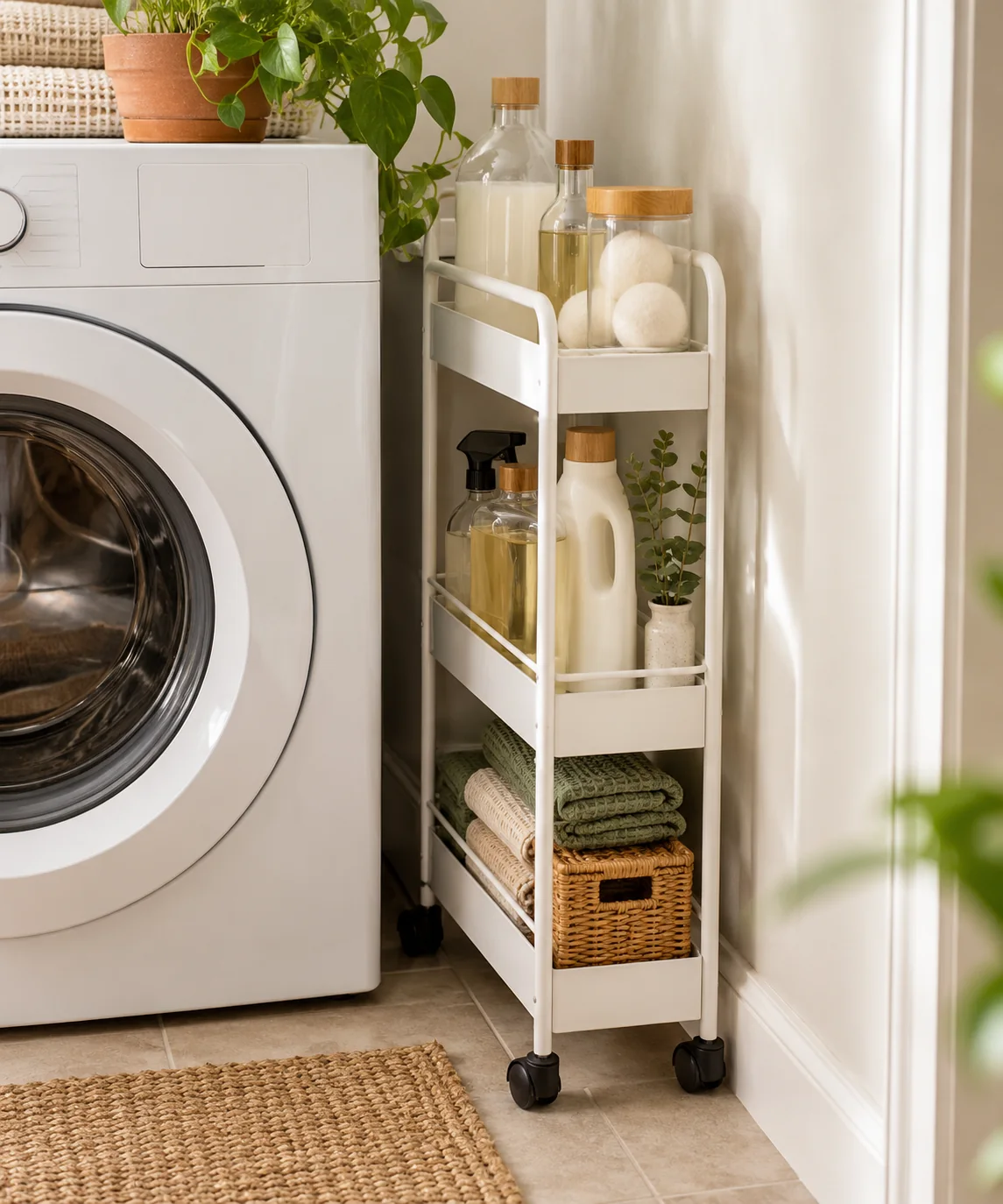
Accounting for Dynamic Spin and Manufacturer Clearances
Front-load washing machines move during high-speed spin extraction cycles, with lateral sway varying depending on load balance, floor firmness, and machine leveling. Before selecting a rolling cart, check your appliance manual for recommended side clearances and measure the gap at multiple vertical points, including floor trim and appliance handles. Allow enough margin beyond the cart's widest hardware point so minor drum oscillations do not cause the appliance to bump repeatedly into the cart or drywall.
Selecting Materials and Wheel Quality
Narrow utility carts are commonly constructed from powder-coated steel or molded polypropylene. Metal frames provide structural rigidity that resists flexing when fully extended, while plastic models resist corrosion from laundry moisture and accidental detergent spills. Look for smooth-rolling casters made of dense polyurethane or rubber rather than thin plastic. Sturdy wheels track more consistently over grout lines and textured laundry floors, reducing the likelihood of the cart binding in tight alcoves.
Balancing Weight for Stability
Slim, multi-tier carts have a narrow track width and a relatively high center of gravity, making them susceptible to tipping if top-heavy. Store dense items such as gallon detergent jugs, liquid softeners, and distilled water bottles exclusively on the lowest shelf. Use intermediate levels for lighter boxes, stain sprays, or dryer balls, and reserve the top tray for compact essentials like lint rollers or laundry bags. This distribution lowers the center of mass and keeps the cart steady as it rolls.
Navigating Baseboards and Floor Obstacles
Baseboard molding, quarter-round trim, and floor drain covers can reduce usable clearance at floor level. Measure the opening at the narrowest point between the appliance base and the trim profile rather than relying solely on upper wall dimensions. If baseboards restrict wheel movement, choose a cart whose bottom tier or caster placement clears the trim height. Always verify that cart casters do not roll over electrical cords, washing machine drain hoses, or water supply lines.
Maintaining Cleanliness and Hose Access
Tight gaps around laundry equipment tend to accumulate airborne lint, dust, and pet hair over time. Because laundry appliances produce heat and humidity, lingering debris should be cleared periodically to maintain good household airflow and sanitation. Roll the cart completely out on a regular basis to vacuum the alcove floor and inspect the wall. Use this opportunity to check that appliance fill hoses and drain lines remain dry, kink-free, and securely connected.
YOUR STARTING POINT
A little checklist.
Original editorial guidance. Images are AI-generated concepts, not photographs of completed projects. Our sources and approach.
Questions to consider
Will the cart rattle against the wall when the washer spins?
It depends on the machine's leveling, load balance, and available clearance. An unbalanced load can cause significant lateral vibration in front-load washers. Maintaining adequate spacing and attaching adhesive felt bumpers to the outer edges of the cart can reduce contact noise, but keeping the washer leveled is essential to minimizing dynamic sway.
Can I store powder detergents on an open slim cart?
Yes, but powders should be kept in airtight, moisture-resistant containers. Laundry spaces frequently experience shifts in humidity from washers and dryers, which can cause cardboard boxes to soften and loose detergent powder to clump.
How do I keep tall bottles from tipping when rolling?
Choose a cart design that features deep shelf baskets or side retention rails. You can also place non-slip shelf liners or compartmentalized storage caddies inside the trays to hold tall liquid containers securely upright during movement.