Compact Home Offices · THE GUIDE
Fit a Slim 18-Inch Wall-to-Wall Desk Along an Unused Bedroom Niche
Unused alcoves between structural pillars often become dead zones cluttered with laundry hampers or stray storage boxes. Transforming an awkward niche into a functional workspace requires precise boundary planning and disciplined surface dimensions. An 18-inch depth provides enough clearance for a laptop, writing notebook, and compact task lamp without projecting into primary bedroom circulation routes. By spanning a single continuous hardwood plank across the opening, the alcove reads as intentional built-in architecture. Maintaining clear legroom beneath and concealing wiring paths creates an uncluttered, focused environment tailored to quiet administrative tasks and remote work.
Jump to the checklist ↓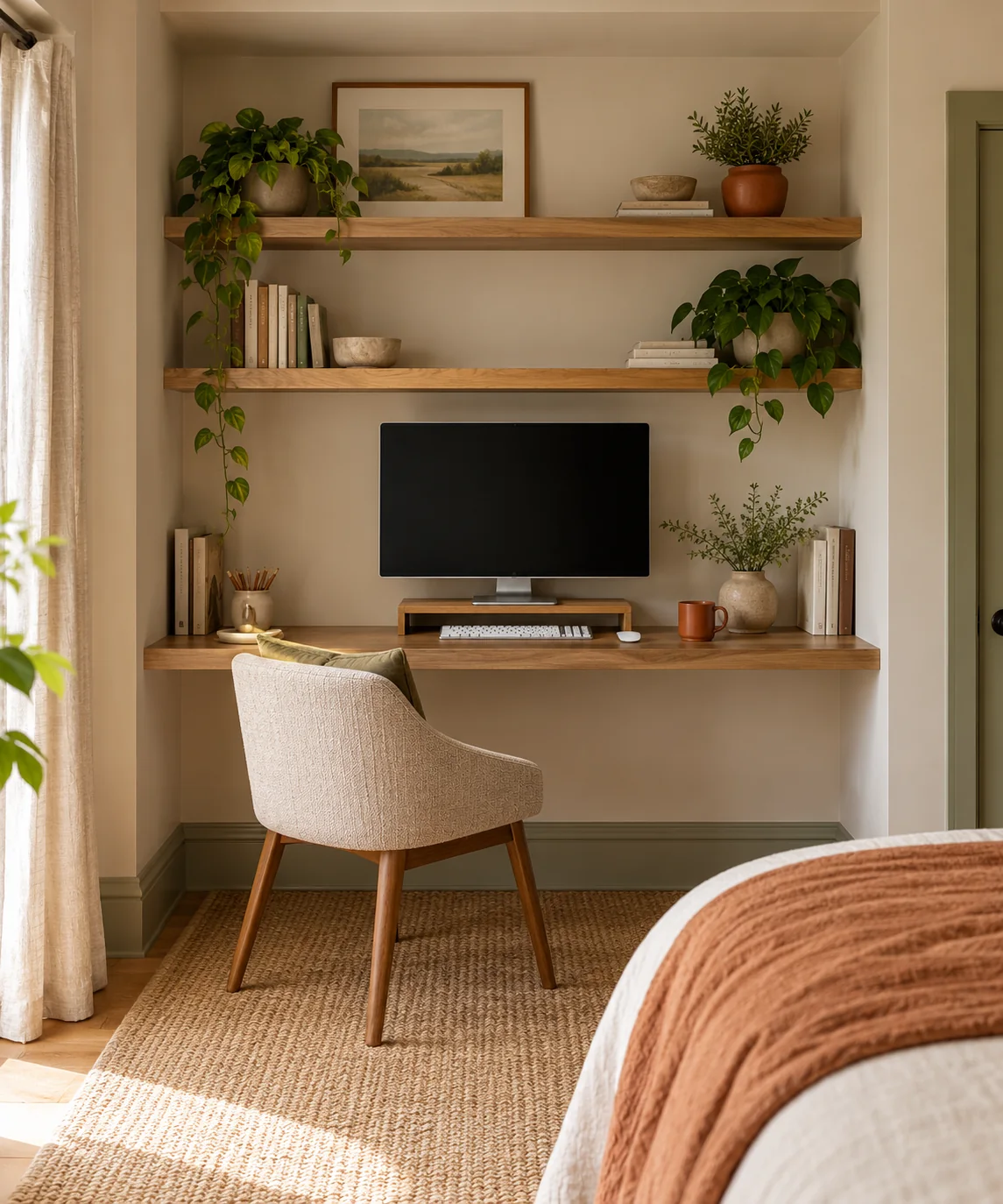
Alcove Measurement and Clearance Mapping
Transforming an alcove into a functional work area begins with measuring the span across multiple heights and depths. Structural pillars and partition walls in older construction rarely sit plumb, meaning a rigid plank cut to a single measurement will leave noticeable gaps or bind during placement. An 18-inch working depth fits compact bedroom layouts, but you must confirm that the forward edge does not interfere with bedroom door swings, wardrobe clearances, or primary walking paths. Use low-tack painter tape on the floor to assess room circulation before committing to dimensions.
Timber Selection and Structural Support Requirements
Spanning an alcove without intermediate legs requires careful attention to material strength and deflection. A standard 1.5-inch hardwood plank can bow over a wide opening if subjected to concentrated loads like heavy monitors or leaning weight. Consult standard timber deflection limits (such as the Sagulator) to evaluate your chosen species across the measured width. Secure, continuous perimeter ledger strips anchored into solid wall studs or masonry are necessary to support the plank ends and rear edge securely, rather than relying on unreinforced friction fits.
Under-Desk Cable Management and Routing
Shallow desk depths expose electrical cords quickly, creating visual clutter and snag hazards for legs. Mount a flame-retardant surface raceway or horizontal J-channel along the underside rear perimeter of the timber. Route laptop power supplies, display leads, and phone cables through this channel toward the nearest compliant wall outlet. Keep extension blocks firmly elevated off the floor using approved mechanical brackets, ensuring that all power leads stay clear of foot movement and floor vacuuming paths.
Ergonomic Realities of Shallow Workspaces
An 18-inch deep desk places the back wall close to the user's lower body. Depending on your height and chair configuration, your knees or feet may contact the rear wall when sitting upright. Test your natural sitting posture within the empty alcove before finalizing desk height. Because the screen sits closer to your eyes than on a standard 30-inch commercial desk, position compact monitors on low-profile risers or use smaller laptop screens to maintain comfortable focal lengths without inducing neck flexion.
Maintenance and Working Surface Boundaries
Narrow built-in surfaces require strict desktop discipline to remain functional. Because shallow desks lack buffer space, avoid stacking peripheral equipment, large printers, or heavy paper files on the plank. Clean the timber finish weekly with a lightly dampened microfiber cloth and follow the finish manufacturer's care recommendations. Acknowledge the functional boundaries: an 18-inch wall-to-wall surface works well for focused writing, laptop tasks, and study, but cannot safely host multi-display creative suites without ergonomic compromises.
YOUR STARTING POINT
A little checklist.
Original editorial guidance. Images are AI-generated concepts, not photographs of completed projects. Our sources and approach.
Questions to consider
Can I mount an external monitor on an 18-inch deep niche desk?
Yes, provided the monitor uses a shallow base or slim arm that preserves focal distance. Large displays over 24 inches placed on shallow depths sit uncomfortably close to your field of vision and may cause eye strain.
How do I prevent a five-foot timber desk from sagging in the middle?
Install a continuous rear wall ledger screwed into framing studs, and attach a stiffening apron rail along the front underside edge if the timber species and thickness indicate deflection risk across that span.
Will my knees bump the back wall on an 18-inch surface?
Taller individuals may find their knees or shins touching the wall, particularly when using standard office chairs. Test your posture against the alcove wall beforehand and adjust seat height or desk elevation accordingly.