Pantry Organization · THE GUIDE
Fit a Slim Rolling Pantry Tower into the Gap Beside the Refrigerator
The narrow gap between a freestanding refrigerator and an adjacent wall or counter often collects dust and goes unused. Placing a slender rolling pantry tower into this vertical space can turn underutilized square footage into accessible storage for dry staples, vinegars, and spices. Successfully using this space requires consulting the refrigerator manufacturer's manual for mandatory clearance tolerances, choosing appropriate wheel and frame designs, and organizing stored items to maintain stability during movement. Planning carefully helps you gain useful storage while ensuring essential appliance ventilation and smooth kitchen movement are preserved.
Jump to the checklist ↓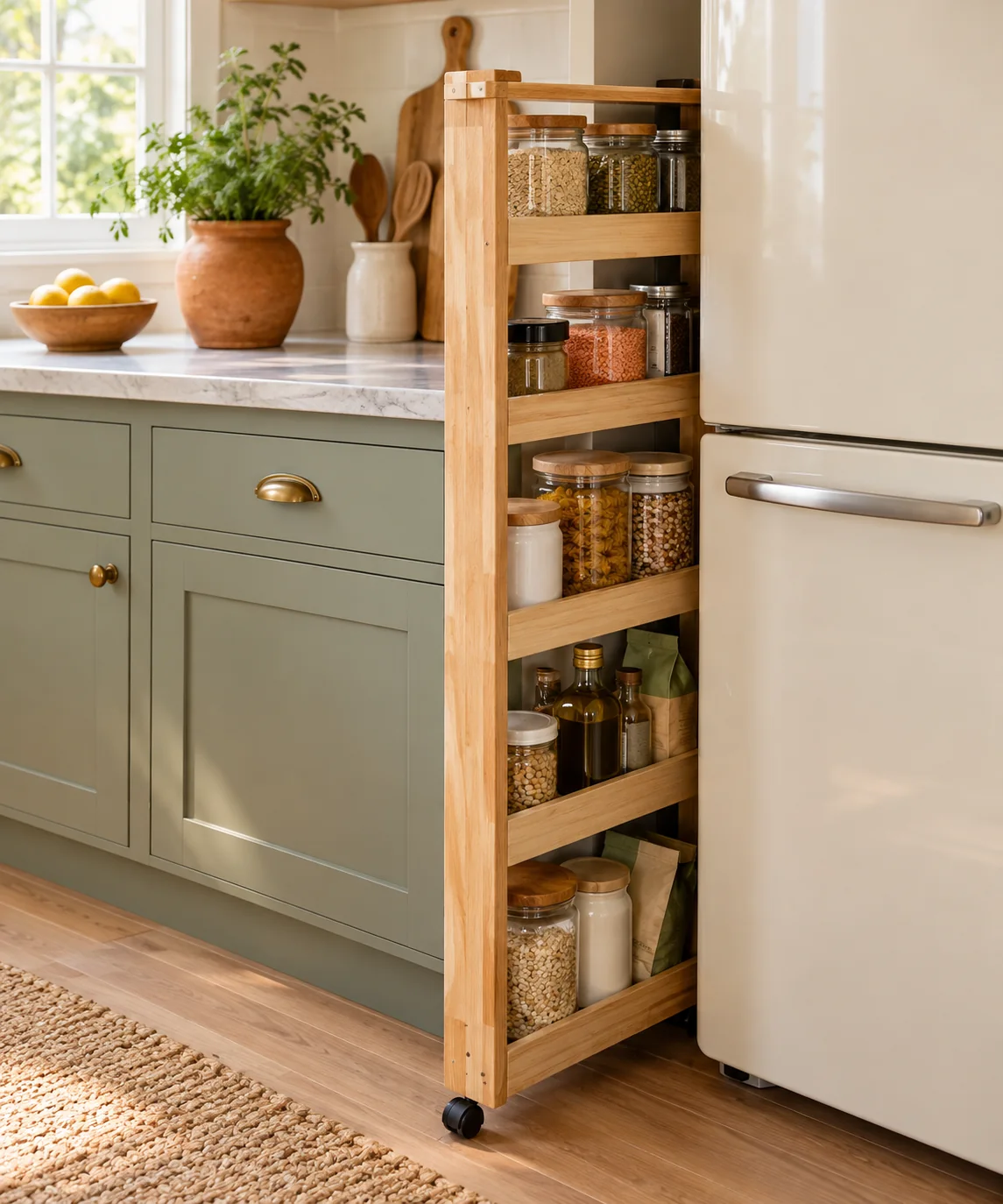
Verifying Manufacturer Clearances and Heat Tolerances
Before purchasing or building a slim rolling cart, check your refrigerator manual for required side and rear ventilation clearances. Different refrigerator models dissipate heat differently: some use bottom-mounted condenser coils with front exhaust, while others dissipate heat through external side walls that can become warm during cooling cycles. Placing a storage cart too close to a heat-dissipating appliance wall can restrict airflow, degrade compressor efficiency, or warm stored food. Measure the gap at the floor, midpoint, and top, taking baseboards into account, and ensure the cart leaves adequate open space per appliance specifications.
Selecting Wheels and Stable Frame Geometry
Choose a rolling tower equipped with rigid, fixed-direction casters rather than 360-degree swivel wheels. Fixed casters ensure the unit rolls directly forward and backward along a straight track, reducing the risk of the cart veering into the refrigerator panel or scraping the wall. For hard floors like wood or tile, soft polyurethane or rubberized tread wheels minimize rolling noise and prevent surface scuffs. Check that the wheel diameter smoothly handles any flooring transitions or deep grout lines without catching.
Distributing Weight to Prevent Tip Hazards
Slender storage towers with narrow footprints can become unstable if loaded improperly. Distribute weight with the heaviest items on the lowest shelves: reserve the bottom tier for large vinegar jugs, sealed cooking oils, and canned broths. Place intermediate-weight boxed staples and sauces on middle shelves, and use upper levels exclusively for lightweight spice jars, tea tins, or paper goods. Choose carts with raised perimeter guardrails or lips on every tier to prevent tall bottles from tilting outward when the unit rolls forward.
Maintaining Floor Clearances and Transit Paths
Smooth operation depends on a clear, level floor surface along the cart's pull-out path. Keep rugs, floor runners, and electrical cords out of the doorway or transition zone directly in front of the refrigerator gap. When rolling the tower out, pull steadily from the center handle rather than pulling from an angle, which could cause a narrow tower to twist. Periodically sweep or vacuum the narrow floor track to clear dust, pet hair, and grit that can jam small caster wheels or abrade floor finishes.
Monitoring Stored Food and Ambient Temperatures
Because the area immediately surrounding an active refrigerator can fluctuate in temperature, select stored items thoughtfully. Reserve the rolling tower for heat-tolerant, shelf-stable goods like vinegar, dried grains, and canned items. Avoid storing temperature-sensitive ingredients such as active baking yeast, fine chocolates, high-quality cooking oils prone to oxidation, or household medications next to the appliance flank. Periodically feel the sides of the cart facing the refrigerator to confirm that heat buildup remains minimal.
YOUR STARTING POINT
A little checklist.
Original editorial guidance. Images are AI-generated concepts, not photographs of completed projects. Our sources and approach.
Questions to consider
How much space should be left between a rolling cart and the refrigerator?
Clearance requirements depend entirely on the specific refrigerator model. Consult your appliance user manual for mandatory air space, especially if your model features side-wall condensers that release heat through exterior panels. The cart should glide freely without touching the appliance housing.
Can canned goods be stored on a narrow rolling tower?
Yes, but canned goods should be concentrated on the bottom one or two shelves. Placing heavy cans on upper tiers raises the center of gravity and increases the risk of the tower wobbling or tipping when pulled out.
How do I keep tall bottles from falling over when rolling the cart?
Choose a rolling tower designed with sturdy side guardrails or deep basket shelves. Alternatively, group tall bottles closely together or use small adjustable shelf dividers to prevent individual containers from shifting during movement.