Small Balcony Layouts · THE GUIDE
Fit a Storage Bench into an Acute Balcony Corner
Balconies with acute, non-square corners often present dead space where standard rectangular furniture cannot sit flush. Rather than leaving these sharp angles unused, selecting or arranging an appropriately shaped storage bench can transform an awkward wedge into an organized asset. A carefully planned bench provides exterior seating while keeping gardening accessories, cushions, and tools protected from view. Implementing this setup successfully requires checking property weight guidelines, measuring exact angles, preserving floor drainage, and selecting materials suited to sheltered outdoor conditions.
Jump to the checklist ↓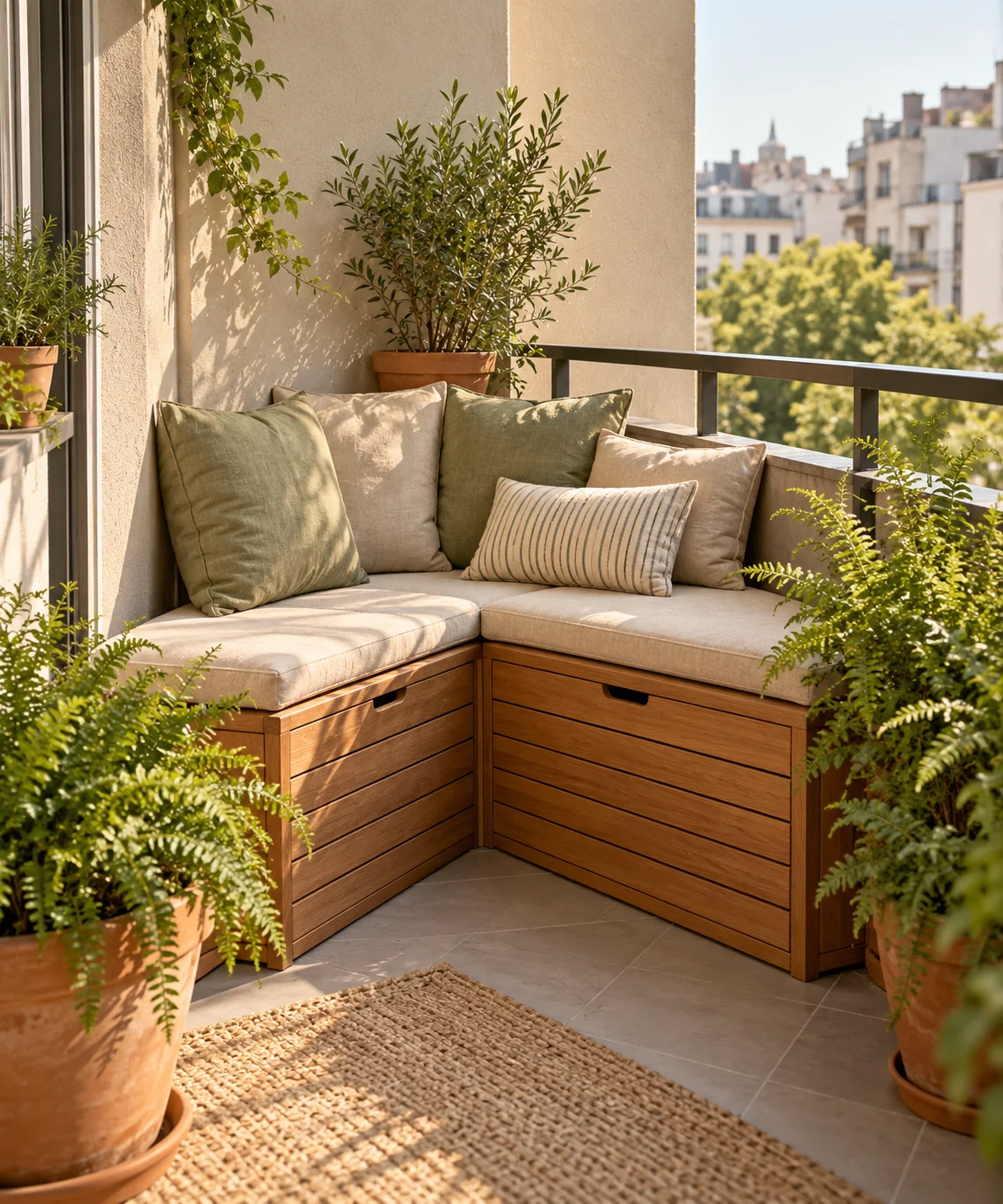
Measure the Corner Geometry and Clearances
Acute corners rarely conform to standard ninety-degree angles, making precise measurement essential before shopping for modular furniture or custom solutions. Lay heavy paper or cardboard flat across the balcony floor into the corner apex, tracing the contours of the joining walls. Note exterior wall fixtures, baseboard trim, siding overlaps, and wall weep holes. This template helps you identify whether a wedge-shaped unit will sit securely without blocking vital exterior wall drainage or scraping against textured cladding.
Review Balcony Weight Allowances and Materials
Enclosed storage units filled with tools, planters, and accessories can accumulate significant weight. Before introducing heavy storage furniture, consult property management or building documentation to verify your balcony's allowable live and dead load limits. Select furniture crafted from durable exterior materials, such as naturally dense woods or powder-coated aluminum, but keep overall weight modest. Elevating the unit on low, adjustable feet prevents the base from sitting directly in rainwater and allows air to circulate beneath the bench.
Evaluate Lid Opening Clearances and Wall Textures
In an acute corner, standard hinged bench lids frequently collide with adjacent walls before opening wide enough for practical use. Look for designs featuring a split lid, a removable cushion top, or front-facing access doors. If using an upward-lifting seat, verify that the lid clearance clears textured finishes like rough stucco or brick, which can abrade wood finishes and fabric. Selecting stainless steel or coated outdoor hardware helps prevent hinge corrosion in humid environments.
Organize Interior Contents for Balanced Weight
The narrow, deep wedge of an acute corner can easily become a catch-all for disorganized supplies. Use separate, lightweight plastic bins or breathable canvas totes to divide the interior volume. Place longer, lighter items, such as bamboo plant supports or folded textile covers, into the narrow back point. Keep everyday tools and heavier essentials near the wider front opening to avoid overbalancing the unit and to ensure items remain accessible without strain.
Maintain Airflow and Inspect Drainage Paths
Deep corner spaces can collect windblown dust, fallen leaves, and standing moisture. Routinely inspect the gap behind and beneath the storage bench to ensure building drainage scuppers remain unobstructed. Follow the furniture manufacturer's maintenance recommendations for surface care, which may include periodic cleaning and applying protective finishes. Checking the interior periodically helps detect dampness early, ensuring stored tools and textiles stay dry and well-ventilated.
YOUR STARTING POINT
A little checklist.
Original editorial guidance. Images are AI-generated concepts, not photographs of completed projects. Our sources and approach.
Questions to consider
Can I place heavy garden supplies inside a corner balcony bench?
Always check your building's allowable balcony load capacity before loading storage furniture. Materials like dense potting soil, gravel, and heavy pottery add weight quickly, so distribute weight evenly and store bulkier gardening bags in designated ground-level storage areas if limits are strict.
How do I prevent standing water from damaging a corner bench?
Ensure the bench rests on elevated, non-absorbent feet so rainwater can flow freely toward exterior scuppers. Never position a solid furniture base directly over a balcony drain, and maintain a slight air gap between the bench frame and the exterior walls to encourage ventilation.
What lid design works best in a non-square corner?
A split lid—where only the front portion lifts—or a front-access cabinet door prevents the lid from scraping against converging side walls. Removable lift-off seat panels are another practical option for tight, irregular architectural corners.