Small Balcony Layouts · THE GUIDE
Fit an Outdoor Woven Rug to Unify Balcony Furniture
Concrete balcony slabs often appear stark, industrial, and visually disconnected from interior living spaces. Incorporating a flatweave outdoor rug can define a seating area, tying individual chairs and tables into a coherent, comfortable layout. Synthetic materials like polypropylene absorb minimal moisture, dry relatively quickly after rain, and resist surface abrasion under regular foot traffic. Because balconies encounter wind exposure and moisture pooling, selecting the right rug dimensions, low-profile edge binding, and breathable underlays helps keep the textile lying flat, reduces tripping hazards, and allows routine floor maintenance.
Jump to the checklist ↓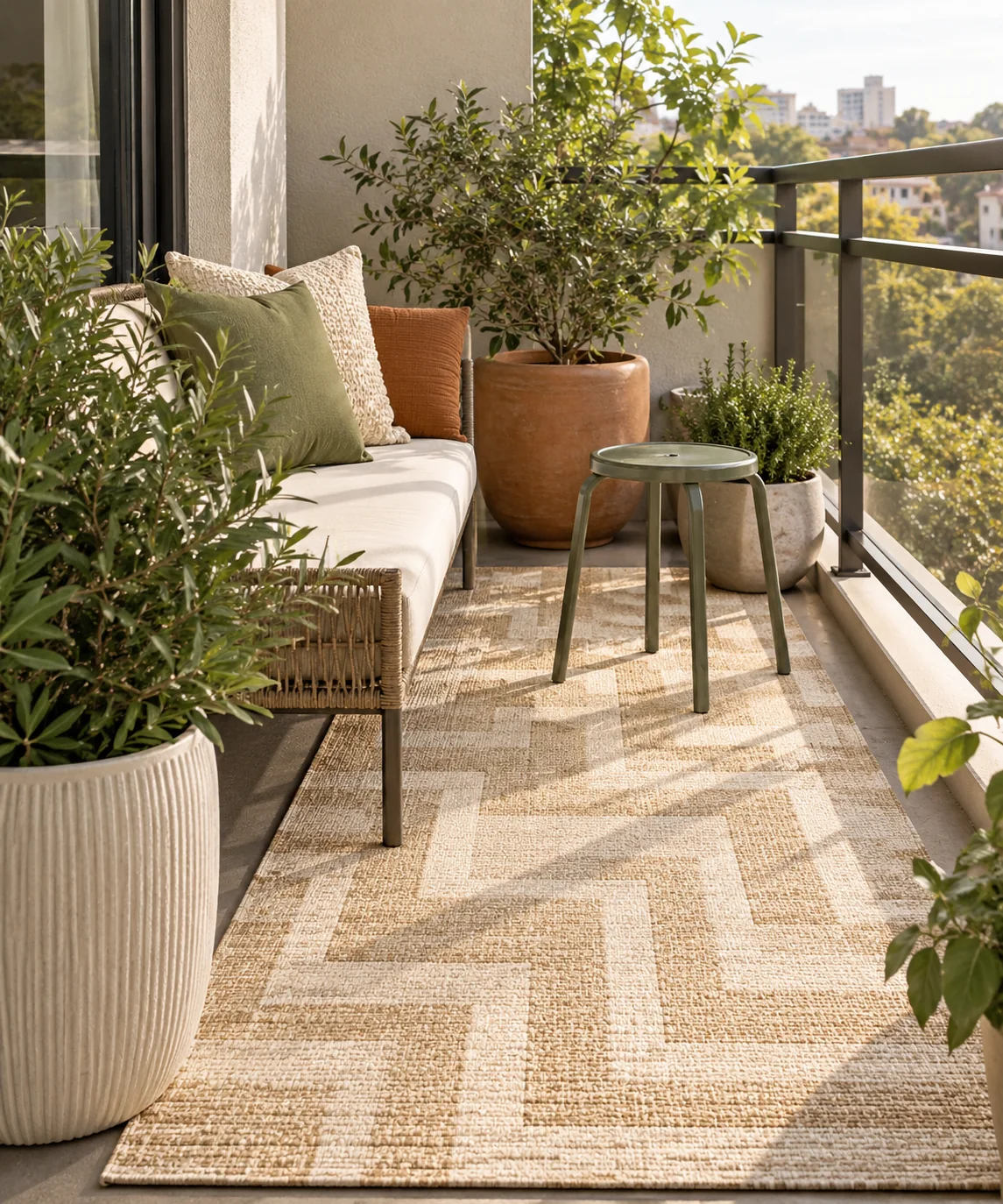
Checking Clearances and Drainage Paths
Accurate measurements prevent rug edges from curling against walls or obstructing perimeter drainage. Measure the balcony deck to ensure the rug leaves open access to built-in deck drains, gutters, and scuppers, as covering these points can trap standing water during heavy downpours. In addition, test outward-opening exterior doors before purchasing by placing a piece of cardboard or a sample swatch matching the expected rug thickness beneath the door sweep. The door should swing freely without catching or dragging along the textile.
Selecting Low-Profile Polypropylene Weaves
Polypropylene flatweaves are well-suited for exposed balcony settings because synthetic fibers take up very little ambient water compared to natural yarns like jute or wool. Unlike high-pile or tufted carpets, dense flatweaves do not trap loose soil, pollen, or outdoor grit deep within the pile. Look for rugs with tightly bound, heat-sealed, or serged border hems to minimize fraying when exposed to regular weather. Neutral shades help reduce the appearance of atmospheric city dust while visually warming cool concrete flooring.
Positioning Furniture to Anchor the Layout
Placing primary furniture legs directly on an outdoor rug helps define the space while assisting in keeping the textile weighted against light drafts. In compact seating arrangements, resting the front legs of chairs and all table supports on the weave provides steady downward contact. However, top-floor wind gusts can still shift unweighted sections, so furnishings alone should not be considered a total guarantee against high-wind displacement. Regularly check that chair glides glide smoothly across the weave without snagging the fibers.
Managing Deck Moisture and Slab Breathability
Even weather-resistant synthetic rugs can trap water against balcony slabs if left unchecked after persistent rain. Prolonged moisture retention against concrete can encourage efflorescence, mildew formation, or surface discoloration. Placing a ventilated, outdoor-rated mesh pad beneath the rug allows airflow and promotes evaporation along the slab. Size the underlay so it stays slightly within the rug border, preventing exposed pad edges while helping the runner stay positioned without using chemical adhesives that could harm balcony sealants.
Routine Maintenance and Seasonal Storage
Consistent upkeep prevents grit from embedding into synthetic fibers and keeps the balcony surface hygienic. Sweep the rug periodically with a medium-stiff outdoor broom to remove debris before moisture settles into it. When deeper washing is necessary, spot-clean using a mild detergent mixed with water, rinse thoroughly, and allow both sides to dry fully in the open air before replacing. During prolonged winter freezes or severe seasonal storms, rolling the clean, dry rug and storing it indoors helps extend the material's working lifespan.
YOUR STARTING POINT
A little checklist.
Original editorial guidance. Images are AI-generated concepts, not photographs of completed projects. Our sources and approach.
Questions to consider
Can outdoor flatweave rugs remain outside through heavy rain seasons?
While polypropylene resists water damage, leaving a rug on a wet slab indefinitely can trap moisture and cause mildew or concrete efflorescence. Periodically rolling or lifting the rug to let the balcony deck dry completely helps preserve both the floor and the textile.
How should I keep rug edges flat against balcony breezes?
Placing heavy furniture feet along corners and edges helps hold the weave down under moderate breezes. For persistent edge curling, check whether the rug requires rerolling in the opposite direction, and avoid using unapproved permanent exterior tapes that could damage balcony coatings.
Are flatweave synthetic rugs suitable for homes with pets?
Yes. Tight flatweaves lack the looped pile that tends to catch pet claws, which reduces the chance of unraveling. The smooth synthetic fibers also shed hair more easily than plush rugs and can be wiped down or rinsed when soiled.