Small Bathroom Storage · THE GUIDE
Fit Tension-Rod Wire Baskets into Shower Corners
Sharing a compact alcove shower among multiple family members often results in crowded ledges, fallen shampoo bottles, and slippery tub edges. When tile walls cannot be drilled due to rental rules or waterproofing concerns, a floor-to-ceiling tension rod caddy with wire baskets offers an adaptable solution. Utilizing vertical corner space that normally goes unused, this non-permanent fixture organizes bottles by individual user or product type. Open wire designs allow water to drain instantly, reducing mildew formation while keeping everyday cleansing essentials organized, accessible, and safely elevated off the shower floor.
Jump to the checklist ↓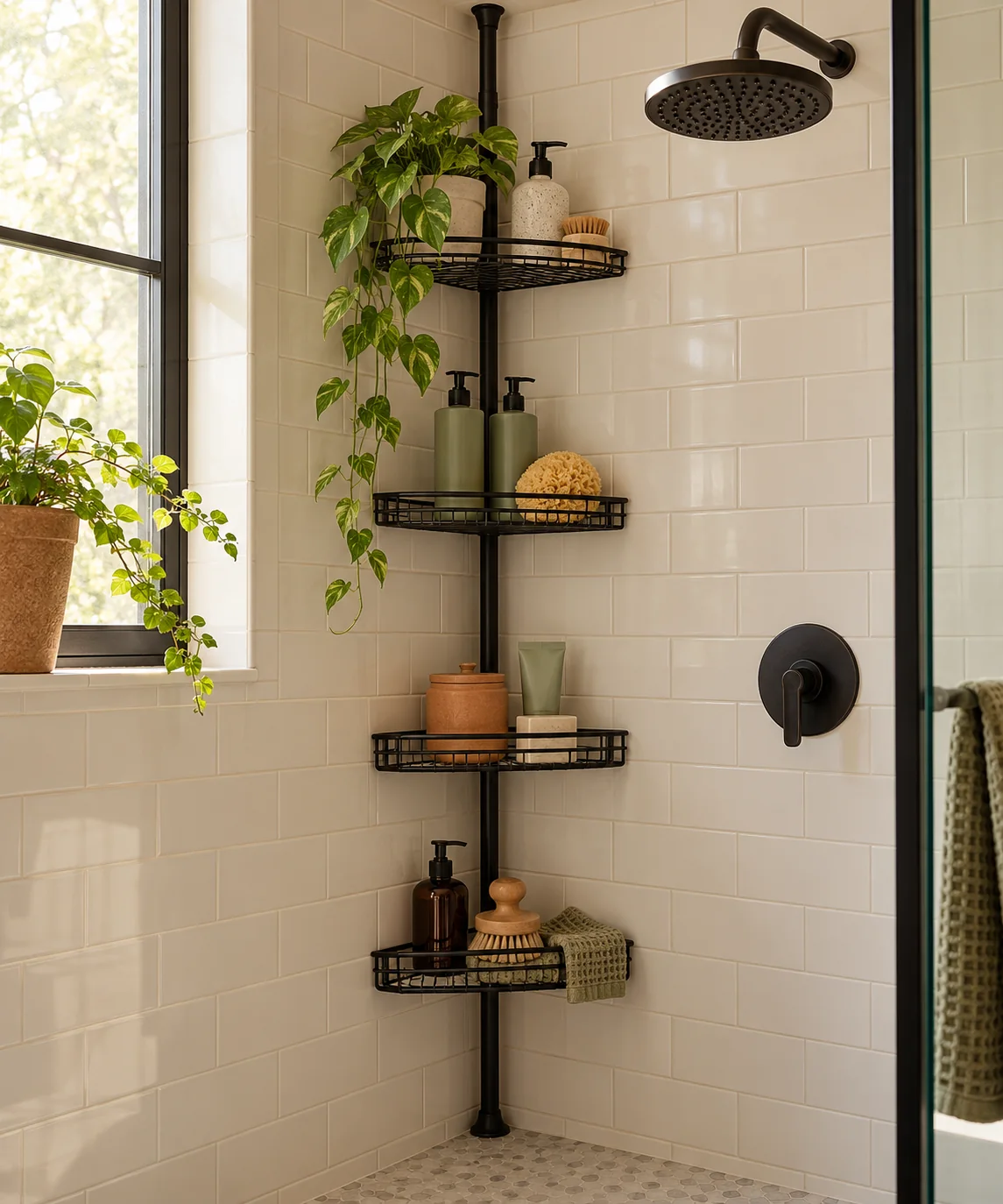
Assessing Corner Placement and Plumb
Identify a shower corner located away from the primary spray stream to minimize constant water impact on stored hygiene containers. Inspect the ceiling and floor surfaces for structural soundness before selecting a tension pole system, confirming that the upper contact point is solid drywall, tile, or reinforced fiberglass rather than a flexible drop ceiling or fragile plastic vent panel. Use a level or visual plumb line to verify that the planned vertical path is upright, as an out-of-plumb pole can gradually shift position under daily use.
Distributing Tier Heights for Users
Plan basket heights along the central pole based on the reach of each family member sharing the shower. Position lower baskets for younger children or seated shower users, reserving intermediate tiers for everyday adult washes and upper baskets for backup supplies. Allow sufficient vertical clearance between baskets to accommodate taller pump bottles without binding. Grouping heavier pump containers on lower tiers also minimizes mechanical leverage against the pole when dispensing product during routine showers.
Managing Drainage and Soap Residue
Open wire baskets facilitate natural water drainage in humid shower stalls, preventing the stagnant pooling common with solid caddy trays. To maintain clean storage surfaces, store open bottles upright and consider using perforated silicone liners beneath small bar soaps to prevent melting residue from dripping down lower tiers. During regular bathroom cleaning, rinse the wire shelves to wash away lingering soap films before they dry into stubborn mineral deposits, and check wire joints for trapped moisture.
Planning Reversible Placement and Stability
Because tension caddies rely on mechanical spring or twist compression rather than permanent fasteners, successful placement requires evaluating contact surface textures. Smooth tile and solid ceiling finishes provide dependable friction points, whereas highly textured plaster or flexible acrylic tub surrounds may reduce holding stability. Follow manufacturer instructions regarding pole extension limits, verify that rubber footpads seat flat against non-slip surfaces, and distribute container weights symmetrically to maintain balanced tension over time.
Recognizing Structural and Moisture Limits
Tension caddies are engineered for standard daily personal care bottles rather than oversized bulk jugs. Transfer salon-sized shampoos into standard squeeze or pump bottles to avoid exceeding manufacturer weight guidelines for individual wire tiers. High humidity and mineral-rich tap water can degrade protective coatings over time, so inspect pole finishes, basket welds, and rubber end pads periodically for signs of oxidation, wear, or loss of elasticity that could affect stability.
YOUR STARTING POINT
A little checklist.
Original editorial guidance. Images are AI-generated concepts, not photographs of completed projects. Our sources and approach.
Questions to consider
Can rubber end pads leave marks on bathroom ceilings?
Rubber or silicone pads can occasionally leave circular impressions or slight discoloration on soft, painted drywall or textured surfaces under sustained compression. Keep contact surfaces clean and dry prior to positioning, avoid over-compressing the tension mechanism beyond manufacturer guidance, and check the ceiling contact point periodically for moisture accumulation.
How do I prevent wire shelves from slipping down the pole?
Shelf slippage typically occurs when manufacturer load limits are exceeded or mounting collars become slick with soap residue. Verify that rubber wedges and pole surfaces are clean and dry during assembly, tighten fasteners according to product instructions, and place heavier bottles on lower tiers to minimize downward leverage.
What should I do if my shower ceiling is slanted?
Standard vertical tension caddies require parallel horizontal surfaces to distribute compression force evenly. On sloped ceilings, flat rubber pads sit at an angle and can slip under load. Look for specialized caddy models equipped with pivoting or ball-joint top pads designed specifically to accommodate angled ceilings securely.